Article Summary
Inline density measurement provides real-time, continuous liquid and slurry density data directly within industrial pipelines — eliminating the lag, error, and labor of manual laboratory sampling. This guide covers the three dominant measurement technologies (ultrasonic acoustic impedance, tuning fork vibration, U-tube oscillating frequency), their applicable process environments, installation best practices, and how to select the right inline density meter for chemical, petroleum, mining, and food & beverage applications. For those seeking a turnkey solution, the LONN-700CM inline tuning fork density meter delivers ±0.002 g/cm³ accuracy with 4-20mA and RS485 Modbus outputs, suitable for most chemical and petrochemical installations.
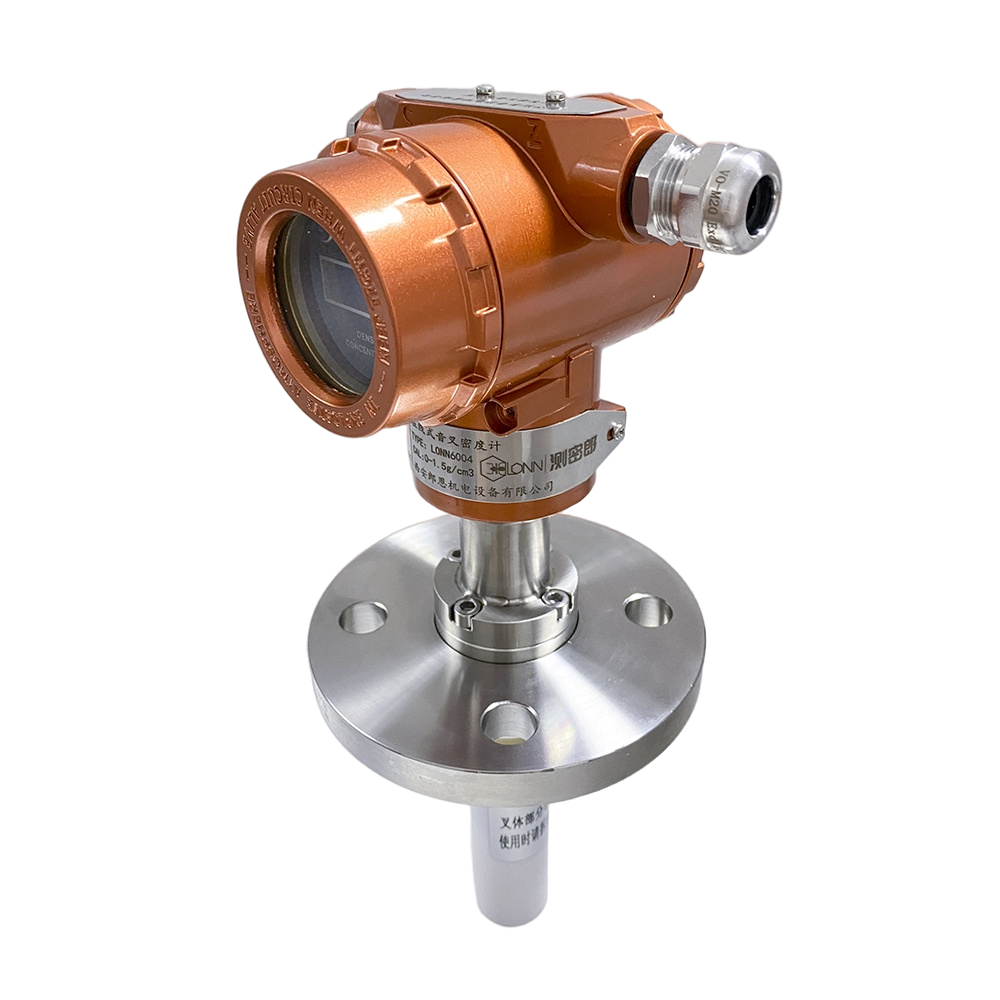
Table of Contents
- Why Inline Density Measurement Matters
- How Inline Density Measurement Works: Core Technologies
- Measurement Principle Comparison
- Applications by Industry
- Key Specifications to Evaluate When Selecting an Inline Density Meter
- Installation Best Practices
- Calibration and Maintenance
- Common Challenges and Solutions
- How to Select the Right Inline Density Meter for Your Process
- FAQ: Inline Density Measurement
- Conclusion: Next Steps for Process Engineers
1. Why Inline Density Measurement Matters
Density — the mass of a substance per unit volume (typically expressed in g/cm³ or kg/m³) — is one of the most fundamental physical properties monitored in industrial fluid processes. In chemical reactions, density directly correlates with concentration. In petroleum refining, it determines API gravity and product grade. In mining slurry circuits, it controls separation efficiency and material recovery rates.
The Problem with Manual Sampling
Traditional process control relies on laboratory sampling: an operator extracts a sample from the pipeline, sends it to the lab, waits 15–60 minutes, and receives a density reading. By the time this data arrives, the process has moved on. A batch that was off-specification 30 minutes ago may already be in the storage tank — or worse, in the next process stage.
The quantified impact is significant:
- Delayed feedback: A typical laboratory turn-around of 30–60 minutes means entire batches can be produced outside specification before correction occurs.
- Sampling error: Grab samples are inherently non-representative — stratified flow, temperature gradients, and operator technique all introduce measurement uncertainty.
- Labor cost: A plant running 8 samples per shift across 3 shifts per day dedicates 24 labor-hours daily to manual density testing.
- Safety risk: Sampling from pressurized pipelines or corrosive fluid streams exposes operators to chemical burns, thermal injury, and process leaks.
What Inline Density Measurement Solves
An inline density meter installs directly in the pipeline (or in a by-pass loop) and provides continuous, real-time density readings — every second, every minute, without human intervention. This transforms density from a periodic lab measurement into a continuous process variable, enabling:
- Real-time process control: PID loops can use density as a direct controlled variable for dosing, blending, or dilution.
- Early deviation detection: Automatic alarms trigger within seconds of an out-of-spec reading — not 30 minutes later.
- Reduced batch waste: Immediate corrective action keeps processes within specification, reducing off-grade product.
- Regulatory compliance: Continuous data logging supports FDA 21 CFR Part 11, ISO 9001, and hazardous area safety certifications.
For a mid-sized chemical plant processing 100 batches per week, even a 1% reduction in off-spec batches represents significant raw material and reprocessing savings. Inline density measurement is often the highest-ROI instrumentation investment in a process plant.
2. How Inline Density Measurement Works: Core Technologies
Three technologies dominate the inline density measurement market for industrial liquid and slurry applications. Each has a distinct physical operating principle, and each is optimized for different process conditions.
2.1 Ultrasonic Acoustic Impedance
How it works: A pair of ultrasonic transducers mounted on opposite sides of the pipe send and receive high-frequency acoustic pulses through the process fluid. The speed of sound through the fluid is directly related to its density. By measuring the transit time difference between the two sensors, the instrument calculates fluid density with high accuracy.
Key characteristics:
- Non-nuclear: No radioactive source required — eliminates licensing, monitoring, and disposal costs that plague radiometric systems.
- No moving parts in the process stream: No sensor elements protrude into the flow, reducing wear and fouling risk.
- Wide measuring range: 0–100% solids concentration; density range 0.5–3.0 g/cm³.
- Suitable for: Slurry applications (mining, mineral processing), corrosive chemical streams, sanitary food processes.
Example: LONN7000 Insert Ultrasonic Density Meter
The LONN7000 uses ultrasonic acoustic impedance measurement and is designed specifically for mining slurry monitoring. With a flange connection from DN50 to DN200 and customizable insertion lengths from 200 mm to 1000 mm, it handles particle sizes up to 50 mm and suspended solids concentrations up to 40%.
Accuracy: ±1% of reading (concentration mode)
Output: 4-20mA + RS485 Modbus RTU
Temperature range: -25°C to +150°C
2.2 Tuning Fork Vibration
How it works: A pair of metal tines (the “tuning fork”) is inserted into the process fluid and vibrated at their natural resonant frequency by a piezoelectric actuator. The resonant frequency decreases as the surrounding fluid density increases — heavier fluid dampens the vibration more than lighter fluid. By measuring the resonant frequency shift, the instrument calculates fluid density in real time.
Key characteristics:
- High accuracy: ±0.002 g/cm³ in standard configuration — suitable for custody transfer and tight process control.
- Excellent for clean liquids: Ideal for petroleum products, chemicals, solvents, and food liquids.
- Available in ceramic version: The LONN-700C ceramic tuning fork variant withstands abrasive slurries with particles up to 50 μm and 40% suspended solids — with tine hardness exceeding 1200 HV.
- Split-type option: The LONN-700S separates the sensor (installed in the process) from the transmitter/display (mounted up to 10 meters away), enabling use in high-temperature processes up to +200°C while keeping electronics in a safe operating environment.
Example: LONN-700CM Inline Tuning Fork Density Meter
The LONN-700CM inline tuning fork density meter is LONNMETER’s core online density product for chemical and petrochemical processes. It mounts directly in the pipeline via ANSI/DIN/JIS flanges and delivers continuous 4-20mA and RS485 Modbus outputs compatible with any DCS or PLC.
Accuracy: ±0.002 g/cm³
Output: 4-20mA + RS485 Modbus RTU
Process connection: Flange (ANSI/DIN/JIS)
Suitable for: Chemical, petrochemical, petroleum, food & beverage
2.3 U-Tube Oscillating Frequency
How it works: A precision U-shaped glass or metal tube is filled with process fluid and vibrated at its resonant frequency. The mass of the fluid inside the tube determines the oscillation frequency — denser fluid produces a lower frequency. This is the same principle used in laboratory digital density meters, but adapted for continuous inline installation.
Key characteristics:
- Highest absolute accuracy: ±0.001 g/cm³ — the most precise of the three technologies.
- Best suited for: Clean, low-viscosity liquids such as alcohols, beverages, petroleum products, and pharmaceutical solutions.
- Glass U-tube options: Provide excellent chemical resistance for aggressive acids and solvents.
- Not suitable for: Slurries, high-particulate fluids, or highly viscous media that would clog or coat the tube.
Example: LONN6004 Explosion-Proof Alcohol Density Meter
The LONN6004 uses U-tube oscillating frequency measurement for real-time ABV (alcohol by volume) and ethanol concentration monitoring. With ±0.001 g/cm³ accuracy and ATEX/IECEx explosion-proof certification, it is designed for distilleries, breweries, and bioethanol production plants.
Accuracy: ±0.001 g/cm³
Measuring range: 0.1–5 g/cm³
Certification: Ex d IIC T6 explosion-proof
3. Measurement Principle Comparison
| Criterion | Ultrasonic Acoustic Impedance | Tuning Fork Vibration | U-Tube Oscillating Frequency |
|---|---|---|---|
| Typical accuracy | ±1% of reading | ±0.002 g/cm³ | ±0.001 g/cm³ |
| Slurry compatibility | Excellent | Good (ceramic option for abrasive) | Poor |
| Clean liquid accuracy | Moderate | High | Very High |
| Particulate tolerance | High (up to 40% solids) | Low–Moderate | Very Low |
| Temperature range | -25°C to +150°C | Up to +200°C (split-type) | Up to +130°C (glass); higher (metal) |
| Explosion-proof option | Available | Available (ATEX/IECEx) | Available (ATEX/IECEx) |
| Nuclear source | No | No | No |
| Maintenance frequency | Low | Low | Moderate (tube cleaning) |
| Best application | Mining slurry, mineral processing | Chemical, petrochemical, petroleum | Alcohol, beverages, pharma, clean fuels |
| LONNMETER product | LONN7000, LONN7001 | LONN-700CM, LONN-700S, LONN-700C | LONN6004 |
4. Applications by Industry
4.1 Chemical Processing
Chemical plants rely on inline density measurement for three primary applications:
Concentration monitoring: Many chemical reactions are concentration-dependent. Inline density meters provide continuous concentration data that feeds directly into DCS control loops, enabling precise reagent dosing. For acids, alkalis, and solvents, this translates directly to reaction yield and product quality.
Blending and formulation: Automated blending systems use density as the primary feedback variable to control the ratio of components in formulations. An inline density meter can replace multiple load cells and flow meters in a formulation balance system.
Corrosion monitoring: In processes handling aggressive chemicals, the density of the process stream can indicate the presence of corrosion byproducts — an early warning of equipment degradation.
Relevant products: LONN-700CM Inline Tuning Fork Density Meter for general chemical applications; LONN-700S for high-temperature chemical processes.
4.2 Petroleum and Refining
API gravity determination: Density is the primary measurement for calculating API gravity — the standard quality parameter for crude oil, intermediate streams, and finished petroleum products.
Separator efficiency monitoring: Real-time density measurement at the inlet and outlet of three-phase separators verifies that oil, water, and solids are being separated effectively.
Custody transfer: With ±0.001 g/cm³ accuracy, U-tube instruments like the LONN6004 are suitable for custody transfer applications where measurement precision has direct financial implications.
Relevant products: LONN-700CM for refinery process monitoring; LONN6004 for fuel and alcohol applications.
4.3 Mining and Mineral Processing
Slurry density measurement is one of the most critical process measurements in mining operations. The density of the slurry fed to cyclones, thickeners, and flotation cells directly determines:
- Mineral recovery rates: Too low a density means dilute feed and reduced recovery efficiency.
- Concentrate grade: Density fluctuations cause grade instability in the concentrate output.
- Water consumption: Optimizing slurry density reduces unnecessary water usage — a major operational cost in water-scarce mining regions.
The LONN7000 ultrasonic density meter handles the harsh conditions of mining slurry circuits: particle sizes up to 50 mm, suspended solids up to 40%, and gas content up to 20%. Its non-nuclear design eliminates the regulatory burden of radioactive source licensing that has historically complicated radiometric density measurement in mining.
Relevant product: LONN7000 Insert Ultrasonic Density Meter for mining slurry circuits; LONN-700C Ceramic Tuning Fork for abrasive slurry applications.
4.4 Food and Beverage
Food manufacturers use inline density measurement for:
- Brix/°Brix monitoring: In sugar processing, juice concentration, and beverage production, density directly correlates with dissolved solids concentration.
- Fermentation monitoring: During fermentation, the density of the mash decreases as sugars are converted to ethanol — a direct indicator of fermentation progress.
- Dilution control: For products like fruit concentrates and syrups, density measurement ensures consistent dilution ratios and product consistency.
Relevant product: LONN6004 for fermentation and beverage processing.
4.5 Battery and EV Manufacturing
The rapid growth of electric vehicle battery manufacturing has created new demand for inline concentration measurement in electrolyte production. Precise control of lithium salt concentration in electrolyte solutions is critical for battery performance and safety — and density is the most reliable inline proxy measurement for electrolyte concentration.
5. Key Specifications to Evaluate When Selecting an Inline Density Meter
5.1 Measurement Accuracy
Accuracy requirements depend on your application:
- Laboratory-quality custody transfer: Requires ±0.001 g/cm³ or better — U-tube technology.
- Process control with tight tolerances: ±0.002 g/cm³ — tuning fork technology.
- Industrial process monitoring: ±1% of reading is sufficient — ultrasonic technology.
- Rough process monitoring: ±2–5% of reading — basic industrial sensors.
Always verify accuracy specifications are stated at your operating conditions (temperature, pressure, fluid type), not just at reference conditions.
5.2 Measuring Range
Check the density range against your process:
- Clean liquids: Typical range 0.5–2.0 g/cm³
- High-density slurries: Up to 3.0+ g/cm³
- Concentration mode: Some instruments report directly in % solids or % concentration, which may be more useful than raw density for process control.
5.3 Output Signals
Standard industrial outputs ensure compatibility with existing control systems:
- 4-20mA (analog): The most universally compatible industrial standard. Suitable for long cable runs (up to several hundred meters) and intrinsically safe loops.
- RS485 Modbus RTU (digital): Enables multi-drop networking of multiple instruments on a single bus, plus access to diagnostic data.
- HART: Adds digital communication on top of the 4-20mA loop — useful for field device diagnostics without disrupting the analog loop.
- Foundation Fieldbus / Profibus PA: For plants with legacy fieldbus infrastructure.
LONNMETER instruments ship standard with 4-20mA + RS485 Modbus RTU, covering the majority of industrial installation requirements.
5.4 Process Connection
Match the instrument’s process connection to your pipeline specification:
- Flange connections: ANSI, DIN, and JIS flanges are the most common. Verify pressure rating (PN16/PN25/PN40 or ANSI 150/300/600).
- Threaded connections: For smaller pipelines (DN15–DN50) and sampling ports.
- Tri-clamp: For sanitary food, pharmaceutical, and biotech applications.
5.5 Temperature and Pressure Ratings
Process temperature affects both instrument materials and measurement accuracy:
- Standard chemical service: -25°C to +150°C — covered by most tuning fork and ultrasonic meters.
- High-temperature processes (asphalt, steam, molten salts): Requires split-type configuration (sensor in process, electronics remote) — LONN-700S handles up to +200°C.
- Cryogenic applications: Verify materials compatibility for sub-zero temperatures.
5.6 Hazardous Area Certification
For installation in Zone 1 or Zone 2 hazardous areas (explosive gas atmospheres) or Zone 21/22 (explosive dust):
- ATEX (Europe): ATEX Directive 2014/34/EU
- IECEx (International): IECEx Scheme
- UL/FM (North America): Class I, Division 1 certification
All LONNMETER inline density meters are available with ATEX and IECEx explosion-proof certifications.
5.7 Wetted Materials
Material compatibility with your process fluid is critical for instrument longevity:
- 316L stainless steel: Standard for most chemical and petroleum applications.
- Hastelloy C-276: For highly corrosive acids (hydrochloric acid, sulfuric acid).
- PTFE/Teflon lining: For ultra-high purity and aggressive chemical applications.
- Ceramic (Al₂O₃): For abrasive slurry service — LONN-700C ceramic tuning fork handles particle abrasion that destroys standard metal sensors.
6. Installation Best Practices
6.1 Location Selection
Key principles:
- Avoid low points: Sediment and solids accumulate in low points, creating measurement bias.
- Avoid high points: Air or vapor pockets cause erroneous low-density readings.
- Prefer horizontal runs: Ensures the sensor is fully immersed and the flow profile is symmetric.
- Maintain sufficient upstream straight pipe run: 10–15 diameters of straight pipe upstream of the sensor reduces flow profile disturbance effects.
- Avoid locations near pumps, valves, or fittings: These create turbulent flow that can affect measurement stability.
6.2 Orientation
- Tuning fork sensors: Install vertically (fork pointing up or down) for best performance in slurry service. Horizontal installation is acceptable for clean liquids.
- Ultrasonic sensors: Typically installed in pairs on opposite sides of the pipe — orientation is less critical than alignment accuracy.
- U-tube sensors: Must be installed in a orientation that ensures the U-tube remains full of fluid at all times — typically vertical with flow upward.
6.3 By-Pass Loop vs. Direct Pipeline Installation
Direct inline installation: Lower cost, simpler installation — preferred for clean liquids with no suspended solids.
By-pass loop installation: Allows the instrument to be maintained without shutting down the main process line. Essential for mining slurry circuits where the inline instrument might be inaccessible under normal operating conditions.
For slurry applications, a by-pass loop also allows periodic flushing and cleaning without interrupting the process.
6.4 Electrical Installation
- Use shielded, twisted-pair cable for 4-20mA signals to minimize electromagnetic interference.
- For RS485 Modbus, use shielded twisted pair (Belden 3105A or equivalent) with 120Ω termination resistors at the bus ends.
- Route cable away from high-power VFD drives, which generate significant electrical noise.
- Verify intrinsically safe barrier ratings if installing in hazardous areas.
6.5 Start-Up and Verification
- Verify mechanical installation: Confirm flange bolts are torqued to specification and gaskets are properly seated.
- Verify electrical connections: Confirm wiring matches the instrument terminal diagram.
- Perform zero-point verification: With the pipe empty (or filled with a known reference fluid at process temperature), verify the instrument reads within specification.
- Perform span verification: Compare the instrument reading against a laboratory reference sample at process conditions.
- Enable trending: Configure the DCS to capture continuous density data for the first 24–48 hours of operation — this establishes the baseline and reveals any periodic measurement issues.
7. Calibration and Maintenance
7.1 Calibration Philosophy
Inline density meters should be calibrated against reference standards traceable to national measurement institutes (NIST in the US, NIM in China, PTB in Germany). For most industrial applications, a two-point calibration (zero and span) is sufficient:
- Zero point: Air or nitrogen at atmospheric pressure — provides the zero reference.
- Span point: A reference fluid of known density (e.g., deionized water at 20°C = 0.9982 g/cm³) at process temperature.
For food and pharmaceutical applications, calibration fluids should be traceable to a national metrology institute and accompanied by calibration certificates.
7.2 Calibration Frequency
| Application Type | Recommended Calibration Interval | Verification Interval |
|---|---|---|
| Custody transfer | 3–6 months | Monthly |
| Pharmaceutical / food safety | 6 months | 3 months |
| General chemical process | 12 months | 6 months |
| Mining slurry (harsh environment) | 6–12 months | 3–6 months |
| Clean petroleum products | 12 months | 6 months |
7.3 Common Maintenance Tasks
- Sensor cleaning: Ultrasonic transducers should be inspected and cleaned of any buildup every 6–12 months. Tuning fork tines may accumulate deposits in sticky or scaling fluids — inspect during each planned shutdown.
- Cable and connector inspection: Check for moisture ingress, corrosion, and loose connections annually.
- Output verification: Confirm 4-20mA output corresponds to the displayed density value using a calibrated loop calibrator.
- Explosive atmosphere inspections: For hazardous area installations, follow ATEX/IECEx periodic inspection schedules (typically every 3 years).
8. Common Challenges and Solutions
Challenge 1: Bubbles and Gas Entrainment
Symptoms: Erratically low density readings, high signal noise, fluctuating outputs.
Cause: Gas bubbles in the liquid stream scatter or attenuate ultrasonic pulses (ultrasonic sensors) or dampen tuning fork vibration inconsistently (tuning fork sensors).
Solutions:
- Relocate the instrument to a point with lower gas entrainment (downstream of a deaeration tank or degasser).
- Install a defoamer or gas release fitting upstream.
- For by-pass loops, install an air release valve in the loop.
Challenge 2: Sensor Fouling and Coating
Symptoms: Gradual drift in zero point, increasing measurement noise, reduced accuracy over weeks or months.
Cause: Process fluids that are scaling, polymerizing, or containing sticky particulate matter build up on sensor surfaces.
Solutions:
- Select materials of construction that resist the specific fouling mechanism (PTFE lining for scaling fluids, Hastelloy for polymer buildup).
- Schedule periodic sensor cleaning during planned shutdowns.
- Install instrument in a by-pass loop to enable cleaning without process shutdown.
Challenge 3: Temperature-Induced Measurement Error
Symptoms: Apparent density changes that correlate with process temperature changes, not actual density changes.
Cause: Most inline density meters measure density at the actual process temperature. If the process temperature fluctuates and the instrument reports “density” without temperature compensation, the output reflects both the real density change and the thermal expansion/contraction of the fluid.
Solutions:
- Use an instrument with built-in temperature measurement and compensation (all LONNMETER instruments include this).
- If using raw frequency output, apply the fluid’s temperature coefficient of expansion in the DCS calculation.
- Verify that temperature compensation is active in the instrument configuration.
Challenge 4: High-Pressure Applications
Symptoms: Instrument will not seal at flange connection, pressure rating insufficient.
Cause: Standard ANSI 150# or PN16 instruments may not be rated for high-pressure chemical or petrochemical processes.
Solutions:
- Specify instruments with pressure ratings matching or exceeding process operating pressure (ANSI 300#, ANSI 600#, PN40, etc.).
- For very high pressures, consult LONNMETER for custom pressure-rated configurations.
Challenge 5: Abrasive Slurry Wear
Symptoms: Sensor tines erode over time, accuracy degrades, instrument needs frequent replacement.
Cause: Mining slurries, sand-laden water, and mineral processing streams contain hard particles that mechanically erode sensor surfaces.
Solutions:
- Select ceramic tuning fork sensors (LONN-700C) with tine hardness exceeding 1200 HV — rated for 5–10× the service life of standard metal sensors in abrasive service.
- For ultrasonic sensors, the non-intrusive design means no physical contact with the slurry — inherent advantage in abrasive applications.
9. How to Select the Right Inline Density Meter for Your Process
Use this decision framework to narrow down the appropriate instrument:
Step 1: Identify your fluid type
- Clean, low-viscosity liquid (petroleum, chemicals, beverages) → Tuning fork or U-tube
- Slurry with particles (mining, mineral processing) → Ultrasonic or ceramic tuning fork
- Highly corrosive chemical (acid, alkali) → PTFE-lined or Hastelloy sensor
- High-temperature process (>150°C) → Split-type (LONN-700S)
Step 2: Define accuracy requirements
- Custody transfer / high-precision process → U-tube (±0.001 g/cm³)
- Standard process control → Tuning fork (±0.002 g/cm³)
- General monitoring → Ultrasonic (±1% reading)
Step 3: Confirm hazardous area requirements
- Zone 1 / Division 1 → ATEX/IECEx explosion-proof model required
- Non-hazardous area → Standard instrument
Step 4: Verify process connection compatibility
- Match flange size and pressure rating to your pipeline specification.
- Confirm material compatibility with your process fluid.
Step 5: Confirm output compatibility
- 4-20mA + RS485 Modbus RTU is the universal standard (covered by all LONNMETER instruments).
- For Foundation Fieldbus or Profibus, check specific product availability.
Quick Selection Reference
| Your Process | Recommended Instrument |
|---|---|
| Chemical process (clean liquids, ±0.002 g/cm³) | LONN-700CM Inline Tuning Fork |
| High-temperature chemical (>150°C) | LONN-700S Split-Type Tuning Fork |
| Mining slurry / mineral processing | LONN7000 Ultrasonic Density Meter |
| Abrasive slurry (high particle content) | LONN-700C Ceramic Tuning Fork |
| Alcohol / ethanol / beverage concentration | LONN6004 U-Tube Alcohol Density Meter |
| Chemical + concentration monitoring | LONN7001 Tee Ultrasonic |
10. Conclusion: Next Steps for Process Engineers
Inline density measurement is not a commodity instrumentation decision — the choice of measurement principle, accuracy class, materials of construction, and hazardous area certification has direct consequences for process performance, maintenance burden, and total cost of ownership.
The core decision is straightforward:
- Ultrasonic acoustic impedance for slurry, mining, and highly particulate fluids where no other technology survives.
- Tuning fork vibration for clean and slightly viscous liquids in chemical, petroleum, and food processes — the most versatile and widely applicable technology.
- U-tube oscillating frequency for the highest precision custody transfer and quality control applications.
LONNMETER manufactures all three technology platforms — which means our recommendations are based on genuine technical fit, not a single product line’s limitations. Our instruments are certified to ATEX, IECEx, and ISO standards, and are supported by global distribution across 130+ countries.
Ready to specify an inline density meter for your process?
→ Browse the full LONNMETER Online Density Meter product range
→ Contact our technical team for application-specific recommendations
→ Download the Technical Specifications Catalog
11. FAQ: Inline Density Measurement
Q1: What is the difference between inline density measurement and online density measurement?
Inline and online density measurement are often used interchangeably, but there is a technical distinction. “Inline” means the sensor is installed directly in the process pipeline — the instrument is physically in contact with the process fluid. “Online” is a broader term that includes both inline instruments and by-pass loop installations where the sensor is connected to the process via a sample loop but not directly mounted in the main pipeline. Both provide continuous, real-time density data. For most industrial contexts, the terms are functionally synonymous.
Q2: How accurate is an inline density meter compared to a laboratory measurement?
Modern inline density meters achieve laboratory-quality accuracy when properly installed and calibrated. Tuning fork instruments like the LONN-700CM deliver ±0.002 g/cm³ — comparable to most benchtop laboratory density meters (±0.001 g/cm³). The key advantage of inline measurement is that the instrument measures the process fluid continuously at process conditions (temperature, pressure), whereas a laboratory measurement involves sampling, sample transport, and measurement under reference conditions — all of which introduce additional uncertainty. For custody transfer applications, inline instruments are typically verified against laboratory standards on a periodic calibration schedule.
Q3: Can inline density meters handle slurries with high solid content?
Yes — but the technology must be matched to the slurry characteristics. Ultrasonic acoustic impedance meters (LONN7000) are the most tolerant of high-solids slurries, handling up to 40% suspended solids and particles up to 50 mm in diameter. For abrasive slurries with smaller particles (up to 50 μm), the LONN-700C ceramic tuning fork provides superior wear resistance with ±0.002 g/cm³ accuracy — the ceramic tines (1200+ HV) extend sensor service life 5–10× compared to standard metal tuning forks. Standard tuning fork and U-tube instruments are not suitable for slurry service.
Q4: Do inline density meters require calibration?
Yes. Like all precision instruments, inline density meters require periodic calibration to maintain their stated accuracy. The minimum calibration is a two-point verification (zero and span) using reference standards traceable to a national metrology institute. Recommended calibration intervals depend on the application: every 3–6 months for custody transfer and pharmaceutical applications; every 12 months for general chemical process control. All LONNMETER instruments are calibrated at the factory before shipment with calibration certificates provided. For hazardous area installations, calibration must be performed by personnel qualified for work in explosive atmospheres.
Q5: What is the maintenance requirement for inline density meters in chemical service?
Maintenance requirements depend on the process fluid. For clean chemical services, annual calibration verification and visual inspection of cable connections are typically sufficient. For fouling or scaling fluids (e.g., lime slurry, polymer solutions), sensor cleaning every 3–6 months may be required — best accomplished via a by-pass loop installation that allows instrument removal without process shutdown. For abrasive slurry applications, the primary maintenance consideration is wear on sensor surfaces — select ceramic or ultrasonic sensors to minimize wear-related maintenance. All LONNMETER instruments use non-radioactive measurement principles, eliminating the special licensing, periodic source leak testing, and decommissioning procedures required for radiometric density measurement.
Q6: How do I integrate an inline density meter into my existing DCS?
Integration is straightforward via standard industrial signals. All LONNMETER inline density meters provide 4-20mA (analog) and RS485 Modbus RTU (digital) outputs as standard. For 4-20mA integration: connect the signal wires to any standard analog input card on the DCS or PLC — scale the engineering units in the DCS (e.g., 4mA = 0.500 g/cm³, 20mA = 2.000 g/cm³). For Modbus integration: connect the RS485 wires to the DCS Modbus serial port, configure the Modbus address, baud rate (typically 9600 or 19200), and parity, then map the relevant registers (density, temperature, concentration, status) into the DCS tag database. LONNMETER provides Modbus register maps for all instruments on request.
Q7: Are inline density meters suitable for food and beverage applications?
Yes — when specified with appropriate materials and certifications. For food, beverage, and pharmaceutical applications, select instruments with 316L stainless steel or higher-grade wetted materials, FDA-compliant seals and gaskets, and 3-A Sanitary or EHEDG certification where required. The LONN6004 U-tube instrument is used in fermentation and beverage applications where 3-A sanitary standards apply. The LONN7000 ultrasonic sensor’s smooth, unobstructed flow path minimizes product retention zones and bacterial growth sites, making it suitable for sanitary applications. All instruments used in food contact applications must be CIP (Clean-In-Place) compatible — verify CIP temperature and chemical compatibility with your sanitation protocol.
Q8: What is the difference between density measurement and concentration measurement?
Density and concentration are related but distinct measurements. Density is the mass per unit volume of a substance (e.g., g/cm³ or kg/m³). Concentration is the proportion of a specific component in a mixture (e.g., % sulfuric acid, % dissolved solids, % mass of solute per mass of solution). In many industrial processes, density is used as an indirect, continuous proxy for concentration — because for a given solute-solvent system at constant temperature, density varies linearly with concentration. This is the basis of Brix refractometry (sugar concentration from density) and acid concentration monitoring. Instruments like the LONN7001 and LONN7000 can be configured to output either raw density or calculated concentration, provided the fluid composition is known and the temperature is compensated.
Q9: Can inline density meters be used in explosive atmospheres?
Yes — when installed with appropriate hazardous area certification. LONNMETER offers ATEX and IECEx certified models for installation in Zone 1 (gas) and Zone 21/22 (dust) explosive atmospheres. For North American installations, UL or FM certification is required. The explosion-proof rating (typically Ex d IIC T6 for gas atmospheres) indicates the instrument housing is designed to contain any internal explosion and prevent ignition of the surrounding explosive atmosphere. Installation must comply with the relevant explosive atmosphere installation standard (IEC 60079-14, EN 60079-14, or NFPA 70/NEC Article 505). Consult LONNMETER’s technical team to confirm the correct certification for your specific hazardous area classification.
Q10: What is the typical installation time for an inline density meter?
Installation time depends on whether the installation is a new build or a retrofit, and whether a by-pass loop is required. For a direct inline installation in an existing plant:
- Mechanical installation (flange mounting): 2–4 hours
- Electrical installation (wiring, grounding): 1–2 hours
- Start-up and verification: 2–4 hours
- Total: approximately 1 working day for an experienced instrumentation technician
For a by-pass loop installation, add 4–8 hours for the loop piping and mounting structure. LONNMETER provides detailed installation drawings and, for complex applications, on-site technical support during installation and commissioning.
Need a specific recommendation for your process conditions?
→ Request a Technical Proposal for Your Application
→ Download LONNMETER Density Meter Product Catalog
Last updated: July 2026 | LONNMETER Industrial Automation Corp.
Tags: inline density measurement, online density meter, real-time density monitoring, tuning fork density meter, ultrasonic density meter, industrial density measurement, process density control, mining slurry density, chemical process control, petroleum density monitoring