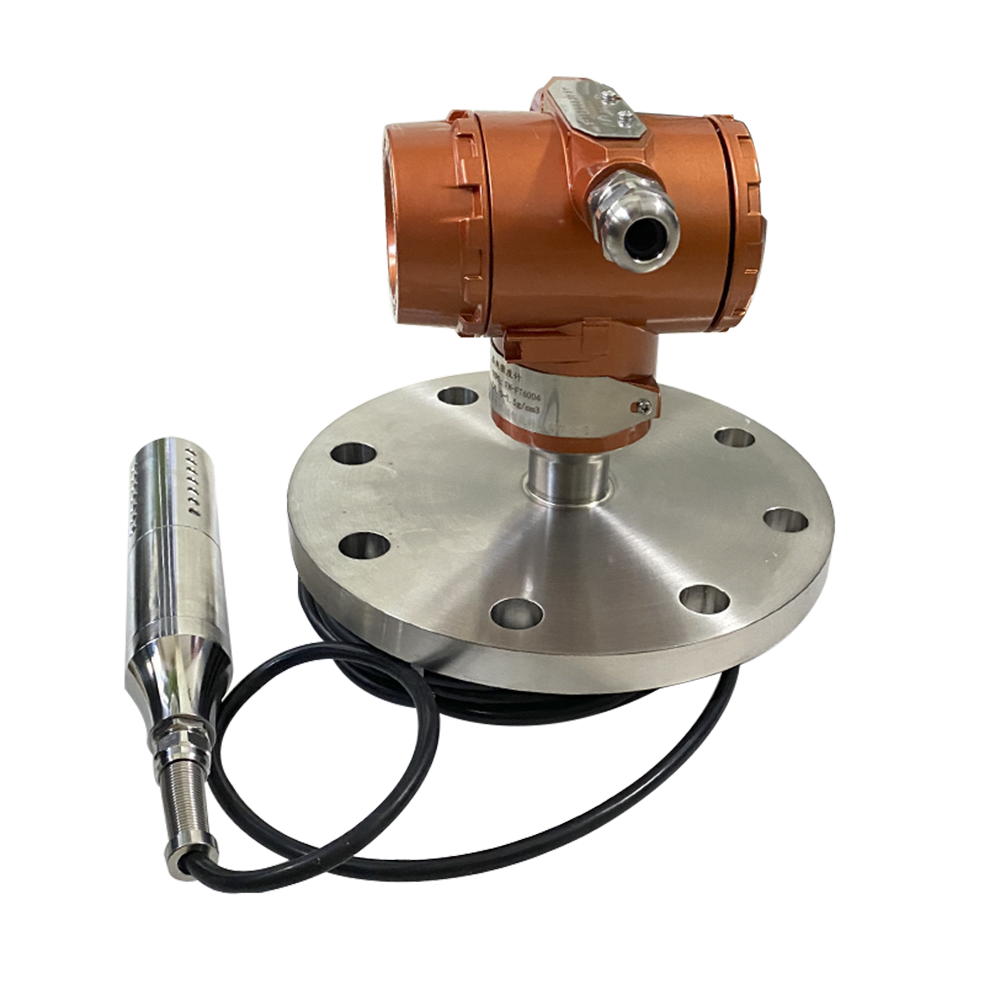
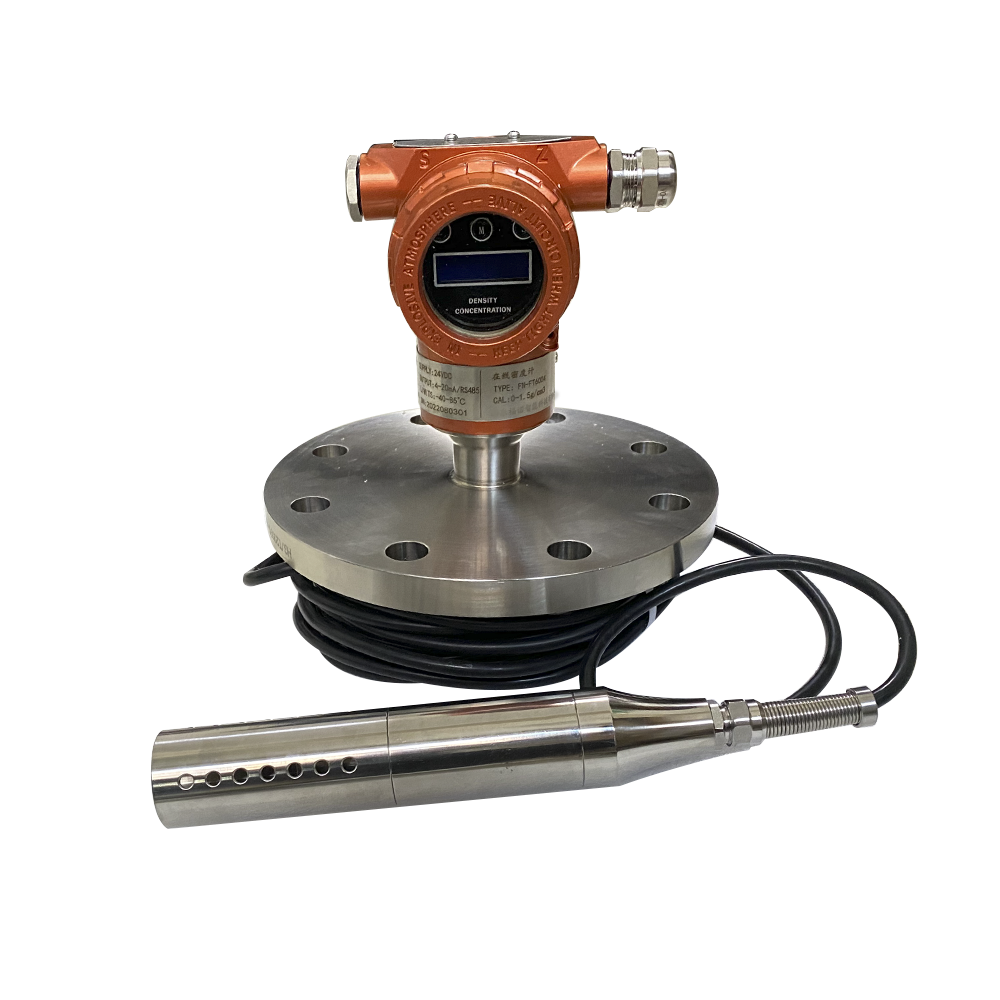
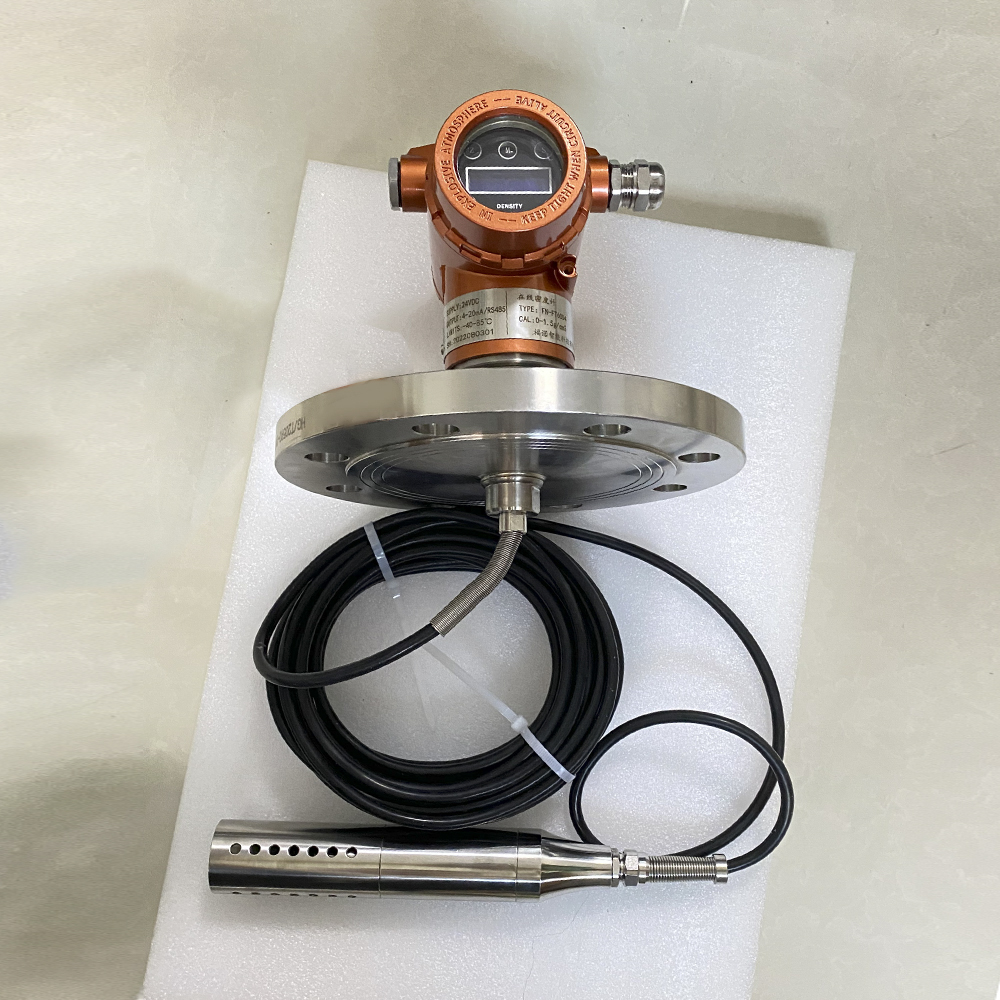
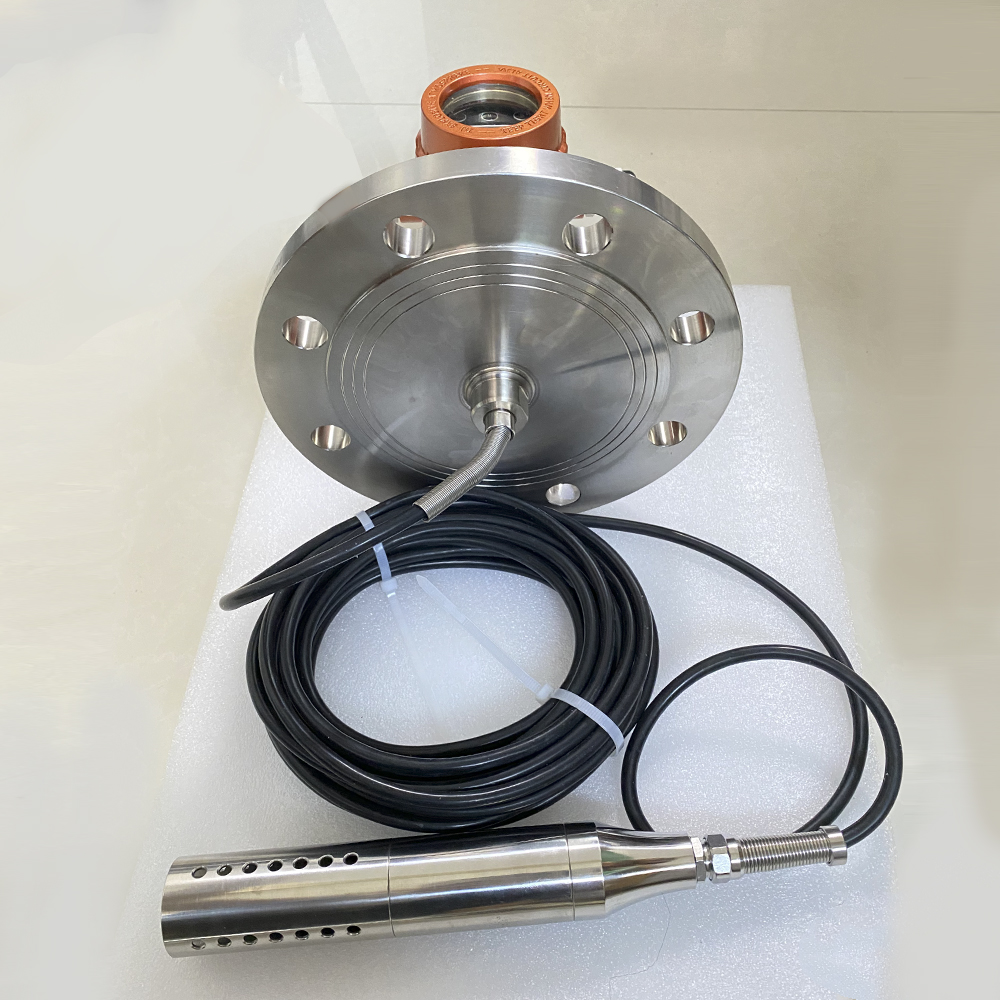
The LONN-700S is a split-type tuning fork density meter separating sensor from transmitter via sealed cable. Handles +200°C process temperatures while keeping electronics remote. Ideal for steam injection, asphalt processing, and high-temperature chemical applications requiring safe display access.
Key Benefits of This Advanced Split Type Tuning Fork Density Meter:
The LONN-700S split type tuning fork density meter represents the most flexible and safe approach to continuous liquid density measurement in demanding industrial environments. By separating the vibrating fork sensing element from the electronics transmitter through a sealed multi-conductor cable assembly, this split type tuning fork density meter solves installation challenges that integrated instruments simply cannot handle — extreme pipeline temperatures exceeding 200°C, heavy mechanical vibration from pumps and compressors, and confined spaces where operator access to a display is restricted or dangerous.
Engineered for the toughest process conditions, the LONN-700S delivers ±0.002 g/cm³ accuracy across a 0-2 g/cm³ measurement range while offering mounting flexibility that no compact design can match. The fork sensor installs directly into your process line via flange or tri-clamp connection, while the transmitter enclosure mounts on a nearby wall, pipe stand, or control panel — keeping sensitive electronics completely isolated from heat sources, vibration zones, and corrosive atmospheric conditions.
This split type density meter configuration has become the preferred choice in oil & gas thermal production, asphalt processing, chemical alkylation units, and high-temperature food sterilization lines where standard integrated density meters fail prematurely or require costly cooling jackets and vibration dampeners.
Key Benefits of This Advanced Split Type Tuning Fork Density Meter:
In steam injection wells, asphalt mixing tanks, polymer reactors, and bitumen storage facilities, pipeline temperatures routinely exceed 150°C and can reach 200°C or higher. Standard integrated electronics cannot survive sustained exposure above +120°C without accelerated component degradation and premature failure.
The LONN-700S high temperature density meter places only the all-stainless-steel (or Hastelloy/Titanium) fork sensor in the hot zone while the transmitter housing mounts in an ambient-temperature location. This simple but effective design extends service life dramatically compared to integrated units equipped with expensive cooling fins or heat sinks.
According to ISA (International Society of Automation) guidelines on instrument temperature management, separating sensing elements from electronics is recognized as best practice for processes operating above +120°C ambient temperature at the instrument location.
Centrifugal pumps, reciprocating compressors, positive displacement pumps, and agitators generate significant mechanical vibration that travels through piping systems. Integrated instruments experience connector loosening, LCD failure, solder joint fatigue, and PCB cracking over time — leading to unplanned downtime and replacement costs.
By physically separating the remote density transmitter from the vibrating pipeline connection, the LONN-700S eliminates this failure mode entirely. The sensor is a solid-state vibrating fork with no moving parts beyond the tines themselves — inherently resistant to vibration. The transmitter sits quietly on a stable wall or panel mount, processing digital frequency signals carried over the shielded cable assembly.
Many production facilities feature densely packed pipe racks, overhead installations at 4+ meters height, underground vaults, or equipment rooms where reading an integrated display requires ladders, platforms, or entry into permit-required confined spaces. Each reading becomes a safety incident waiting to happen.
The split type density meter with remote display allows operators to position the LCD screen at a convenient viewing height — on a nearby wall at eye level, on a handrail within arm’s reach, or inside a control room where process data is monitored alongside other instruments. This single design choice reduces fall hazards, eliminates confined space entry requirements, and improves overall plant safety metrics.
Chemical plants handling chlorine, hydrogen sulfide, acid vapors, or salt-laden coastal air create aggressive ambient conditions that attack aluminum enclosures, corrode connector pins, and degrade seal materials over time. Even IP66-rated integrated instruments show visible corrosion damage within 12-24 months in these environments.
Mounting the transmitter in a protected electrical room, instrument shelter, or air-conditioned control cabinet while exposing only the sealed stainless steel fork sensor to the process atmosphere provides dramatic service life extension. Field reports from chemical processing industry installations consistently show 3-5 year lifespan improvements when electronics are relocated away from corrosive ambient zones.
| Parameter | Specification |
|---|---|
| Measurement Principle | Tuning fork vibration frequency method |
| Density Range | 0 ~ 2 g/cm³ (0 ~ 2000 kg/m³) |
| Density Accuracy | ±0.002 g/cm³ |
| Density Repeatability | ±0.0001 g/cm³ |
| Concentration Range | 0 ~ 100% (programmable curves) |
| Concentration Accuracy | ±0.25% (after curve calibration) |
| Temperature Coefficient | 20 ppm/°C (automatic compensation) |
| Process Temperature (Sensor) | Standard: -25°C ~ +150°C; Extended: -25°C ~ +200°C |
| Ambient Temperature (Transmitter) | -20°C ~ +60°C |
| Max Working Pressure | Standard: 4.0 MPa; High Pressure: 10.0 MPa |
| Cable Length Options | 3m / 5m / 10m (custom up to 20m available) |
| Cable Assembly | Shielded multi-conductor, sealed military-spec connectors |
| Wetted Materials | 316L SS / Hastelloy C-276 / Titanium / Zirconium |
| Fork Surface Treatment | Standard polish / PTFE coating / Electro-polish (sanitary) |
| Transmitter Enclosure | IP66 die-cast aluminum with epoxy powder coating |
| Output Signals | 4-20mA (loop-powered) + RS485 Modbus RTU |
| Display Interface | Backlit LCD with 4-button keypad menu |
| Power Supply | 24V DC (two-wire loop-powered, < 300mA) |
| Max Medium Viscosity | 2000 cP |
| Particle Size Limit | <10 μm recommended; 10-50 μm acceptable with reduced accuracy |
| Max Suspended Solids | ≤40% by volume |
| Max Gas Content | ≤20% by volume |
| Process Connection | Flange (ANSI 150#-600#, DIN PN16-PN64, JIS 10K-40K) or Tri-clamp (2″/3″ sanitary) |
| Transmitter Mounting Options | Wall bracket kit / Pipe clamp kit / Panel cutout mount |
Heavy crude oil thermal production methods including steam-assisted gravity drainage (SAGD), cyclic steam stimulation (CSS), and steam flooding generate pipeline temperatures of 180-200°C at pressures up to 10 MPa. The LONN-700S high temperature density meter handles these extremes while keeping transmitter electronics at safe ambient temperature.
Key oil & gas applications:
Road construction material manufacturing involves highly viscous hot asphalt and bitumen at 150-170°C flowing through heated transfer lines. The split type tuning fork density meter enables continuous density monitoring during mixing, storage, and loading operations while protecting transmitter electronics from sustained thermal exposure that degrades standard integrated units within months.
Critical measurements include:
Sulfuric acid alkylation units (H₂SO₄ concentration 85-99%), polymerization reactors, high-temperature distillation columns, and organic synthesis processes all benefit from the thermal isolation provided by remote transmitter mounting. As a non nuclear density meter, the LONN-700S eliminates radiation safety program requirements while delivering reliable inline density measurement for closed-loop process control.
Notable chemical applications:
UHT milk pasteurization (135-140°C), juice hot-fill bottling, sugar syrup concentration (Brix), and aseptic processing lines involve elevated temperatures requiring sanitary process density meter solutions. The LONN-700S with tri-clamp connection, electro-polished 316L surfaces, and 3A-compliant finish meets food-grade standards while the remote transmitter stays outside the hot processing zone — avoiding both thermal stress and washdown exposure.
Food industry use cases:
Black liquor recovery boilers and digester systems operate at high temperature (160-180°C) and pressure (up to 8 MPa) with highly corrosive alkaline media containing dissolved lignin, sodium hydroxide, and sodium sulfide. The Hastelloy or Titanium wetted parts option combined with remote electronics mounting provides reliable multi-year service where standard instruments fail within weeks.
Geothermal brine monitoring, steam condensate analysis, boiler feedwater chemical injection, and cooling tower blowdown concentration control all benefit from the split type density meter configuration. The transmitter locates in a protected electrical enclosure while the sensor endures the harsh process environment.
| Feature | Split Type (LONN-700S) | Integrated (LONN-700CM) |
|---|---|---|
| Maximum Process Temperature | Up to +200°C at sensor | Up to +150°C maximum |
| Vibration Tolerance | Excellent — electronics fully isolated | Good — integrated damping design |
| Display Accessibility | Flexible — mount anywhere within cable range | Fixed at process connection point |
| Installation Space Required | Cable routing path needed | Compact single-unit footprint |
| Ambient Protection | Transmitter in protected location | Exposed to local atmosphere |
| Relative Cost | +15-25% (cable assembly included) | Standard factory pricing |
| Best Application Fit | High temp, heavy vibration, confined spaces, corrosive atmospheres | Standard industrial installations with adequate space and moderate conditions |
Decision Rule: If any ONE of these conditions applies to your installation → choose the LONN-700S split type tuning fork density meter:
Otherwise, the LONN-700CM integrated tuning fork density meter offers excellent value for standard industrial applications.
Q: What is the maximum cable length available for the LONN-700S split type tuning fork density meter?
A: Standard factory cable lengths are 3 meters, 5 meters, and 10 meters. Custom lengths up to 20 meters are available upon request with factory signal integrity verification. For installations requiring longer runs, consult our application engineering team — we have successfully deployed 25-meter custom configurations in geothermal power plants with proper signal conditioning.
Q: Can the remote transmitter be mounted outdoors without additional weather protection?
A: Yes — the transmitter enclosure carries an IP66 ingress protection rating, suitable for direct outdoor installation in most climates including rain, snow, and dust. However, for extreme environments such as direct tropical sun exposure (surface temperature >70°C), freezing rain with icing risk, or highly corrosive coastal salt spray, we recommend installing a simple sunshade or protective weather shelter to maximize electronics service life beyond the standard 5-year warranty period.
Q: Does the split-type design sacrifice any measurement accuracy compared to integrated tuning fork density meters?
A: Zero accuracy loss. The LONN-700S delivers identical ±0.002 g/cm³ precision as the LONN-700CM integrated model. The interconnecting cable carries raw digital frequency signals from the sensor oscillator to the transmitter’s microprocessor — there is no analog signal degradation, voltage drop error, or noise pickup concern over standard cable lengths up to 10 meters. Our laboratory cross-validation testing confirms <0.00005 g/cm³ deviation between split-type and integrated configurations using the same reference fluids.
Q: Is the interconnecting cable field-replaceable if damaged during maintenance or construction?
A: Absolutely yes. Both the sensor head and transmitter end use sealed military-grade circular connectors (MIL-DTL-38999 series equivalent) that allow cable replacement in under 15 minutes without any factory recalibration. Replacement cables are stocked as spare parts with dedicated part numbers. Important: always verify proper gland sealing and torque specification after cable replacement to maintain the IP66 environmental rating at both connection points.
Q: Which hazardous area certifications are available for the LONN-700S explosion proof density transmitter?
A: The LONN-700S is certified for Zone 1 hazardous locations with the following approvals (varies by configuration):
For Zone 0 applications, please contact our hazardous area specialist team for intrinsically safe (Ex ia) configuration options.
Q: How does this split type tuning fork density meter compare to nuclear/radiometric density gauges for slurry applications?
A: While optimized primarily for clean and low-particulate liquids, the LONN-700S can handle light slurries with particles under 50 microns at concentrations up to 40%. For heavy mining slurries with large abrasive solids, we recommend the LONN-7000 ultrasonic slurry density meter which uses acoustic impedance technology specifically engineered for high-solids media. Compared to nuclear gauges from Berthold or Thermo Scientific, both LONN-700S and LONN-7000 eliminate radioactive source licensing, annual safety inspections, specialized transport requirements, and decommissioning costs — making them the smarter long-term choice for facilities prioritizing operational safety and regulatory simplicity.
Ready to configure your LONN-700S? Fill out our RFQ form with the following details:
As a specialized split type density meter manufacturer with direct-from-factory pricing, LONNMETER provides complimentary application engineering support to ensure optimal model selection for your specific installation constraints. We don’t just sell instruments — we partner with your engineering team to deliver reliable measurement solutions.
Please provide your application parameters for a technical assessment and formal quote.