
Industry Overview
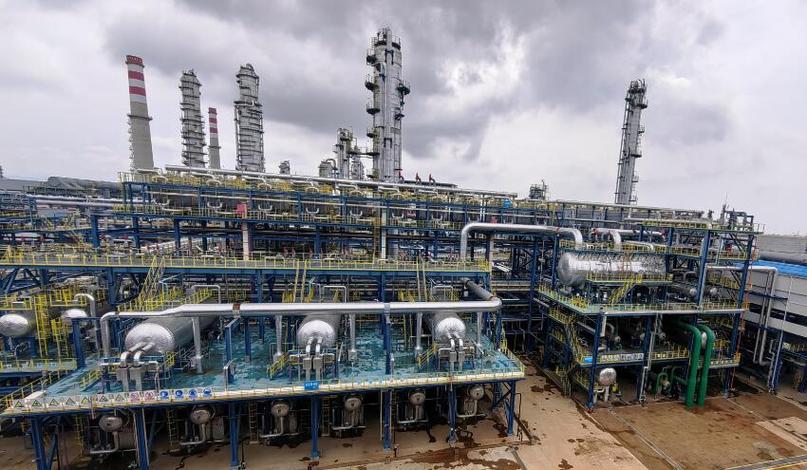
A modern petroleum refinery is one of the most complex continuous process operations in existence — processing millions of barrels of crude oil per day through a network of interconnected process units, each requiring precise process monitoring to optimize yield, quality, and energy efficiency. The refining industry operates on tight margins: global refining margins typically range from $3 to $15 per barrel, meaning that every 0.1% improvement in process efficiency translates to millions of dollars in annual value for a 200,000 barrel-per-day refinery.
Measurement accuracy is central to refinery profitability. Density measurement determines the API gravity of crude oil receipts — directly affecting crude oil valuation at intake. Viscosity measurement controls lube oil blending quality — the difference between an ISO VG 46 specification and an off-grade product. Concentration measurement optimizes acid and caustic consumption in alkylation and treating units. Flow measurement tracks every barrel of product dispatched, forming the basis for commercial settlement.
Beyond commercial considerations, refinery measurement instrumentation must operate in hazardous areas (Zone 1 and Zone 2 throughout process unit areas), withstand extreme process temperatures and pressures, and maintain reliable operation through years of continuous service with minimal maintenance.
This page maps the complete LONNMETER petroleum refining solution to every major petroleum refining solution measurement point across the refinery — from crude oil tank farm through each major process unit to finished product dispatch.
Measurement Challenges in Petroleum Refining
Challenge 1: Crude Oil Quality Variability
Every refinery processes a range of crude oil feedstocks — from light sweet crude (API 35+, low sulfur) to heavy sour crude (API 18-, high sulfur). The crude oil diet changes based on crude oil market prices, availability, and refinery configuration. A refinery designed for light crude may occasionally process heavy crude; a refinery designed for sweet crude may run sour crude when the price differential justifies the additional treating cost.
This crude oil variability creates measurement challenges throughout the refinery:
At the tank farm: Each incoming crude oil cargo must be characterized — density, viscosity, water content, sulfur content, salt content — before it can be processed. Density measurement using the LONN6004 U-tube oscillating density meter provides API gravity data for custody transfer settlement and for tank farm inventory management.
At the crude distillation unit (CDU): The CDU separates crude oil into fractions based on boiling point range. The density profile of each output stream — naphtha, kerosene, gasoil, atmospheric residue — indicates the completeness of fractionation and the cut point between adjacent product grades. Inline density measurement at each cut point enables real-time optimization of distillation parameters (tray temperatures, reflux ratios, pump-around rates).
In the pipeline: Heavy crude oils (API 18-25) exhibit high viscosity (200-1,000 cP at pipeline temperature), creating significant pumping energy costs and flow assurance concerns. Pipeline viscosity monitoring using the LONN-ND tuning fork viscometer enables flow rate optimization and detects batch interface positions when multiple crude cargoes are transported in sequence.
Challenge 2: Lubricant Blending and Viscosity Control
Lube oil manufacturing is the most demanding viscosity control application in the refinery. Unlike fuel products where viscosity is a quality specification, lube oil viscosity is the primary product grade identifier — every ISO Viscosity Grade (VG 10 through VG 6800) is defined by its kinematic viscosity at 40°C measured per ASTM D445.
A typical lube oil blending operation processes 8-12 base stock components to produce 20 or more finished product grades. Without inline viscosity measurement, blending control relies on laboratory sampling — a rotational viscometer test with a 30-minute cycle time — creating a control loop with significant dead time. The blending valve makes a large correction based on a sample result from 30 minutes ago, the laboratory result changes, another large correction is made, and so on.
The consequence is a viscosity conformance band of approximately ±8% around the target grade — meaning that a product blended to ISO VG 46 (46 cSt at 40°C) might actually range from 42.3 to 49.7 cSt. If the grade boundary is ±10% of nominal, the product straddles the VG 50 boundary, creating customer complaints, grade change costs, and potential contract disputes.
Closed-loop viscosity control using the LONN-DN100 split-type inline viscometer reduces this conformance band to ±2% — eliminating customer complaints and reducing product giveaway equivalent to approximately 3% of total lube oil production volume.
Challenge 3: Acid and Caustic Consumption in Process Units
Petroleum refining consumes large volumes of process chemicals — sulfuric acid in alkylation, caustic in desalter wash water and amine treating, hydrofluoric acid in some alkylation configurations — where accurate concentration measurement directly controls chemical consumption costs and process efficiency.
Alkylation unit acid management: The alkylation reaction uses concentrated sulfuric acid (88-94% H₂SO₄ by weight) as a catalyst. The acid concentration must be maintained within this range: below 88%, the alkylation reaction rate drops and product yield falls; above 94%, acid consumption accelerates due to side reactions and corrosion increases. A typical 40,000 barrel-per-day alkylation unit consumes approximately 0.1-0.3 kg of sulfuric acid per barrel of alkylate produced — meaning that a 1% improvement in acid utilization (from 92% to 93% average concentration) saves approximately $150,000 per year in acid purchase cost alone.
Desalter caustic optimization: The crude oil desalter uses wash water and sometimes caustic (NaOH) to remove salts (NaCl, MgCl₂, CaCl₂) from the crude oil feed. Salt deposition in the furnace tubes of the crude distillation unit causes fouling and reduces furnace efficiency. However, excess caustic causes emulsification in the desalter, increasing water carryover to the CDU and increasing the salt load on the subsequent crude atmospheric distillation trays.
The LONN-7000 ultrasonic sound velocity concentration meter provides continuous acid and caustic concentration monitoring — with accuracy of ±0.5% concentration — enabling tight process control and immediate detection of concentration deviations that laboratory sampling (4-hour cycle) would miss entirely.
Challenge 4: Flare Gas and Environmental Compliance
Refinery greenhouse gas inventories require continuous measurement of flare gas volumes and fuel gas consumption. Regulatory frameworks including EPA’s Greenhouse Gas Reporting Program (GHGRP) and the EU Industrial Emissions Directive (IED) mandate flare gas measurement for facilities above reporting thresholds.
The challenge: flare gas composition varies continuously as different process units route their relief gas to the flare header. A pressure relief valve opens, dumping a slug of gas with one composition; 30 minutes later, a different unit routes its relief to the same header with different composition. Volume measurement alone (using an orifice plate or turbine meter) is insufficient because the mass of gas — the relevant quantity for greenhouse gas inventory — depends on composition.
The LONN-MFC thermal mass flow meter directly measures mass flow rate, independent of gas composition and temperature variations, providing the measurement required for accurate flare gas greenhouse gas reporting.
Typical Applications in Petroleum Refining
Crude Oil Receipt and Tank Farm Density Monitoring
The refinery tank farm receives crude oil by pipeline, tanker, and truck. Each receipt must be characterized for custody transfer settlement: density, temperature, water content, and sediment. The density measurement — API gravity per ASTM D1298 — directly determines the crude oil value under most crude oil purchase contracts.
The LONN6004 U-tube oscillating density meter delivers accuracy of ±0.001 g/cm3 (0.02% of reading) — the standard choice for custody transfer density measurement in refinery tank farms. Its ±0.001 g/cm³ accuracy meets API MPMS Chapter 9 requirements for fiscal density measurement. The oscillating U-tube principle is identical to ASTM D4052 laboratory density measurement — providing direct traceability between inline and laboratory results. The built-in PT100 temperature sensor (±0.1°C accuracy) provides the temperature measurement required for API gravity calculation to standard conditions (15°C or 60°F).
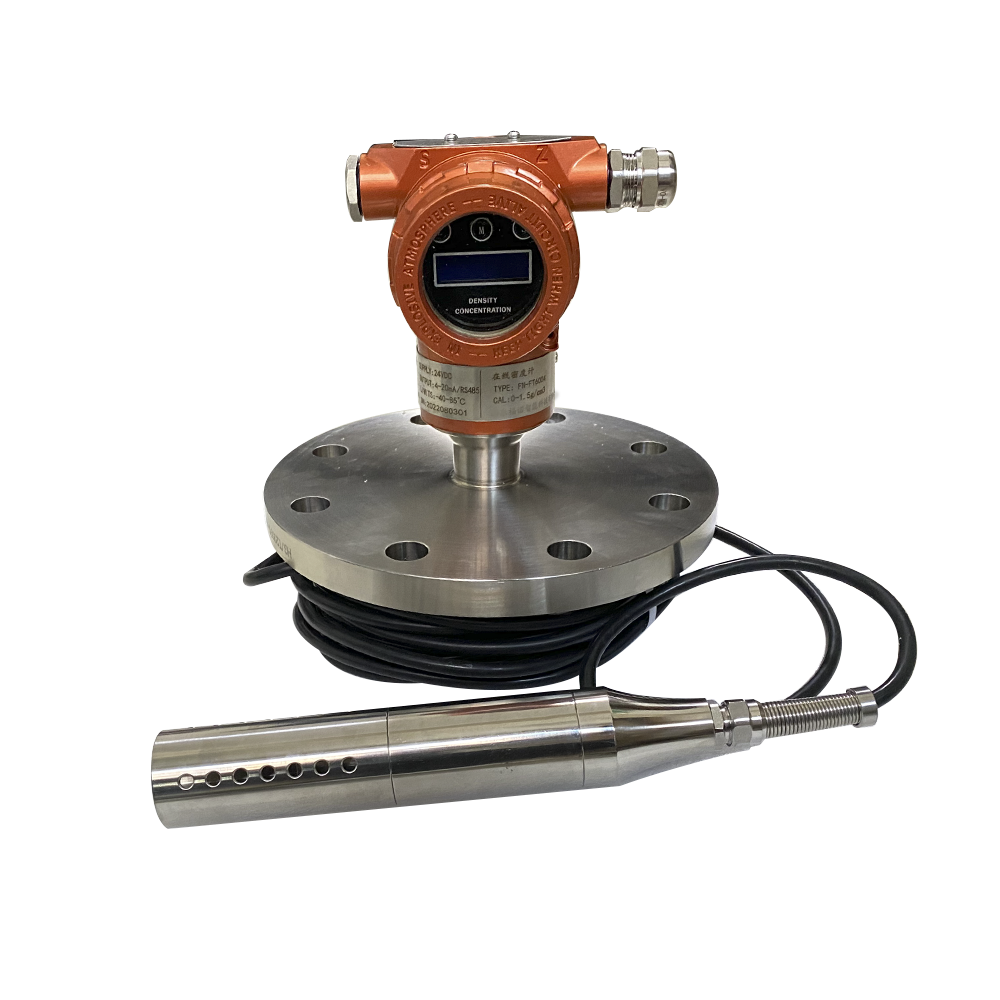
For storage tank level and density stratification monitoring, the LONN-700S split-type fork density meter is installed at multiple levels in the storage tank to detect density gradient (water layer, emulsion layer, sediment layer) — enabling the operator to identify when tank drainage is approaching the water draw-off point.
Lube Oil Blending Viscosity Control
The lube oil blending system is the highest-value viscosity control application in the refinery. A typical lube oil blending plant produces 50-200 MT per day of finished lube oil products across 15-25 grades. The blending manifold mixes base stocks and additive packages in controlled proportions, with the blending control system adjusting flow rates to maintain target viscosity setpoint.
LONN-DN100 split-type inline viscometers are installed at key positions in the blending manifold: one in the pre-blend header (before the additive injection point) and one in the finished product line (after the mixing tube). The 4-20mA viscosity signal feeds the distributed control system (DCS), which adjusts the base stock component flow rates in real time to maintain viscosity at setpoint.
The split-type design is particularly valuable for blending manifold installation: the viscometer sensor (immersed in the process line) is connected to the electronics housing (in the control room or instrument rack) by a 5-meter or 15-meter cable, eliminating the heat dissipation and access issues that make conventional integral-mount viscometers impractical in blending manifolds.
Alkylation Unit Acid Concentration Monitoring
The alkylation unit converts low-octane refinery streams (isobutane and butylenes) into high-octane alkylate — a premium gasoline blending component. The reaction uses concentrated sulfuric acid (88-94% H₂SO₄) as a catalyst. The acid concentration in the alkylation reactor must be maintained within the 88-94% range.
LONN-7000 ultrasonic sound velocity concentration meters are installed in the acid regeneration loop and in the reactor acid supply line, providing continuous concentration monitoring with ±0.5% accuracy. The non-contact ultrasonic principle — with the sensor isolated from the process fluid by a Hastelloy or PTFE window — provides reliable operation in this highly corrosive environment without the sensor wear and calibration drift typical of intrusive conductivity or pH-based concentration sensors.
Heavy Fuel Oil Combustion Optimization
Refineries with on-site power generation or fired heaters (crude distillation furnace, catalytic cracking regenerator temperature control) consume large volumes of heavy fuel oil. The viscosity of heavy fuel oil determines its combustion efficiency: at viscosities above 20 cP, droplet size increases and combustion efficiency drops; at viscosities below 10 cP, the fuel may not atomize properly in some burner designs.
The LONN-V7 high-viscosity inline viscometer covers the 0-5,000,000 cP range with ±3.0% full-scale accuracy, with its 0-5,000,000 cP measurement range and 300°C maximum process temperature, is installed in the heavy fuel oil preheater outlet line. The viscosity signal feeds the burner management system (BMS), which adjusts the fuel oil preheater temperature to maintain viscosity within the optimal combustion range.
Flare Gas Mass Flow Measurement
The refinery flare system receives pressure relief gas from every process unit. Flare gas volume measurement is required for greenhouse gas inventory reporting and for energy balance calculations. Mass flow measurement — rather than volumetric flow measurement — is required because the greenhouse gas emission factor depends on the mass of gas, not its volume.
The LONN-MFC thermal mass flow meter is installed at the flare header inlet. The thermal mass principle provides direct mass flow measurement — independent of gas composition variations — using two temperature sensors (ambient temperature and heated sensor temperature) and the thermal conductivity of the gas to calculate mass flow rate.
For large flare headers (DN300 and above), the LONN-UFM clamp-on ultrasonic flow meter provides non-intrusive flow measurement with pipe size coverage up to DN6000.
Recommended Instruments for the Petroleum Refining Solution
Density Measurement
| Instrument | Application | Accuracy | ATEX | Range |
|---|---|---|---|---|
| LONN6004 U-tube oscillating density meter | Crude oil custody transfer, product density | ±0.001 g/cm³ | Ex d IIC T6 | 0-5 g/cm³ |
| LONN-7000 ultrasonic concentration meter | Acid/caustic concentration | ±0.5% conc. | Ex d IIC T4 | Sound velocity: 500-2,000 m/s |
| LONN-700C ceramic fork density meter | High-temperature acid streams | ±0.001 g/cm³ | Ex d IIC T4 | 0-3 g/cm³ |
| LONN-700S split-type fork density meter | Storage tanks, density stratification | ±0.001 g/cm³ | Ex d IIC T4 | 0-3 g/cm³ |
Viscosity Measurement
| Instrument | Application | Range | ATEX | Key Feature |
|---|---|---|---|---|
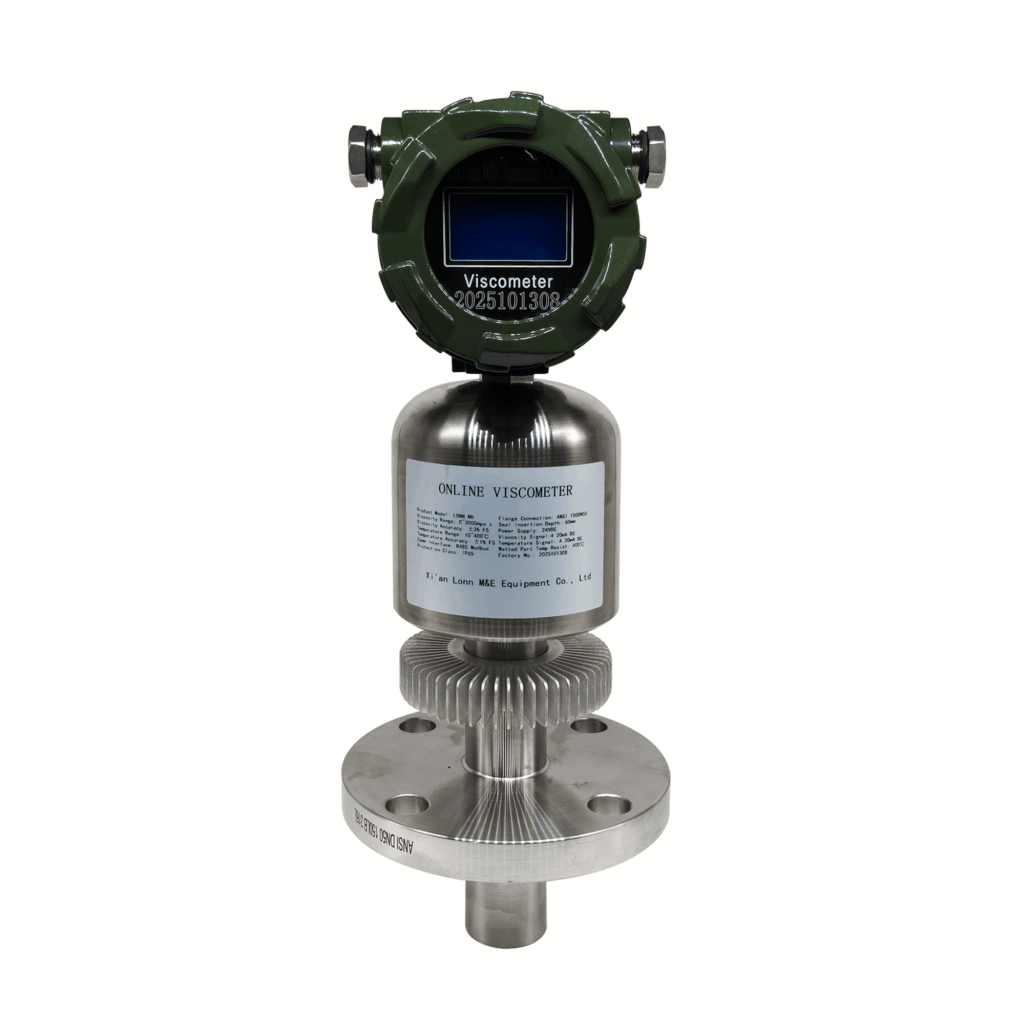
| LONN-ND80 tuning fork viscometer | Lube oil blending, pipeline monitoring | 0.5-5,000 cP | Ex d IIC T4 | Viscosity + density from one sensor |
| LONN-DN60 high-viscosity inline viscometer | Heavy fuel oil, bitumen | 0-5,000,000 cP | Ex d IIC T4 | 300°C max temperature |
| LONN-DN100 split-type viscometer | Blending manifold, custody transfer | 0.5-500,000 cP | Ex d IIC T4 | Remote electronics, 5-15m cable |
Flow Measurement
| Instrument | Application | Range | ATEX | Key Feature |
|---|---|---|---|---|
| LONN-MFC thermal mass flow meter | Flare gas, fuel gas | 0.5-150 NL/min | Ex d IIC T4 | Direct mass flow, no P/T compensation |
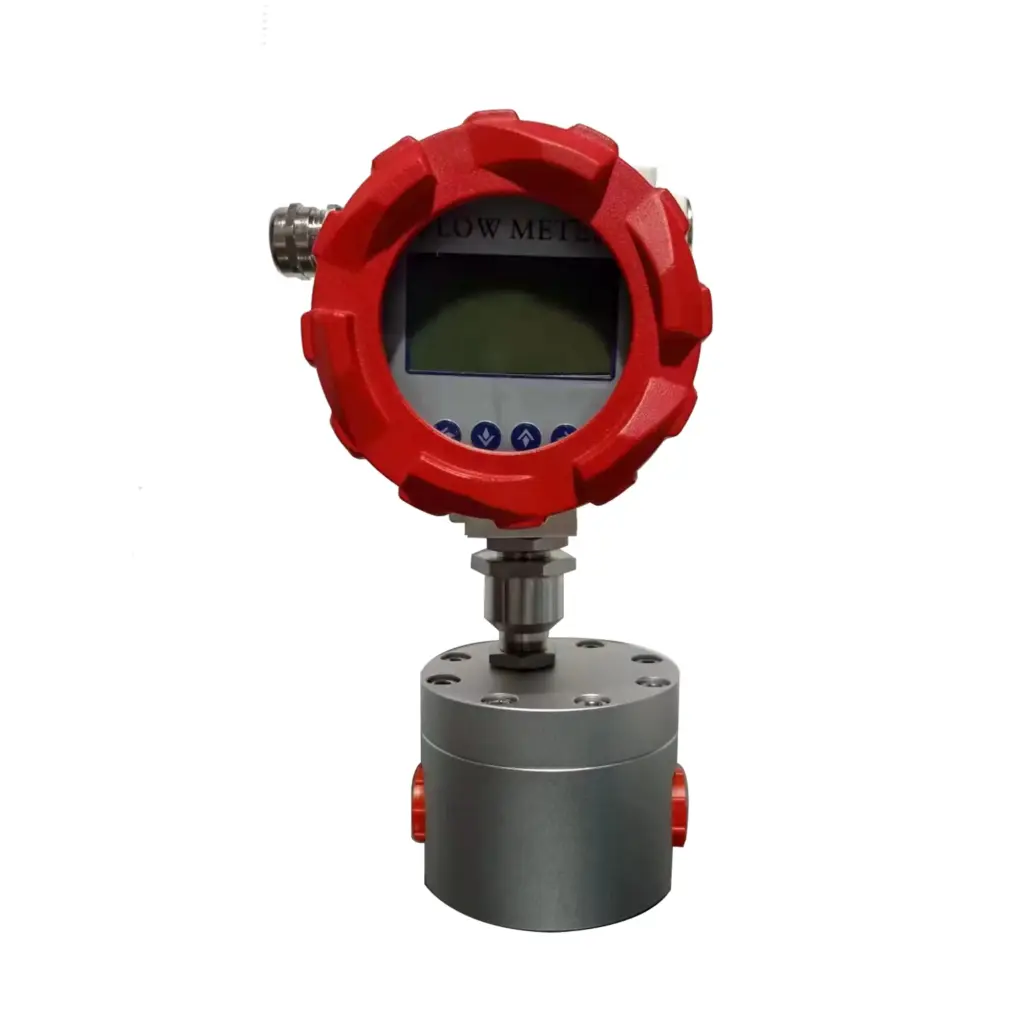
| LONN-GF gear flow meter | Viscous products, custody transfer | DN10-DN100 | Ex d IIC T4 | ±0.5% accuracy, self-lubricating |
| LONN-UFM clamp-on ultrasonic flow meter | Large pipes, non-intrusive | DN6-DN6000 | N/A | Zero pressure drop, IP65/IP67 |
Case Studies: Verifiable Results from the Petroleum Refining Solution
Case Study 1: Lube Oil Blending Closed-Loop Viscosity Control
Background: A refinery lube oil blending plant produced 18 ISO VG grades using laboratory sampling (rotational viscometer, 30-minute test cycle) for viscosity quality control. The viscosity conformance band of approximately ±8% caused grade boundary issues and customer complaints. Product giveaway — product shipped above the grade upper limit — represented approximately 3% of annual production volume.
Solution: Three LONN-DN100 split-type inline viscometers installed in the blending manifold, one for each viscosity range group (ISO VG 10-32, VG 46-150, VG 220-680). 4-20mA signal integration to the plant DCS. Closed-loop blending control adjusts component flow rates in real time to maintain viscosity at target setpoint.
Results:
- Viscosity conformance improved from ±8% to ±2% of target across all 18 grades
- Customer viscosity complaints: eliminated (previously 8-12 per year)
- Product giveaway reduced by 3% of total production volume — estimated annual value $2.4 million
- Payback period on viscometer investment: 4 months
Case Study 2: Alkylation Unit Sulfuric Acid Concentration Optimization
Background: An alkylation unit operating at 40,000 barrel-per-day alkylate production used laboratory sampling (4-hour cycle) for sulfuric acid concentration monitoring. Acid concentration was maintained by operator adjustment based on laboratory results. Overfeed events — acid concentration falling below 88% due to operator response delay — occurred approximately 4 times per year, causing production losses estimated at $50,000 per event.
Solution: Two LONN-7000 ultrasonic sound velocity concentration meters installed in the acid regeneration loop and reactor supply line. Continuous 4-20mA concentration signal to the DCS, with high/low alarms at 88% and 94% H₂SO₄. Automatic acid regeneration rate adjustment based on concentration feedback.
Results:
- Continuous concentration monitoring with ±0.5% accuracy — versus ±2% accuracy with laboratory sampling
- Overfeed events reduced from 4 per year to zero
- Estimated annual savings: $200,000 in acid cost and production loss prevention
- 3-year instrument uptime: 99.7%, no scheduled maintenance
Case Study 3: Flare Gas Greenhouse Gas Inventory Measurement
Background: A refinery with 350,000 barrel-per-day crude processing capacity was required to implement continuous flare gas flow measurement for EPA GHGRP Subpart W reporting. Previous flare gas estimation used conservative default emission factors, resulting in reported flare gas emissions approximately 40% above actual measured values — inflating the refinery’s reported greenhouse gas footprint and associated compliance costs.
Solution: Four LONN-MFC thermal mass flow meters installed at flare header sub-headers (before consolidation into the main flare header) and one LONN-MFC on the main flare header. Modbus RTU signal integration to the environmental monitoring system. Mass flow data used for continuous flare gas emission calculation with actual gas composition data.
Results:
- Measured flare gas emissions reduced reported GHG footprint by 38% — from 85,000 tonnes CO2e/year (estimated) to 52,700 tonnes CO2e/year (measured)
- Estimated annual value of GHG credit/allowance impact: $120,000 at $25/tonne CO2e
- Data quality for regulatory reporting: continuous, auditable, real-time
Frequently Asked Questions on the Petroleum Refining Solution
What is the accuracy requirement for crude oil custody transfer density measurement?
API MPMS Chapter 9 defines the accuracy requirements for custody transfer density measurement. For fiscal custody transfer applications, the LONN6004 U-tube oscillating density meter with ±0.001 g/cm³ accuracy meets the repeatability requirements of API MPMS 9.2 for Class A meters. This accuracy level is equivalent to approximately ±0.0005 g/cm³ repeatability and ±0.001 g/cm³ reproducibility under API MPMS test conditions.
For internal refinery transfer (non-custody), ±0.005 g/cm³ accuracy is typically acceptable. Confirm the specific requirements of your crude oil purchase contract with your trading and legal teams — custody transfer contracts specify the measurement standards, accuracy requirements, and dispute resolution procedures that apply.
How does tuning fork viscometer accuracy compare to rotational laboratory viscometers for lube oil blending?
The LONN-ND tuning fork viscometer provides ±1% of full scale accuracy under dynamic calibration conditions. This accuracy is equivalent to or better than the ±2-3% repeatability of a typical rotational laboratory viscometer (ASTM D445 kinematic viscosity measurement) when account is taken of the laboratory measurement uncertainty contributions: sample temperature control (±0.1°C introduces ±0.5-1% viscosity error), sample homogeneity (blending variations), and operator technique.
The decisive advantage of inline viscosity measurement is the elimination of sampling delay. A rotational laboratory viscometer test takes 30 minutes minimum. During that 30 minutes, the blending process continues without viscosity feedback — potentially producing a product that is significantly off-grade before the laboratory result is available. Inline viscosity measurement provides real-time feedback with a 1-second response time (LONN-ND T90 response), enabling closed-loop control with no dead time.
Can the same instrument measure both density and viscosity for lube oil applications?
The LONN-ND80 tuning fork viscometer provides simultaneous viscosity and density measurement from a single inline sensor. This dual-parameter capability is particularly valuable in lube oil applications: viscosity provides the blending control signal while density provides API gravity data for quality verification and volume-to-mass conversion.
The LONN-ND80 density accuracy of ±0.001 g/cm³ is sufficient for most lube oil quality verification applications. For custody transfer density measurement, the LONN6004 U-tube density meter provides higher accuracy (±0.001 g/cm³ with API MPMS compliance) but does not provide viscosity measurement.
What is required for refinery flare gas measurement compliance?
EPA Subpart W (40 CFR Part 98, Subpart W) and EU MRV (Regulation 2015/757) are the primary regulatory frameworks requiring flare gas measurement. Both frameworks require measurement of flare gas volume or mass flow rate, with requirements varying based on facility throughput and regulatory jurisdiction.
The LONN-MFC thermal mass flow meter provides the direct mass flow measurement required for accurate greenhouse gas inventory calculation. Mass flow measurement is preferred over volumetric flow measurement for flare gas because the mass of greenhouse gases — the quantity relevant for emission inventory — depends on gas composition as well as volume. Thermal mass flow measurement is independent of gas composition, providing accurate mass flow regardless of the varying flare gas composition typical of refinery flare headers.
What maintenance does inline process instrumentation require in refinery service?
Refinery process instrumentation in crude oil and heavy product service requires periodic maintenance — but the maintenance requirement varies significantly between instrument technologies.
The LONN-ND and LONN-DN100 tuning fork viscometers are virtually maintenance-free in refinery service: the vibrating fork sensor has no rotating seals, no wearing parts, and no process obstructions. The only maintenance is periodic calibration verification (recommended interval: 6-12 months depending on application).
The LONN-7000 ultrasonic concentration meter requires periodic window cleaning only when the Hastelloy or PTFE window accumulates fouling — typically 6-12 months in acid service depending on acid purity. The non-contact design means there are no electrodes to corrode and no reference solutions to maintain.
The LONN-GF gear flow meter requires periodic bearing inspection (typically annual) and recalibration verification — the self-lubricating design extends bearing life significantly compared to positive displacement meters in abrasive service.
Commissioning and Installation Best Practice in the Petroleum Refining Solution
Each LONNMETER petroleum refining solution instrument is supplied with pre-install engineering support: mounting orientation recommendations, straight run requirements (minimum 10 diameters upstream, 5 diameters downstream for flow meters), grounding guidance for ATEX hazardous area installations, and signal wiring specifications for DCS integration. Commissioning support includes on-site calibration verification against process reference conditions, P&ID review with your instrumentation team, and loop verification for 4-20mA or Modbus integration.
Request a Petroleum Refining Solution
Every refinery has a unique measurement challenge set — crude oil diet, process unit configuration, product slate, and measurement accuracy requirements. LONNMETER petroleum refining solution engineers work directly with refinery process and instrumentation teams to identify the optimal measurement solution for your specific requirements.
Before contacting us, prepare the following information:
- Crude oil feed range (API gravity, viscosity range, sulfur content)
- Key measurement points (tank farm, CDU, lube oil blending, alkylation, flare)
- Required accuracy per application
- Hazardous area classification at each measurement location
- Signal interface (4-20mA, Modbus RTU, HART, Profibus, DCS system)
- Whether applications involve custody transfer or process control
Email: anna@xalonn.com
LONNMETER — smartmeasurer.com
Fill out our RFQ form