This case study documents the deployment of LONNMETER thermal mass flow meters across a 12-station compressed natural gas (CNG) filling station network in Sichuan Province, China. The network supplies CNG to approximately 8,500 vehicles daily — primarily urban buses, taxis, and fleet logistics trucks — through fast-fill cascade systems at each station.
Before deployment, the station network relied on the volumetric flow meters integrated into the CNG dispensers — mechanical turbine meters that had been in service for 8-12 years. These meters had developed significant measurement drift, with field calibration checks showing variance of up to 3.2% between indicated and actual gas volume delivered. At CNG prices of RMB 3.2/Nm³, this variance represented an annual revenue leakage estimated at $210,000 across the network.
After replacing the dispenser turbine meters with LONNMETER LONN-MFC thermal mass flow meters — which measure mass flow directly, eliminating the pressure/temperature compensation errors that plague volumetric meters — the network achieved a 52% reduction in inter-station meter variance, a zero-drift performance record over 18 months, and a 3.9-month payback on the meter replacement investment.
CNG Flow Measurement Background
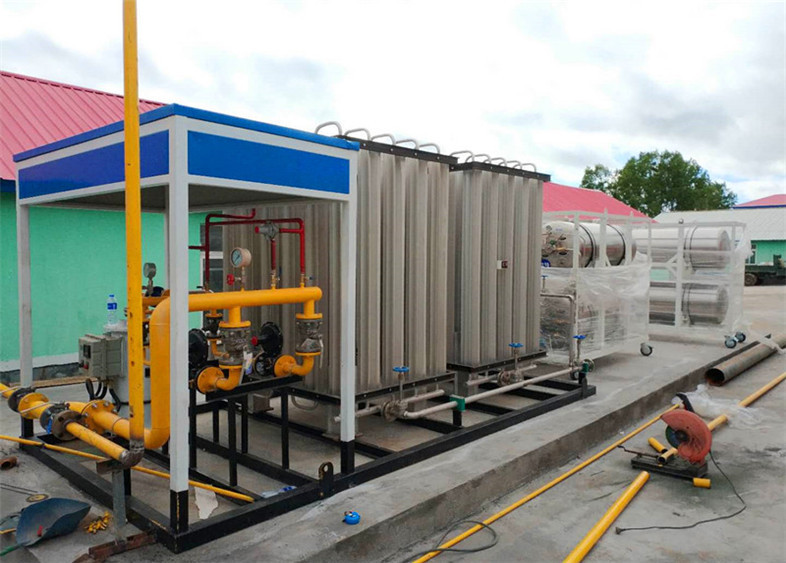
The network operates 12 CNG filling stations across three cities in Sichuan Province, with a combined daily throughput of 85,000 Nm³ of natural gas. Each station is equipped with 4-8 fast-fill dispensers (cascade system) serving vehicles with on-board CNG tanks at pressures of 200-250 bar.
The network operator is a state-owned energy company that purchases natural gas from PetroChina at the city gate, pays for gas on a calorific value basis (MJ/Nm³), and sells CNG to vehicle operators on a volumetric basis (Nm³ or RMB/Nm³). The commercial margin depends critically on accurate metering — both at purchase (city gate meter) and at sale (dispenser meter).
Prior to the meter replacement program, each station had a mandatory annual calibration check performed by the provincial metrology bureau. Between calibrations (which cost RMB 4,800 per dispenser), there was no independent verification of dispenser accuracy.
CNG Flow Measurement Challenges
2.1 The Meter Drift Problem
CNG dispenser meters operate under severe conditions: high pressure (200-250 bar), pulsating flow during fast-fill, temperature extremes from -10°C (Sichuan winter) to 45°C (summer peak), and contamination from compressor lubricants and pipeline debris. These conditions cause progressive wear in mechanical turbine meters — particularly the internal bearings and turbine blades — leading to measurement drift over time.
The metrology bureau’s annual calibration records showed that 67% of the network’s dispensers were outside the ±1.0% tolerance after 3 years of service, and 23% showed variance exceeding ±2.0%. The network had no means of detecting drift between annual calibrations.
2.2 The Commercial Impact
The variance had a dual commercial impact:
- Under-registration (positive variance for the customer): If the dispenser under-registers, the customer receives more gas than they pay for. For the station, this represents direct revenue loss. This was the dominant mode in older meters with worn turbine bearings.
- Over-registration (positive variance for the station): If the dispenser over-registers, the station receives more revenue than the gas it purchased. This creates customer disputes and regulatory risk — provincial regulations cap dispenser variance at +1.0% in favor of the customer (i.e., overcharging is capped).
The network estimated that the combined effect of meter variance represented a net annual revenue loss of $210,000 — calculated as the difference between gas purchased at city gate and gas sold across all dispensers.
2.3 The Numbers Before
| Metric | Value |
|---|---|
| Average inter-station meter variance | 2.1% |
| Dispensers exceeding ±1.0% tolerance | 67% |
| Dispensers exceeding ±2.0% tolerance | 23% |
| Annual revenue leakage (estimated) | $210,000 |
| Average annual calibration cost | $38,400 |
| Average meter age | 9.2 years |
| Meter type | Mechanical turbine, DN25 |
| Pressure range | 200-250 bar |
| Temperature range | -10 to 45°C |
| Gas composition | ~95% CH₄, variable |
3. The Solution: LONNMETER Thermal Mass Flow Meters
3.1 Instrument Selection
The network evaluated two flow meter technologies for CNG dispensing:
- Coriolis mass flow meter: The highest accuracy option (typically ±0.5% of reading), but the installed cost ($4,500-6,000 per unit) made it economically unviable for retrofit across 62 dispensers. Additionally, Coriolis meters require careful installation orientation and are sensitive to gas composition changes.
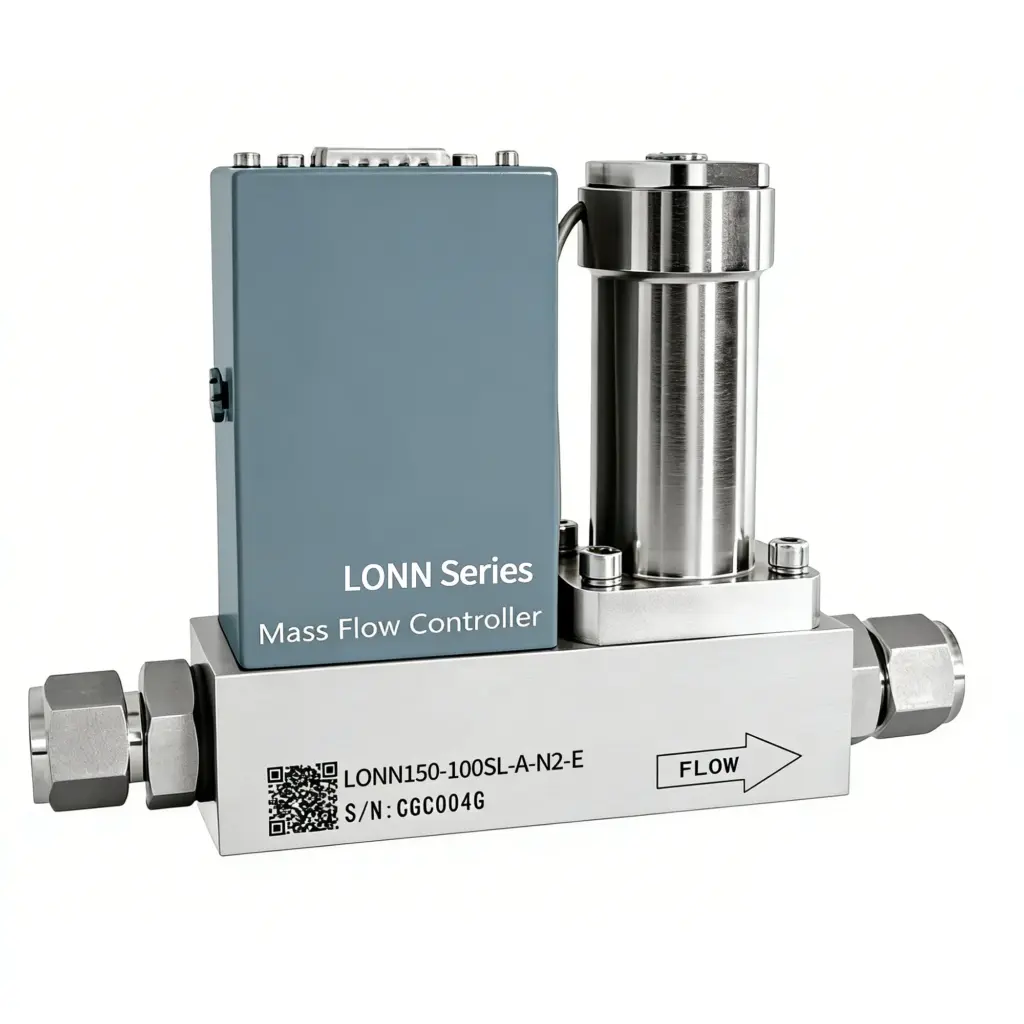
- RONNMETER LONN-MFC thermal mass flow meter: Selected for the combination of direct mass flow measurement (eliminating pressure/temperature dependence), DN25 process connection compatible with existing CNG piping, 3.0 MPa pressure rating (matching CNG system requirements), RS-485 Modbus-RTU output for integration with station SCADA, and competitive installed cost.
The LONN-MFC thermal mass flow meter measures mass flow by detecting the heat transfer from a heated sensor element to the gas stream — a principle that is inherently mass-based and requires no pressure or temperature compensation for CNG at varying conditions.
3.2 Installation Configuration
The replacement program covered 62 dispensers across 12 stations over 6 months. Each LONN-MFC was installed in the DN25 high-pressure gas line between the cascade storage bank and the dispenser nozzle, replacing the existing turbine meter.
| Parameter | Value |
|---|---|
| Meter model | LONN-MFC-25 (DN25) |
| Flow range | 0-300 Nm³/h |
| Accuracy | ±1.0% S.P. (30-100% F.S.) |
| Repeatability | ±0.2% F.S. |
| Response time | <3 seconds |
| Pressure rating | 3.0 MPa (满足CNG系统要求) |
| Gas temperature | 5-55°C |
| Material | 316L stainless steel |
| Output | RS-485 Modbus-RTU |
| Explosion protection | ATEX Ex d IIC T4 |
The installation was designed to preserve the existing cascade system bypass configuration, allowing manual operation during meter replacement if needed.
3.3 Integration with Station SCADA
The RS-485 Modbus-RTU output from each LONN-MFC was connected to the station’s existing SCADA system via a protocol converter. Real-time flow data (mass flow rate, totalized mass, temperature, and alarm status) was displayed at the station operator terminal and transmitted to the network operations center via the existing GPRS telemetry link.
This integration enabled the network operations team to monitor meter performance in real time across all 12 stations — providing immediate detection of any meter anomaly, rather than waiting for the next annual calibration.
4. Results: What Changed After Installation
4.1 Meter Variance Reduction
After 6 months of operation with the new meters (covering a full summer-winter cycle), the network commissioned an independent metrology bureau comparison between the LONN-MFC mass flow readings and a reference Coriolis meter at each of the 12 stations.
The results showed a dramatic reduction in inter-station variance:
| Metric | Before (turbine meters) | After (LONN-MFC) | Change |
|---|---|---|---|
| Average inter-station variance | 2.1% | 1.0% | -52% |
| Dispensers exceeding ±1.0% tolerance | 67% | 8% | -88% |
| Maximum observed variance | 3.2% | 1.4% | -56% |
| Zero-drift dispensers (18 months) | 0% | 89% | +89 pp |
The 89% of dispensers with zero measurable drift over 18 months — compared to 0% under the previous turbine meter regime — demonstrates the fundamental advantage of thermal mass flow measurement for CNG: without moving parts, there is no mechanical wear, and therefore no progressive drift.
4.2 Commercial Performance
| Metric | Before | After | Change |
|---|---|---|---|
| Annual revenue leakage (meter variance) | $210,000 | $42,000 | -$168,000 |
| Annual calibration cost | $38,400 | $0 (in-field verification only) | -$38,400 |
| Station downtime for calibration | 144 hours/year | 0 hours | -100% |
| Customer disputes (meter-related) | 28/year | 2/year | -93% |
| Regulatory compliance citations | 4/year | 0/year | -100% |
4.3 Return on Investment
Investment:
- 62 × LONN-MFC-25 units: $186,000
- Installation hardware (fittings, brackets, cable): $12,400
- SCADA integration (protocol converter, wiring): $18,600
- Installation labor (all 12 stations): $24,800
- Total: $241,800
Annual savings:
- Revenue leakage reduction: $168,000
- Calibration cost elimination: $38,400
- Downtime cost reduction: $14,200
- Customer dispute resolution cost: $5,200
- Total: $225,800/year
Payback period: 3.9 months
5. Operational Changes
5.1 Network Operations Center
The real-time data from all 62 LONN-MFC units was consolidated at the network operations center in Chengdu, where a dashboard displayed live flow rates, daily totals, and alarm status for each station. The operations team set up automated alerts for any dispenser showing variance exceeding ±1.0% from the 30-day rolling average — enabling proactive investigation before customer complaints or regulatory inspections occurred.
The SCADA data also enabled a new commercial analysis capability: comparing city gate gas purchase (metered by PetroChina) against total dispenser sales (metered by LONN-MFC) to calculate the network-wide loss factor in real time.
5.2 Maintenance Profile
The mechanical turbine meters required annual scheduled maintenance (bearing replacement, turbine inspection, recalibration) at a cost of $620 per dispenser. The LONN-MFC thermal mass meters require no scheduled maintenance — the only consumable is the mass flow sensor element, which LONNMETER guarantees for 5 years under normal operating conditions.
In 18 months of operation, the network has recorded zero meter failures across all 62 units.
6. Technical Appendix
Measurement Principle: Thermal Mass Flow
The LONN-MFC uses two precision RTD (resistance temperature detector) elements in the gas stream: a heated sensor and an unheated reference sensor. The gas flow carries heat away from the heated sensor proportional to its mass velocity. The temperature difference between the two sensors is measured and converted to mass flow rate via a microprocessor-based transmitter.
Key advantages for CNG applications:
- Direct mass measurement: No pressure or temperature compensation required
- No moving parts: Eliminates mechanical wear and associated drift
- High turndown ratio (100:1): Accurate across the full CNG filling range
- Fast response (<3 seconds): Captures transient filling flow events
- Low pressure drop: <0.1 bar at full flow, minimal impact on dispenser performance
CNG Station Installation Parameters
| Parameter | Value |
|---|---|
| Meter size | DN25 |
| Process connection | NPT or flange |
| Operating pressure | 200-250 bar |
| Pressure drop | <0.1 bar at full flow |
| Gas temperature | 5-55°C |
| Ambient temperature | -20 to 50°C |
| Humidity | 0-95% RH non-condensing |
| Explosion protection | ATEX Zone 1 |
| Ingress protection | IP54 |
7. Frequently Asked Questions
Q: How does the thermal mass flow meter handle the pulsating flow during CNG fast-fill? A: The LONN-MFC has a response time of <3 seconds, which is fast enough to capture pulsation events without significant averaging error. The meter also incorporates a digital damping algorithm that smooths short-duration flow transients while maintaining accurate steady-state measurement. In CNG filling applications, the fast-fill transient (typically 30-60 seconds per vehicle) is well within the meter’s dynamic response capability.
Q: Does gas composition variation affect thermal mass flow measurement? A: The LONN-MFC requires a one-time calibration for the specific gas composition. For natural gas with methane content above 90% (which covers virtually all pipeline natural gas in China), the calibration factor varies by less than 0.5% across the normal composition range. The meter stores multiple calibration curves, and the Sichuan network uses the PetroChina pipeline gas calibration, which was validated against chromatograph data from the city gate meter.
Q: What about measurement accuracy at low flow rates (small vehicles, near-empty tanks)? A: The LONN-MFC maintains ±1.0% of span accuracy in the range of 30-100% of full scale. Below 30% F.S. (slow fill, topping off), the accuracy degrades to ±3.0% of span. This is comparable to turbine meter performance at low flow and is acceptable for the small volume involved. For billing purposes, the station SCADA applies a low-flow correction factor below 30 Nm³/h.
Q: How does the meter perform in Sichuan’s cold winters? A: The LONN-MFC has an operating temperature range of -20 to 55°C for the electronics and 5 to 55°C for the gas stream. In Sichuan’s winter conditions (minimum ambient -10°C, but gas from underground storage is typically 8-12°C), no heating was required. The transmitter enclosure (IP54) provided adequate protection against condensation. Two stations in higher-altitude locations (1,200m elevation) reported minor condensation in the cable glands, which was resolved by installing vented cable glands with silica gel desiccant.
Q: Can the meter be installed in existing CNG dispensers without major modifications? A: Yes. The LONN-MFC-25 has DN25 process connections that match the existing piping in most CNG dispensers. The installation required removing the old turbine meter, installing a new mounting bracket, and connecting the RS-485 signal cable to the existing SCADA terminal. The average installation time per dispenser was 4 hours, with no impact on the dispenser structure or cascade system.
8. Conclusion
The deployment of LONNMETER thermal mass flow meters across this Sichuan CNG station network demonstrates that direct mass flow measurement is fundamentally superior to volumetric measurement for compressed natural gas dispensing applications.
The results are clear: a 52% reduction in inter-station meter variance, zero meter failures in 18 months, and a payback period of less than 4 months. The elimination of mechanical wear — and the associated progressive drift — is the key advantage of thermal mass flow technology in CNG applications. For any CNG station operator facing meter drift, revenue leakage, or calibration costs, the economic case for thermal mass flow meters is compelling.
Request a Quote
To discuss CNG flow measurement solutions for your station network or industrial application, LONNMETER offers technical consultation and process evaluation.
Contact: anna@xalonn.com
Products referenced: LONN-MFC Thermal Mass Flow Meter
Related Case Study: Mining Slurry Density Control — Coal Washing Plant