Introduction
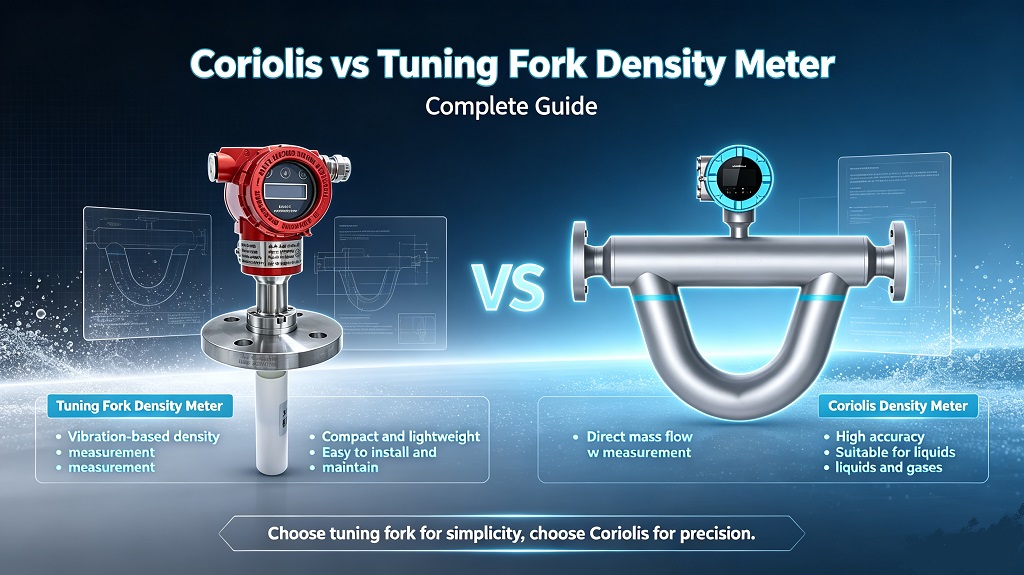
Two of the most precise density measurement technologies on the market are the Coriolis mass flow meter and the tuning fork density meter. Both deliver continuous, real-time density data with accuracy that approaches laboratory standards. Both are fully non-nuclear, avoiding the licensing and safety burden of radiometric alternatives. Both are installed directly in the process line.
But they are fundamentally different instruments, engineered around different physics, priced an order of magnitude apart, and optimal for very different applications.
A Coriolis meter is a precision flow instrument that happens to measure density as a by-product of its mass flow measurement. A tuning fork density meter is a dedicated density instrument that measures fluid density directly from resonant frequency shift — and in many models, viscosity as well. Confusing the two costs projects dearly: either overpaying for flow capability you do not need, or under-specifying accuracy for custody-grade service.
This guide delivers an engineer-to-engineer coriolis vs tuning fork density meter comparison: the physics, the real performance numbers, the total cost of ownership, and a decision framework used by LONNMETER field engineers across chemical, petroleum, food, and pharmaceutical installations worldwide. Any coriolis vs tuning fork density meter evaluation should start with the physics below, then map the application requirements to the capability table in section 3.
How Each Technology Works
Coriolis Density Measurement Principle
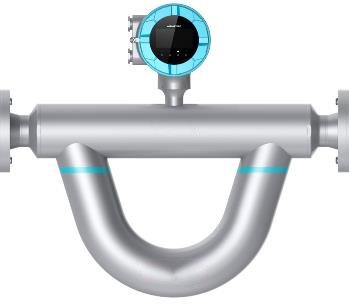
A Coriolis meter contains one or more vibrating tubes (straight or U-shaped) through which the process fluid flows continuously. The tubes are driven to oscillate at their natural resonant frequency. Fluid flowing through a vibrating tube experiences a Coriolis force that causes a measurable phase shift between the inlet and outlet ends of the tube — this phase shift is directly proportional to mass flow rate.
The same vibrating tube provides a second measurement: the resonant frequency of the tube depends on the total mass of the tube plus the fluid inside it. Since the tube mass is fixed and the tube volume is fixed, the resonant frequency is directly proportional to the density of the fluid inside.
So a single Coriolis meter simultaneously reports:
- Mass flow rate (from Coriolis phase shift) — typically ±0.1% of rate
- Density (from resonant frequency) — typically ±0.0005 to ±0.002 g/cm³
- Temperature (from an integral RTD)
- Volumetric flow (calculated: mass flow ÷ density)
Key physical characteristics:
- Fluid flows through the vibrating tube (full-bore, no insertion element)
- Two measurements from one instrument (mass flow + density)
- Accuracy ±0.0005 g/cm³ on premium models, ±0.002 g/cm³ typical
- Significant pressure drop (0.5–3 bar depending on tube design and size)
- Practical upper size limit ~DN100–DN150 before cost becomes prohibitive
- Requires full tube at all times (no partial fill, no gas entrainment)
Tuning Fork Density Measurement Principle
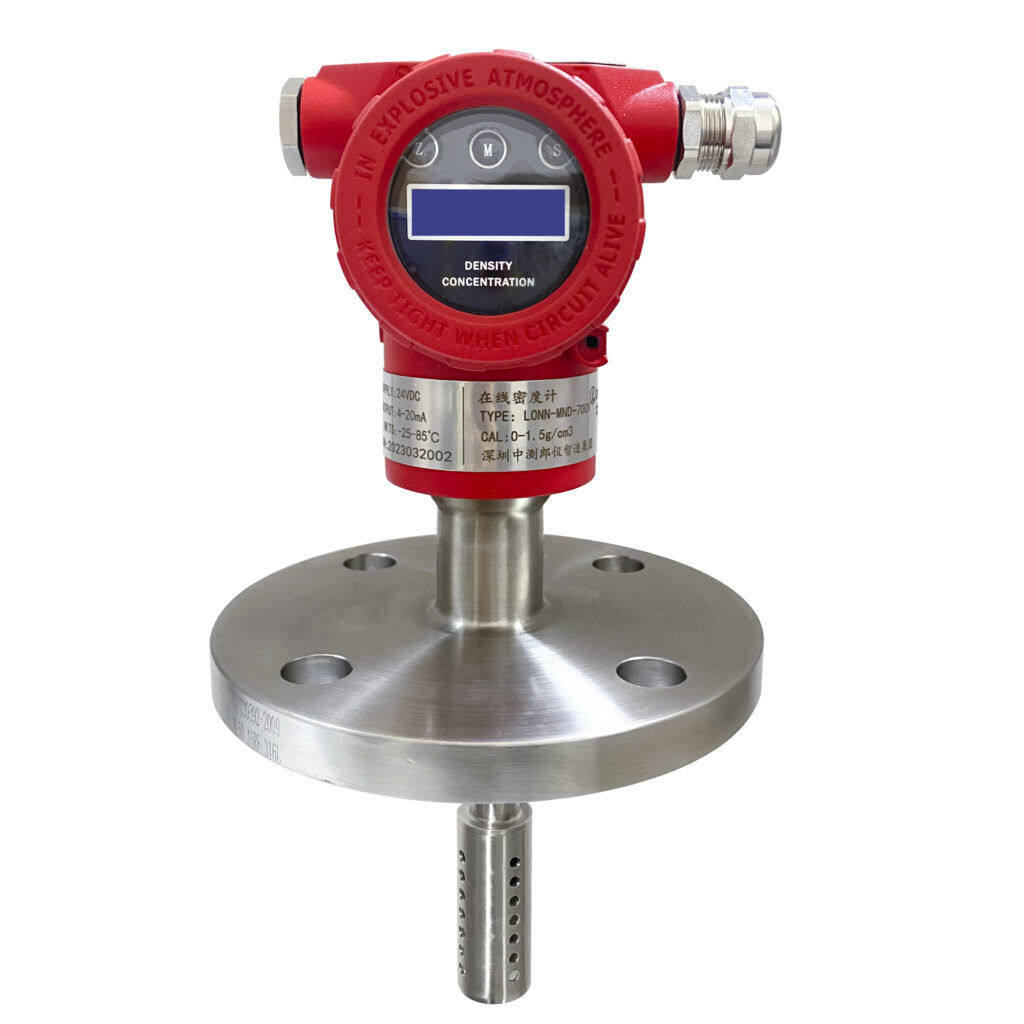
A tuning fork density meter uses a pair of metal tines that are inserted into the fluid stream and excited at their natural resonant frequency by a piezoelectric actuator. As the surrounding fluid density increases, the effective mass loading on the tines increases, lowering the resonant frequency. The frequency shift — measured with sub-Hertz resolution — is converted to density through a factory calibration.
Because the tines measure the fluid surrounding them (not fluid channeled through an internal tube), a tuning fork density meter:
- Creates essentially zero pressure drop (tines are thin, streamlined)
- Has no size limitation — the same sensor inserts into DN25 or DN600 pipe
- Can be installed in a by-pass loop and removed under flow via isolation valves
- Measures viscosity simultaneously from the damping of oscillation amplitude (on dual-parameter models)
Key physical characteristics:
- Wetted element: metal or ceramic tines immersed in the process fluid
- Accuracy ±0.001 to ±0.002 g/cm³ (tuning fork); ±0.002 g/cm³ (LONN-700CM standard)
- Negligible pressure drop (<0.05 bar)
- No pipe-size restriction; insertion design scales to any line size
- Response time ≤1 second
- Minimum density ~0.5 g/cm³; maximum ~2.5 g/cm³ (standard), extended ranges available
Head-to-Head Comparison
| Parameter | Coriolis Density Meter | Tuning Fork Density Meter |
|---|---|---|
| Measurement principle | Resonant frequency of vibrating tube carrying full fluid flow | Resonant frequency shift of tines immersed in fluid |
| Primary function | Mass flow meter (density as secondary output) | Dedicated density meter |
| Typical density accuracy | ±0.0005 to ±0.002 g/cm³ | ±0.001 to ±0.002 g/cm³ |
| Repeatability | ±0.0002 g/cm³ | ±0.0005 g/cm³ |
| Mass flow measurement | Yes (±0.1% of rate) | No |
| Viscosity measurement | No | Yes (dual-parameter models) |
| Pressure drop | 0.5–3.0 bar (significant) | <0.05 bar (negligible) |
| Pipe size limitation | Practical limit ~DN100–DN150 | None (DN25 to DN600+) |
| Flow velocity requirement | Full tube, any reasonable velocity | No minimum; works in static fluid |
| Bubble tolerance | Poor (gas voids cause errors) | Moderate (small bubbles tolerated) |
| Instrument cost | $15,000–$60,000+ | $4,500–$9,000 |
| Installation cost | High (flanged spool, supports, alignment) | Low–Moderate (flange or by-pass loop) |
| Maintenance burden | Zero-moving-part tube; zero-point drift checks | Tine cleaning in fouling service |
| Wetted materials | 316L SS, Hastelloy C-22/C-276, titanium | 316L SS, Hastelloy C-276, ceramic-tined |
| Temperature range | –200°C to +350°C (wide) | –40°C to +200°C (standard) |
| Pressure rating | Up to 100+ bar | Up to 100 bar |
| Hygienic/sanitary option | Yes (3-A, EHEDG models) | Yes (sanitary designs) |
| Best-fit applications | Custody transfer, mass balance, batching, density+flow | Concentration control, density-only monitoring, viscosity+density |
Where Coriolis Wins
1. Custody Transfer and Mass Balance
When the application requires both mass flow and density with the highest defensible accuracy — petroleum product transfer, chemical batching, LNG measurement, refinery mass balance — a Coriolis meter is the standard of practice. It replaces a separate flow meter plus a separate density meter with a single instrument, and its density output is used internally to correct the mass flow measurement for density effects.
For custody transfer of high-value products, the ±0.0005 g/cm³ density accuracy and ±0.1% mass flow accuracy of a premium Coriolis meter provide the measurement certainty required for commercial transactions.
2. Applications Requiring Density Plus Flow
Any process where you need density and accurate flow at the same point benefits from Coriolis:
- Blending systems that ratio components by mass
- Batch filling where delivered mass must be exact
- Chemical injection where mass dose accuracy matters
- Reactor feed where mass-based stoichiometry is critical
A tuning fork density meter provides no flow information — you would need a separate flow meter, adding cost, piping, and another calibration point.
3. Very Wide Temperature Windows
Coriolis meters operate from cryogenic temperatures (–200°C for LNG service) to high-temperature process (+350°C with appropriate electronics) across a single instrument design. Tuning fork density meters are typically limited to –40°C to +200°C. For LNG loading, cryogenic chemical service, or high-temperature polymer processes, Coriolis is the practical choice.
4. Zero Dead Volume and CIP Compatibility
Because fluid flows through a smooth, continuous tube with no protrusions, Coriolis meters are inherently hygienic. Premium sanitary models meet 3-A and EHEDG requirements with full CIP/SIP compatibility. In pharmaceutical and food applications requiring both flow and density, the Coriolis meter eliminates dead legs entirely.
Where Tuning Fork Wins
1. Cost — Up to 10× Lower Capital Investment
A tuning fork density meter costs $4,500–$9,000. A Coriolis meter costs $15,000–$60,000 depending on line size and accuracy class. For applications that need density only — concentration monitoring, process control, product quality trending — spending 3–10× more for mass flow capability you will never use is difficult to justify.
For a plant monitoring acid concentration at 10 points, the difference is decisive:
- 10 × tuning fork at $6,000 average = $60,000
- 10 × Coriolis at $25,000 average = $250,000
The tuning fork installation pays back in months; the Coriolis installation may never pay back if mass flow is not required.
2. Large Pipe Diameters (>DN150)
Coriolis meters become exponentially more expensive and physically massive above DN100–DN150. A DN300 Coriolis meter is a specialty item costing $100,000+ and requiring structural support for its weight.
A tuning fork density meter inserts through a small flange into the same DN300 (or DN600) line for the same $6,000. For large-diameter pipelines, water mains, slurry lines, and refinery transfer lines where density is monitored but flow is measured by other means, the tuning fork is the only economical direct-density option.
3. Negligible Pressure Drop
A tuning fork creates <0.05 bar pressure drop. A Coriolis meter creates 0.5–3.0 bar across its tube bundle — energy that must be supplied by the pump. In low-pressure gravity-fed systems, high-viscosity fluids, or applications where pump head is limited, the Coriolis pressure drop can be prohibitive.
Example: A gravity-fed coating line with 1.5 bar available head. A Coriolis meter consuming 1.2 bar leaves 0.3 bar for the rest of the system — marginal operation. A tuning fork consuming 0.02 bar preserves nearly all available head.
4. Viscosity Plus Density in One Sensor
Dual-parameter tuning fork models (LONN-V7) measure both density and viscosity from the same tines. Paint, coating, adhesive, ink, and polymer processes often need both properties — the tuning fork delivers both from one process penetration, where a Coriolis meter provides density only and a separate viscometer would be required. For this class of process, the coriolis vs tuning fork density meter decision is straightforward: tuning fork, because Coriolis technology simply cannot deliver the viscosity parameter.
5. Static or Low-Flow Service
A tuning fork measures fluid density even when flow stops — the tines simply need to be immersed. Coriolis meters require continuous full-bore flow; they cannot measure density in a static vessel or a line that is periodically idle. Storage tank density monitoring, batch vessels, and start-up verification favor the tuning fork.
6. By-Pass Installation and Hot Serviceability
A tuning fork in a by-pass loop with isolation valves can be removed, cleaned, and verified without process shutdown. Coriolis meters are inline spool pieces — removing one means depressurizing and opening the line. In continuous processes where shutdown costs $10,000–$100,000 per hour, the tuning fork’s hot-serviceability is a decisive operational advantage.
Where Each Technology Struggles
Coriolis Limitations
- Cost at scale: Above DN150, price rises exponentially; large-line custody transfer usually uses sampling + lab or separate density instruments instead.
- Pressure drop: 0.5–3.0 bar across the tube bundle limits use in low-head and high-viscosity services.
- Gas entrainment: Entrained gas changes tube damping and density reading; two-phase flow is a known failure mode requiring gas-tolerant designs or degassing.
- Zero-point drift: Coriolis meters require periodic zero-point verification (typically after installation, after line pressure changes, and at intervals) to maintain density accuracy.
- Erosion in abrasive service: The tube bundle creates high local velocities; abrasive slurries can erode thin-walled tubes. Not recommended for slurry service.
- Vibration sensitivity: External pipe vibration near the tube frequency can corrupt readings; installation requires careful support and sometimes isolation.
Tuning Fork Limitations
- Suspended solids: Standard metal tines tolerate only ~5–10% solids before deposits or particle wedging cause drift. Ceramic-tined versions (LONN-700C) extend tolerance but not to true slurry duty.
- Abrasive wear: In high-velocity abrasive flows, metal tines wear; ceramic tines (1200+ HV hardness) are required for abrasive service.
- Fouling service: Sticky or scaling fluids deposit on tines, shifting calibration. Cleaning is required — by-pass loop installation is the standard mitigation.
- No flow measurement: Density only. If the application also needs accurate flow, a separate flow meter is required.
- Temperature envelope: Standard models rated to +150°C; high-temperature (split electronics) versions to +200°C. Above that, Coriolis or ultrasonic designs may be required.
LONNMETER Product Recommendations
| Application | Recommended Technology | Recommended Model | Key Feature |
|---|---|---|---|
| Density-only concentration control | Tuning Fork | LONN-700CM | ±0.002 g/cm³, 4-20mA + Modbus |
| Density + viscosity monitoring | Tuning Fork | LONN-V7 | Dual parameter, single sensor |
| Abrasive slurry (mining, minerals) | Ultrasonic | LONN7000 | Up to 40% solids, non-intrusive |
| High-temperature service (to +200°C) | Split Tuning Fork | LONN-700S | Remote electronics, Ex d option |
| Clean, high-accuracy process | Tuning Fork | LONN-700CM | ±0.002 g/cm³, custody-grade option |
| Coriolis-required applications | Third-party Coriolis | — | LONNMETER does not manufacture Coriolis; we specify and integrate partner units when mass flow + density is required |
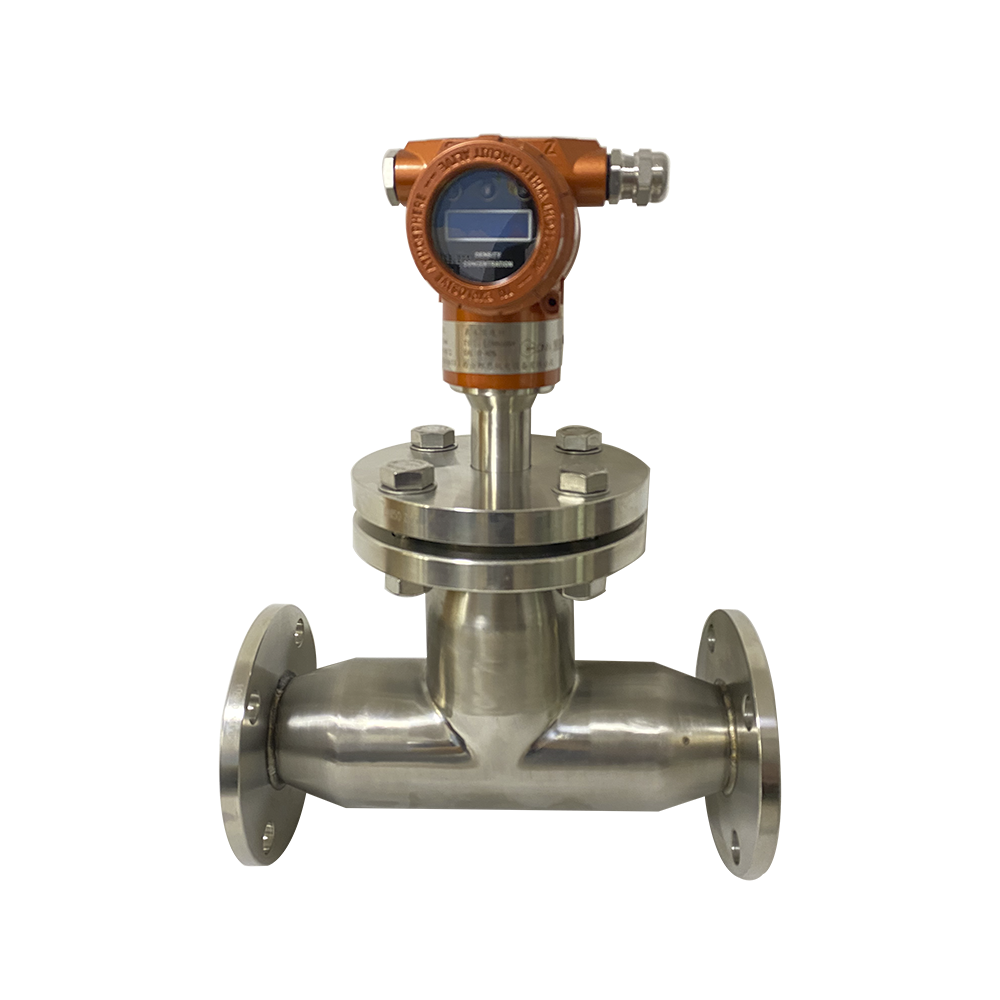
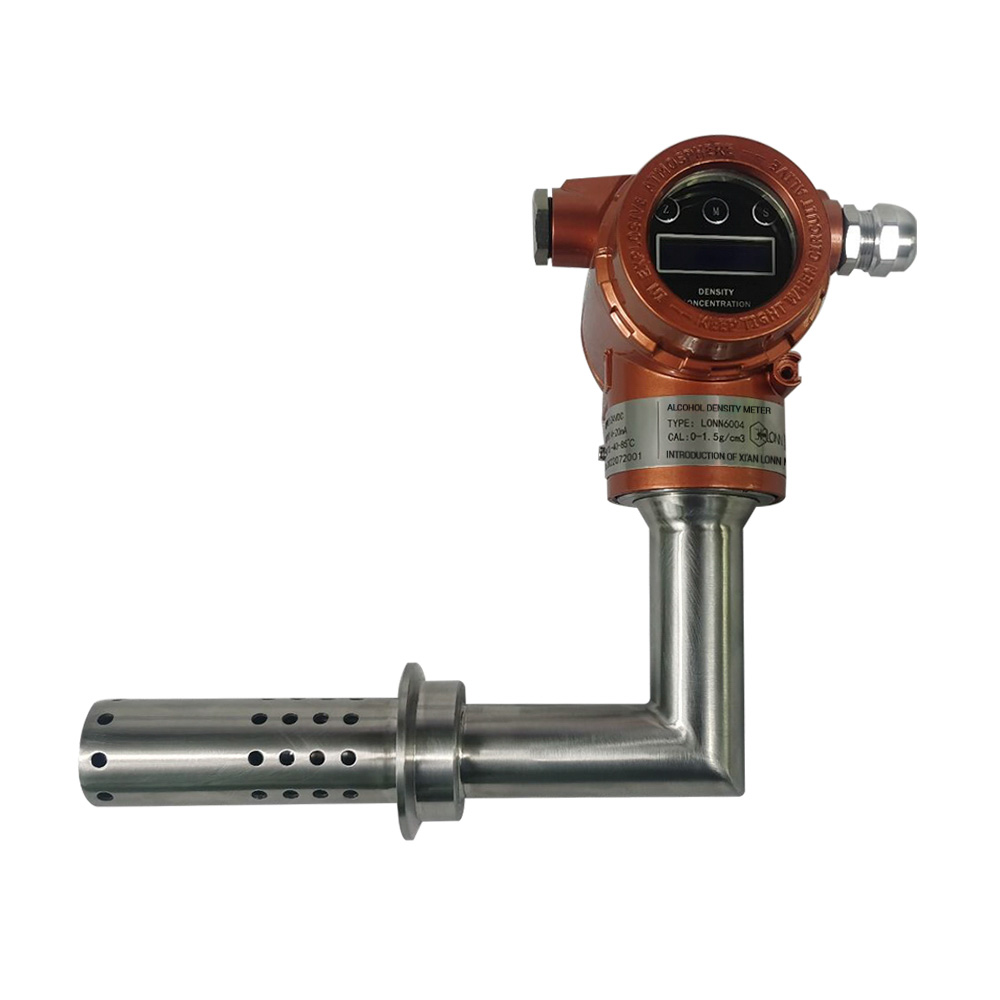
An honest note on Coriolis: LONNMETER does not manufacture Coriolis meters — we specialize in tuning fork, ultrasonic, and U-tube density/concentration instruments. When a project genuinely requires integrated mass flow and density (custody transfer, mass balance, batching), we specify and integrate Coriolis meters from established manufacturers as part of a complete measurement solution. When the requirement is density alone — the majority of process applications — our tuning fork instruments deliver comparable density accuracy at a fraction of the cost. That distinction, stated plainly, is exactly how we advise customers on the coriolis vs tuning fork density meter question: buy the capability the application needs, nothing more.
Frequently Asked Questions
Q1: In a coriolis vs tuning fork density meter comparison, which is more accurate?
Coriolis meters deliver slightly higher density accuracy — ±0.0005 g/cm³ on premium models versus ±0.001 to ±0.002 g/cm³ for tuning fork instruments. Both exceed the requirements of the vast majority of process control applications, where ±0.002 g/cm³ is more than sufficient.
The accuracy difference matters mainly in custody transfer and high-value mass balance applications. For concentration monitoring, quality control, and process control — the most common density applications — both technologies perform to requirement, and the decision should be driven by cost, pressure drop, and whether flow measurement is also needed.
Q2: Why is a Coriolis meter so much more expensive than a tuning fork density meter?
A Coriolis meter is a precision flow instrument with complex tube geometry, vibration isolation, advanced electronics, and multi-variable measurement capability. It must maintain dimensional stability to micro-level tolerances because its mass flow accuracy depends on tube geometry. Typical instrument cost is $15,000–$60,000+ depending on size.
A tuning fork density meter is a single-parameter insertion instrument with a simple resonant element — the manufacturing complexity and material cost are far lower, typically $4,500–$9,000. The price difference reflects capability: you pay for mass flow measurement, wide temperature range, and full-bore hygienic construction in a Coriolis meter. If you do not need those capabilities, the tuning fork is the economically rational choice.
Q3: Does a tuning fork density meter create pressure drop?
Negligibly — typically less than 0.05 bar. The tines are thin and streamlined, causing almost no flow restriction. This is one of the tuning fork’s major advantages over Coriolis, which creates 0.5–3.0 bar pressure drop across its internal tube bundle.
In gravity-fed systems, high-viscosity fluids, or applications with limited pump head, the Coriolis pressure drop can require pump upgrades or restrict throughput. A tuning fork installs without any meaningful impact on hydraulics.
Q4: Can a Coriolis meter handle slurries?
No — Coriolis meters are not suitable for abrasive slurry service. The high-velocity flow through the tube bundle erodes thin-walled tubes, and entrained particles can cause measurement instability. For slurry density measurement, ultrasonic (non-intrusive, up to 40% solids) or ceramic-tined instruments are the appropriate choices.
For mining, mineral processing, and dredging applications, LONNMETER’s LONN7000 ultrasonic density meter is the recommended solution — no wetted sensor element, nothing to erode, and proven multi-year service in copper, iron ore, and coal slurry applications.
Q5: Does the tuning fork density meter need calibration like a Coriolis meter?
Both technologies require periodic verification, but the procedures differ. Coriolis meters require zero-point verification — the meter must be isolated, emptied, or filled with a known fluid and the zero reading confirmed. This is a formal procedure recommended after installation, after line pressure changes, and at scheduled intervals.
Tuning fork density meters require reference verification — comparing the reading against a certified reference fluid or a laboratory measurement of a grab sample. The recommended interval is monthly for critical applications, quarterly for general process control. Neither technology requires the radioactive source handling, leak testing, or licensing of nuclear density gauges.
Q6: Which technology is better for custody transfer in a coriolis vs tuning fork density meter decision?
If the custody transfer requires both mass flow and density (petroleum product transfer, chemical sales), Coriolis is the industry standard. If the custody transfer is density-based — for example, concentration-graded product pricing or interface detection — a high-accuracy tuning fork density meter verified against laboratory standards on a documented schedule is an accepted and defensible solution at substantially lower cost.
The key is documentation: a written calibration protocol, NIST-traceable reference standards, and a verification log. Both technologies are non-nuclear, eliminating the licensing, safety, and decommissioning burden of radiometric gauges.
Q7: Can one tuning fork sensor measure both density and viscosity?
Yes. Dual-parameter tuning fork models measure density from the resonant frequency shift and dynamic viscosity from the damping of the oscillation amplitude — both from the same pair of tines. This is valuable in paint, coating, adhesive, ink, and polymer applications where both properties drive quality.
A Coriolis meter provides density and flow but not viscosity. A process requiring density, viscosity, and flow would need a Coriolis meter plus a viscometer — or a tuning fork for density/viscosity plus a flow meter, depending on which measurements are truly required.
Q8: What is the total cost of ownership difference?
For a density-only application over 10 years:
- Coriolis: $25,000 average capital + $1,000/year maintenance + zero-point verification labor = $35,000+
- Tuning fork: $6,000 average capital + $500/year calibration verification = $11,000
For a 10-point plant installation, the difference exceeds $240,000 — with no difference in process control capability when flow measurement is not required. When mass flow is genuinely needed, Coriolis is worth every dollar; when it is not, the tuning fork is the rational engineering and financial choice. That is the bottom line of the coriolis vs tuning fork density meter cost analysis.
Conclusion
The coriolis vs tuning fork density meter decision is a classic capability-versus-cost engineering trade-off. Coriolis delivers industry-leading mass flow and density accuracy in a single hygienic full-bore instrument — the right answer for custody transfer, mass balance, and batching. The tuning fork delivers comparable density accuracy at one-fifth to one-tenth the cost with zero pressure drop, no size limit, and dual-parameter density-viscosity capability — the right answer for the majority of density monitoring and concentration control applications.
The expensive mistake is buying mass flow capability you do not need, or demanding Coriolis-grade accuracy for service where ±0.002 g/cm³ is already an order of magnitude better than the process requires. Specify to the application requirement, verify the accuracy class against the real control need, and let total cost of ownership — not vendor preference — drive the decision.
LONNMETER manufactures tuning fork, ultrasonic, and U-tube density instruments and provides honest application engineering: when your project genuinely requires Coriolis mass flow, we will tell you and integrate the right instrument; when a tuning fork serves the application at a fraction of the cost, we will tell you that too.
- Browse the full LONNMETER density meter product range
- Contact our technical team for application-specific recommendations
For related comparisons, see our guides on tuning fork vs ultrasonic density meter and inline vs laboratory density measurement. For technology fundamentals, start with our complete inline density measurement guide.
About LONNMETER: LONNMETER manufactures tuning fork (LONN-700CM, LONN-700C, LONN-700S), ultrasonic (LONN7000), and U-tube (LONN6004) density and concentration instruments, certified to ATEX, IECEx, and ISO 9001 standards. All instruments use non-radioactive measurement principles. Global distribution across 130+ countries; technical support in 12 languages.