
In food and beverage manufacturing, density measurement food beverage operations rely on density as the primary measurement variable for managing the most expensive ingredient in most formulations: sugar. Whether you are controlling Brix in a juice blending line, monitoring alcohol content in a brewery, measuring syrup concentration in confectionery, or verifying the specific gravity of a dairy product — density is the most practical, most cost-effective, and most widely deployed inline analytical measurement in the industry.
This guide covers where and how density measurement is used in food and beverage manufacturing, what instruments are appropriate, and how to implement density-based process control for improved yield, consistency, and quality.
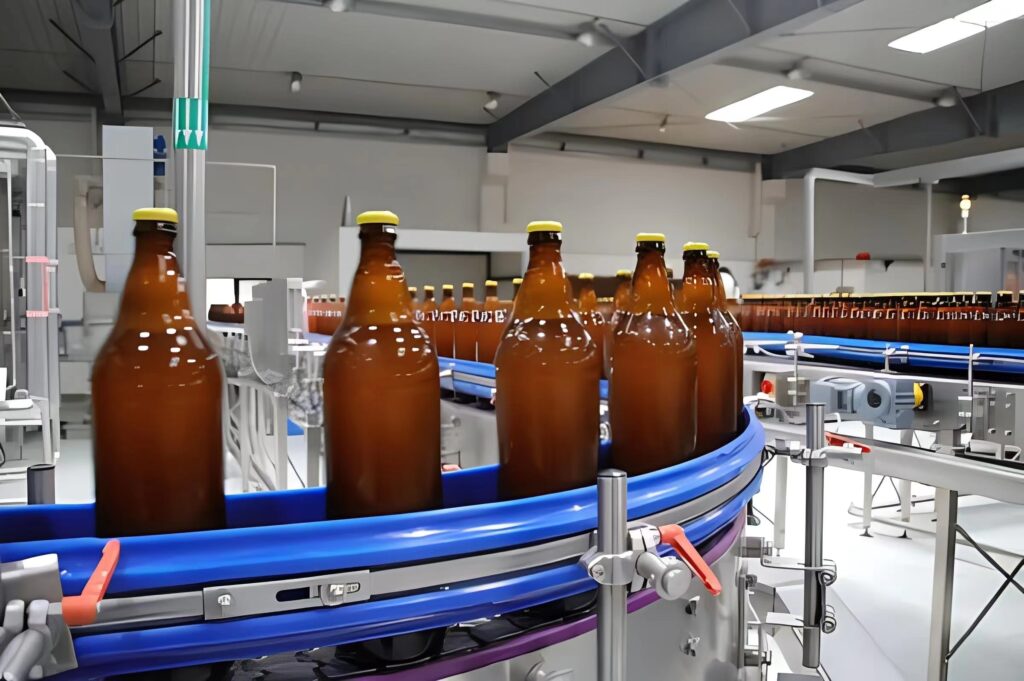
Density Measurement Food Beverage Overview
Density measurement food beverage applications represent one of the most demanding categories of industrial process measurement — not only because of the financial value of accurate concentration control, but because of the regulatory requirements, hygiene standards, and product quality expectations that characterize the industry. This overview introduces the fundamental role of density measurement food beverage operations and sets the context for the detailed application guidance that follows.
1. Why Density Matters in Food and Beverage
Density Measurement Food Beverage Background
Sugar is typically the most expensive ingredient in beverage formulation — and one of the most mis-managed. A beverage plant producing 85 million litres per year at an average sugar cost of $1.15/kg, with a specification tolerance of ±0.3 Brix, faces a financial exposure that depends entirely on how well it controls sugar concentration.
Batch out-of-spec events — caused by incorrect sugar addition, temperature variations, or inadequate measurement — result in rejected batches. A rejected batch of 40,000 litres represents $15,200 in ingredient cost alone — before processing energy, labor, and packaging.
Inline density measurement enables continuous Brix monitoring and closed-loop sugar addition control — reducing batch failures and sugar waste simultaneously.
1.2 Regulatory Compliance
Food and beverage products are subject to nutritional labeling regulations in virtually every market. The declared Brix or dissolved solids content on the product label must reflect the actual composition of the product. Density measurement — whether inline or laboratory — is the primary tool for verifying that the product matches its label declaration.
Inline density measurement provides continuous documentation of product quality — satisfying regulatory requirements while reducing the burden of laboratory sampling.
1.3 Yield and Waste Reduction
The economic case for inline density measurement in food and beverage is compelling:
- Reduced ingredient waste: Accurate concentration control prevents over-addition of expensive ingredients
- Reduced batch rejection: Real-time monitoring catches deviations before they become out-of-spec batches
- Reduced labor: Continuous monitoring reduces the frequency of laboratory sampling
- Improved consistency: Automated control produces more consistent product quality than manual batching
2. Key Applications in Food and Beverage
2.1 Brix and Dissolved Solids Control
Brix (°Bx) is a measure of dissolved solids in a liquid — expressed as grams of sucrose per 100 grams of solution. It is the standard measure of sweetness in fruit juices, beverages, syrups, and sugar solutions.
In food and beverage manufacturing, Brix control means controlling the amount of sugar (and other dissolved solids) in the product. The primary instrument for Brix measurement is the density meter — because Brix is, fundamentally, a density measurement expressed in a sugar-specific conversion.
Primary applications:
| Product | Target Brix | Why Density Matters |
|---|---|---|
| Orange juice (NFC) | 11.0-14.5 °Bx | Sweetness, regulatory compliance |
| Apple juice | 11.0-14.0 °Bx | Sweetness, quality grade |
| Grape juice | 14.0-21.0 °Bx | Quality, blending control |
| Carbonated soft drink | 8.0-12.0 °Bx | Sweetness, calorie control |
| Confectionery syrup | 60.0-80.0 °Bx | Viscosity, quality |
| Jam and preserves | 55.0-70.0 °Bx | Setting point, shelf life |
Implementation: Inline density measurement with Brix-to-density correlation tables for each product SKU. LONNMETER LONN6004 food grade density meter with real-time Brix output for blending control.
2.2 Fruit Juice Processing
Fresh fruit juice processing involves multiple stages where density measurement is critical:
Concentrate reconstitution: NFC (not-from-concentrate) juice production starts with raw juice at variable Brix (seasonal variation of 3-5 °Bx is common). The processor must adjust sugar content to meet the target Brix regardless of incoming juice quality. Inline density measurement provides the real-time feedback for automated correction.
Blending: Multi-ingredient juice blends (orange-apple-grape) require precise Brix balancing across all components. Continuous density monitoring enables real-time blending optimization.
Pasteurization: Brix measurement after evaporation (for concentrated juice production) confirms that the correct concentration has been achieved before the product goes to packaging.
2.3 Brewing and Fermentation
In beer brewing, density (measured as specific gravity) is the primary tool for monitoring fermentation progress. As yeast converts sugar to alcohol, the specific gravity of the fermenting wort drops from approximately 1.050 (original gravity) to approximately 1.010 (final gravity). Monitoring this decline tells the brewer:
- Fermentation progress: Has fermentation reached the expected attenuation?
- Fermentation completion: Has the yeast finished converting sugar to alcohol?
- Stuck fermentation: Is the fermentation unusually slow or incomplete?
- Contamination: Unexpected specific gravity behavior may indicate bacterial contamination
Key measurement points:
- Mash tun: Gravity of sweet wort before fermentation
- Fermenter inlet: Incoming gravity
- Fermenter outlet: Current gravity (trending down)
- Bright tank: Final gravity before packaging
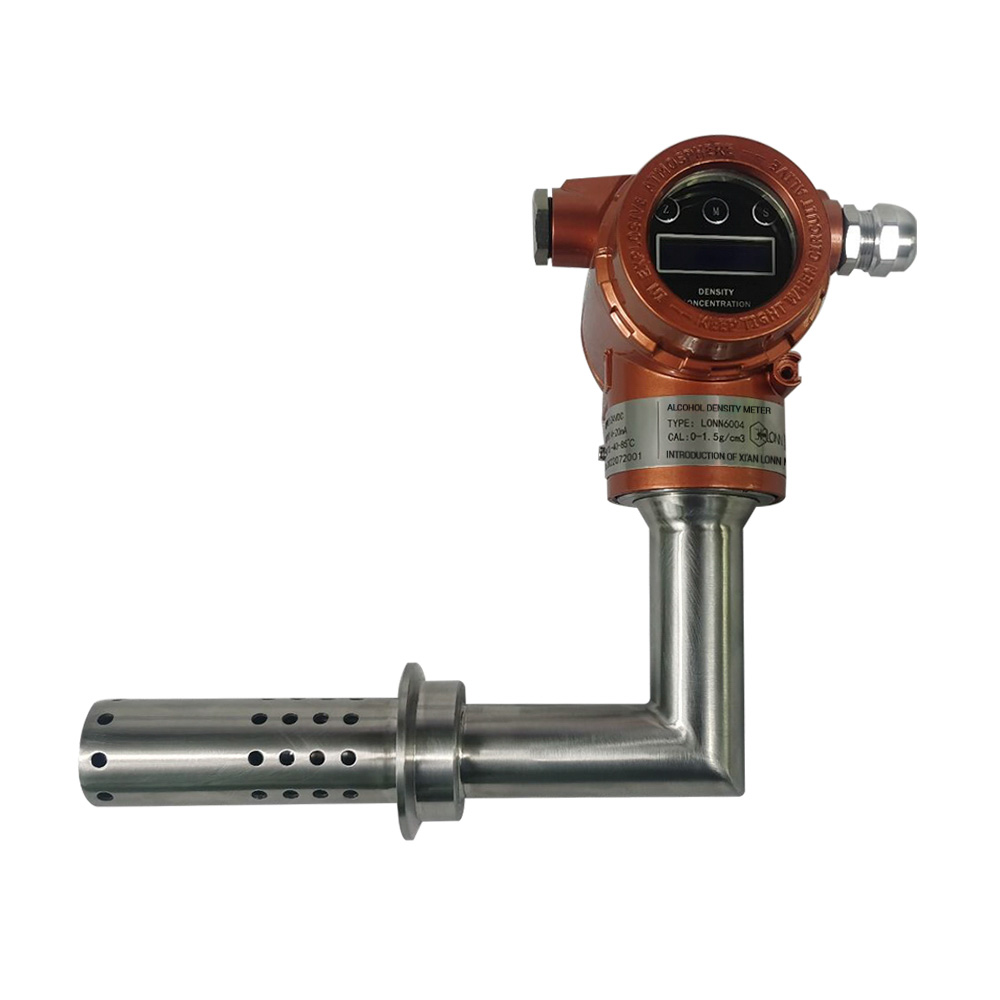
Featured product: LONN6004 Food Grade Density Meter for sanitary brewing applications
2.4 Dairy Processing
In dairy processing, density measurement is used for:
Milk standardization: Milk fat content is determined by measuring the density of the milk serum (after removing fat). Inline density measurement enables real-time fat standardization.
Concentrated milk: Evaporated milk and condensed milk production requires precise concentration control. Inline density monitoring controls the evaporator to achieve the target total solids content.
Cheese production: Whey density indicates the efficiency of curd formation and lactose content of whey — key parameters for yield optimization and quality control.
Ice cream mix: Density measurement of the ice cream mix (before homogenization) confirms that the correct sugar, fat, and solids content has been achieved.
2.5 Confectionery
Sugar confectionery production — syrups, jams, jellies, fondants — requires precise density control:
Syrup concentration: Boiling syrup to the correct density determines the final product’s texture, moisture content, and shelf life. Inline density measurement replaces the traditional method of dropping a sample into cold water to judge consistency.
Jam and preserve making: The setting point of fruit preserves corresponds to a specific density — approximately 65-68 °Bx for most jams. Inline density monitoring ensures the correct setting point is reached consistently.
Chocolate production: Cocoa liquor density affects the viscosity of the chocolate mass and the efficiency of cocoa butter blending.
2.6 Olive Oil and Edible Oils
Density measurement in edible oil processing:
- Virgin olive oil: Density confirms authenticity and detects adulteration with lower-quality oils
- Oil blending: Inline density measurement confirms that blended oils meet specification
- Fatty acid monitoring: Density correlates with fatty acid composition in palm oil and other bulk oils
3. Instrument Selection for Food and Beverage
3.1 Sanitary and Hygienic Requirements
Food and beverage applications require density meters that meet stringent hygienic design standards:
| Requirement | Standard | What It Means |
|---|---|---|
| 3-A Sanitary Standards | 3-A SSI 74-07 | Third-party verified hygienic design for dairy, food, beverage |
| EHEDG compliance | EHEDG Guideline 8 | Hygienic design for liquid food processing equipment |
| FDA 21 CFR 177.2600 | US FDA | Materials safe for repeated food contact |
| EU Regulation 1935/2004 | European Commission | Materials safe for food contact in EU markets |
| CIP compatibility | Manufacturer-specific | Clean-in-place without disassembly |
3.2 LONNMETER Food Grade Density Meter
LONN6004 is LONNMETER’s food grade density meter, specifically designed for food and beverage applications:
| Feature | Specification |
|---|---|
| Measurement principle | Tuning fork (electromagnetic oscillation) |
| Accuracy | ±0.001 g/cm³ |
| Process temperature | 5-80°C |
| Wetted material | 316L stainless steel |
| Seal material | EPDM (FDA 21 CFR 177.2600 compliant) |
| Process connection | DN50 tri-clamp (3-A sanitary) |
| Output | 4-20mA + RS-485 Modbus-RTU |
| Ingress protection | IP69K |
| Certifications | 3-A Sanitary, FDA, EU 1935/2004 |
The LONN6004 is CIP-compatible and rated for clean-in-place cycles with caustic and acid cleaning solutions — essential for food and beverage applications where sanitation is non-negotiable.
3.3 Portable Density Measurement
For receiving inspection, laboratory analysis, and spot verification:
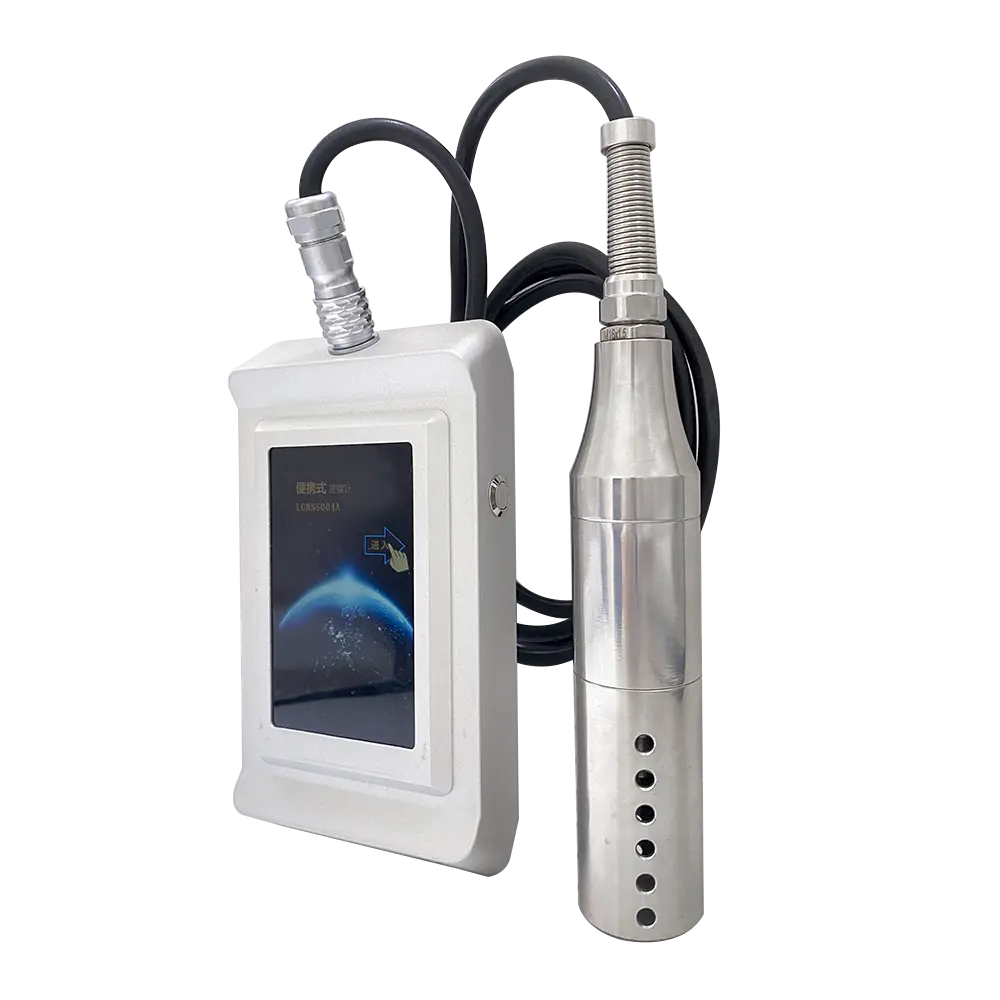
LONN-800T Portable Density Meter: Touch-screen digital density meter with ±0.001 g/cm³ accuracy, data logging, and PT100 temperature compensation. The reference instrument for Brix verification in food and beverage quality control labs.
4. Implementation Guide
4.1 Brix-to-Density Correlation
The density meter measures density (in g/cm³). To use it for Brix control, you need a Brix-to-density correlation table for each product.
Building the correlation table:
- Prepare samples of your product at known Brix values (from 0 °Bx to your maximum)
- Measure the density of each sample with the inline instrument AND a certified Brix refractometer
- Plot density versus Brix for each product
- Fit a polynomial regression (typically 2nd or 3rd order)
- Enter the regression coefficients in your DCS or the instrument’s configuration
Validation: Confirm the correlation against a minimum of 5 production samples. Repeat the comparison monthly and update the correlation if drift exceeds ±0.2 °Bx.
4.2 Installation for Food and Beverage
Location: Install in a well-mixed section of the process line, away from pumps, valves, and flow disturbances. Avoid locations where air entrainment or phase separation can occur.
Orientation: For tank installations, install at mid-tank level to avoid surface foam (top) and settled solids (bottom).
By-pass configuration: Recommended for most food and beverage applications — allows instrument removal for cleaning and maintenance without stopping production.
CIP handling: The LONN6004 is CIP-compatible. During clean-in-place cycles (typically caustic wash followed by acid rinse), the instrument continues to measure — providing process monitoring during cleaning. Verify that the CIP solution is within the instrument’s temperature and chemical compatibility specifications.
4.3 Traceability and Documentation
For regulatory compliance, maintain records of:
- Calibration certificates (instrument and reference instruments)
- Correlation table validation records
- Routine comparison logs (inline vs. laboratory)
- Maintenance records
- Deviations and corrective actions
Common Food Beverage Density Measurement Mistakes to Avoid
Even with the best intentions, food beverage density measurement installations frequently fail to deliver their potential due to predictable, avoidable errors. Understanding these common mistakes before you specify or install an instrument can save significant cost and prevent costly batch failures.
Mistake 1: Using a single Brix-to-density correlation for all products. Every product has a unique Brix-to-density relationship. A correlation table that works for orange juice will give incorrect Brix values for apple juice — even though both are fruit juices. Each product SKU requires a separately validated correlation table, and your control system must apply the correct table based on the active recipe. Failing to validate correlations per product is one of the most common causes of Brix control failures in food beverage density measurement applications.
Mistake 2: Ignoring the effect of suspended pulp on density readings. In pulpy juices and nectars, suspended fruit particles contribute to the density reading but are not measured by a refractometer. If you validate your inline density meter against a refractometer in the laboratory, the laboratory reference is measuring dissolved solids only — while the inline instrument is measuring dissolved plus suspended solids. This discrepancy can cause your correlation to appear to have significant error when the inline instrument is actually correct. Always validate food beverage density measurement inline instruments against a method that accounts for suspended solids — such as a reference density meter or a properly validated rapid method.
Mistake 3: Installing in aerated or foam-prone locations. Food and beverage processes are prone to aeration — from mixing, pumping, and agitation. Air bubbles in the process stream affect the density reading differently depending on the measurement principle. Tuning fork instruments are particularly sensitive to aeration because the bubbles change the effective mass of the vibrating element. Installing the instrument in a location where the fluid is well-degassed — typically after a settling section or a deaeration tank — will improve measurement reliability for food beverage density measurement applications.
Mistake 4: Not planning for CIP-compatible instrumentation. Clean-in-place cycles in food beverage production use hot caustic and acid solutions that can damage instruments not specifically designed for CIP. The LONN6004 is rated for CIP exposure, but not all instruments are. When selecting instruments for food beverage density measurement, confirm CIP compatibility explicitly — not just at normal operating temperature, but including the maximum CIP solution temperature your plant uses.
Mistake 5: Neglecting traceability documentation. Regulatory requirements for food and beverage products include documentation of the measurement chain — from inline instrument to reference method to final product specification. Many plants implement inline density measurement for process control but fail to maintain the documentation required to use those measurements for quality release or regulatory compliance. Every calibration, every correlation validation, and every deviation should be documented — not just stored in the DCS historian, but in a form that can be audited.
By avoiding these five common mistakes, your food beverage density measurement installation will reliably support both process control and regulatory compliance.
5. Frequently Asked Questions
Q: Can I use the same density meter for Brix measurement across different product lines?
A: Each product has a unique Brix-to-density correlation. A table that works for orange juice will not give accurate Brix values for apple juice. You will need a separate correlation table for each product SKU, and your DCS or instrument configuration must apply the correct table based on the active recipe.
Q: How do I handle the effect of pulp and suspended fruit particles on density measurement?
A: The LONN6004 is designed for installation at the mid-tank level, which avoids the highest pulp concentration zones. For products with high pulp content (5-15% by volume), the correlation between inline density and laboratory Brix should be validated on the actual product with pulp. In most juice applications, the correlation R² is 0.98 or better after proper validation.
Q: What is the difference between a density meter and a refractometer for Brix measurement?
A: A refractometer measures the refractive index of a liquid — which is related to dissolved solids content but responds only to dissolved substances, not to suspended particles. A density meter responds to both dissolved and suspended solids. For products with low suspended solids (<1% by volume), both instruments give similar results. For pulpy juices, density measurement may give a higher reading than refractometry because it includes the suspended pulp.
Q: How often should I validate the inline density reading against the laboratory measurement?
A: For quality-critical applications (beverage filling), validate at least once per batch (beginning, middle, and end of batch). For blending operations with automated control, weekly validation is typically sufficient. Keep records of all comparisons — these are required for regulatory compliance and customer audits.
Q: Can the LONN6004 handle high-temperature processes like hot filling?
A: The LONN6004 is rated for process temperatures up to 80°C continuous. For hot filling applications above 80°C, consider the LONN-7000 or LONN-700S with appropriate process connections — though these do not carry food grade certifications. For CIP cycles that reach 85-90°C, the LONN6004 can tolerate brief high-temperature exposure (verify with LONNMETER application engineering).
6. Featured Products for Food and Beverage
| Product | Principle | Key Feature | Food Application |
|---|---|---|---|
| LONN6004 | Tuning Fork, Sanitary | 3-A, FDA, IP69K | Beverage Brix, dairy, syrup |
| LONN-800A | Tuning Fork, Portable | Touch screen, data logging | Lab Brix, receiving inspection |
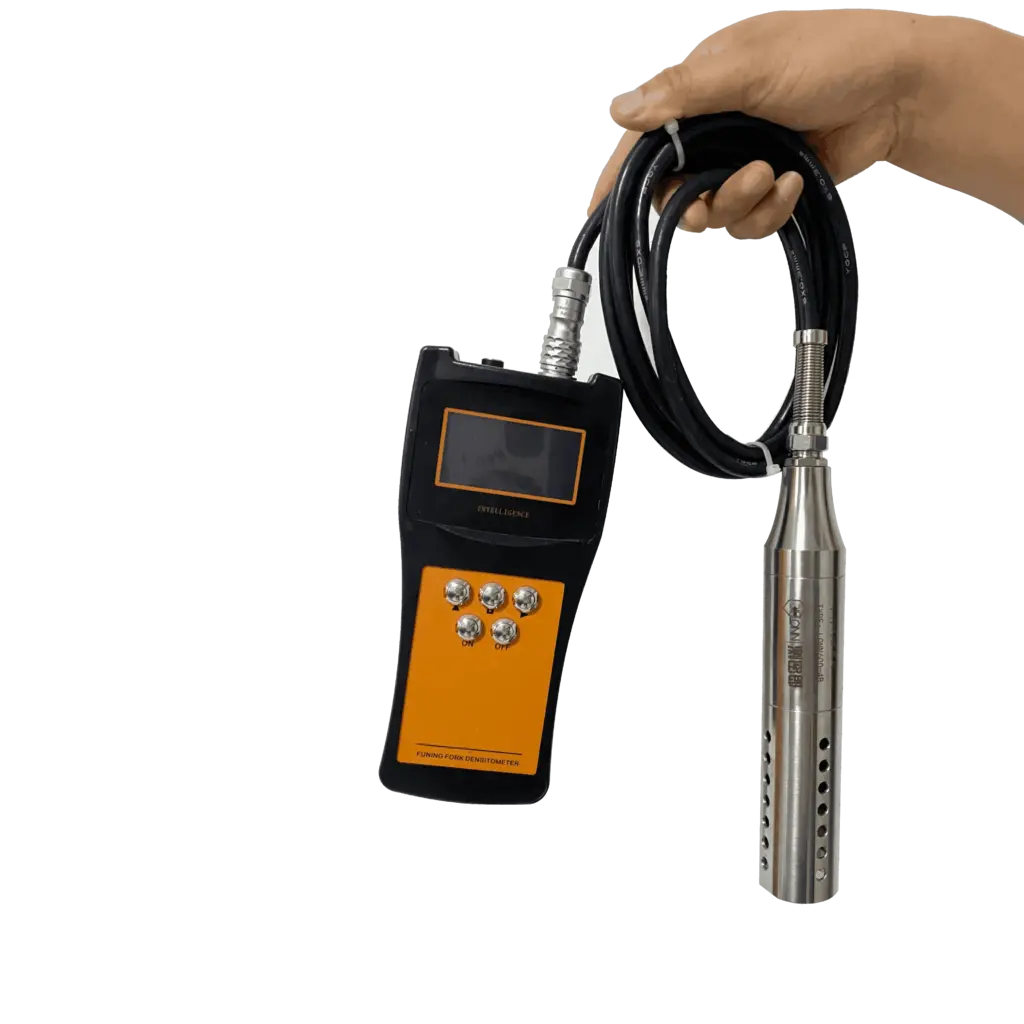
| LONN-800 | Tuning Fork, Handheld | Button operation | Field verification |
Request a Quote
To discuss food and beverage density measurement for your specific application, LONNMETER offers free application evaluation and on-site trial capability.
Contact: anna@xalonn.com