Whether you’re monitoring a chemical reactor, controlling a mining slurry circuit, or ensuring product quality in a food processing line, selecting the right density meter is a decision that directly impacts process efficiency, product quality, and operational costs. A poor choice can mean frequent recalibration, unplanned downtime, measurement drift in harsh environments, or compliance failures during audits.
This guide walks you through everything you need to know about how to choose density meter solutions for your specific application — from understanding measurement principles and comparing meter types to evaluating specifications and avoiding common purchasing mistakes. By the end, you’ll have a clear framework for making a confident, technically sound selection.
What is a Density Meter and How Does It Work?
A density meter (also called a density transmitter, process densitometer, or digital density meter) is an industrial instrument that measures the density or concentration of a liquid in real time. Density is expressed in units such as kg/m³, g/cm³, or °Brix, and the measurement principle varies by technology.
Core Measurement Principles
Vibrating Element (Tuning Fork) Principle: The most common principle for inline process density meters. A tuning fork or flexural resonator is immersed in the process fluid. The fork vibrates at a characteristic frequency that changes with fluid density — denser fluids cause a lower resonant frequency. Because the frequency shift is temperature-dependent, modern instruments incorporate built-in temperature compensation algorithms (often to ±0.01 °C accuracy) to deliver corrected density readings.
Typical accuracy: ±0.001 kg/m³ (in optimal conditions) with repeatability of ±0.0002 kg/m³.
Coriolis Principle: Coriolis mass flow meters can simultaneously measure density by exciting a vibrating tube through which the fluid flows. The Coriolis force effect shifts the phase of the vibration proportionally to mass flow and fluid density. These instruments are renowned for direct mass flow measurement combined with density reading, making them a preferred choice in custody-transfer and high-precision applications.
Typical accuracy: ±0.0005 g/cm³ (density measurement), with repeatability of ±0.0002 g/cm³.
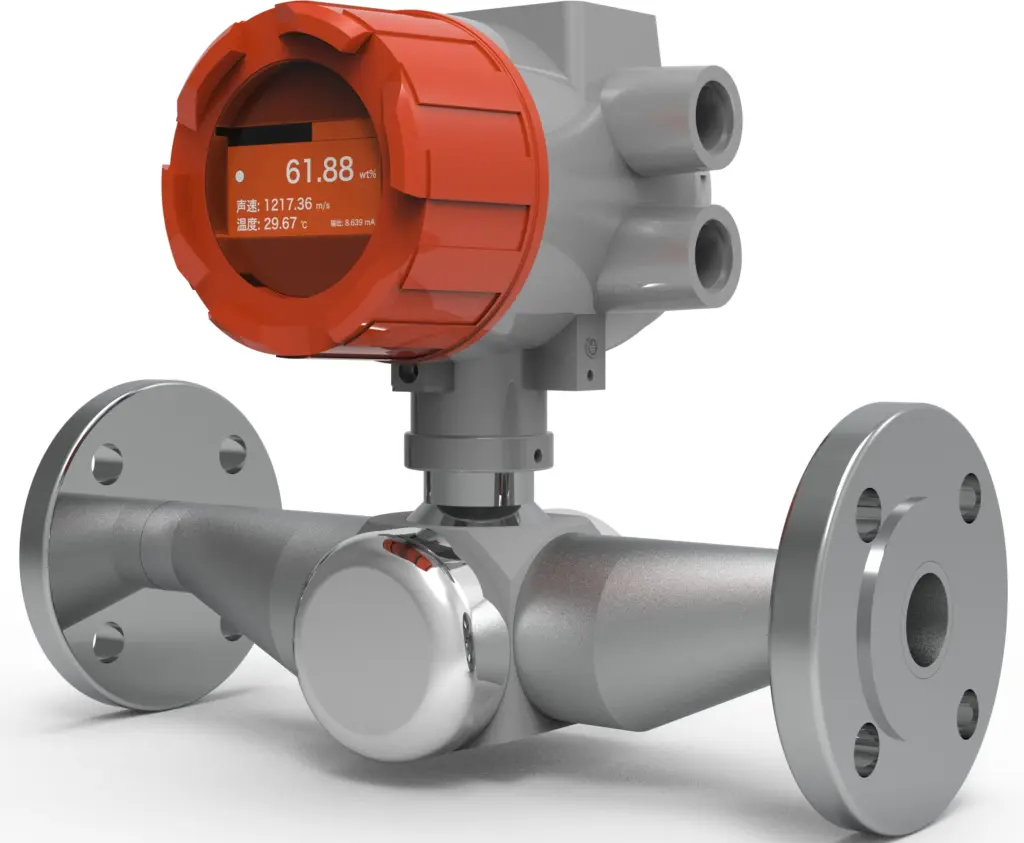
Ultrasonic Principle: Ultrasonic density meters measure the speed of sound propagation through the fluid. Since the speed of sound is a function of density and temperature, the instrument calculates density from the measured transit time. These are non-intrusive and highly suited to sanitary or abrasive applications where no wetted metal components are desired.
Typical accuracy: ±0.001–0.005 g/cm³, with temperature range −40 to +250 °C.
Nuclear (Gamma Ray) Principle: Nuclear density meters use a sealed radioactive source (typically Cesium-137) and a detector mounted on opposite sides of a pipe or vessel. Gamma radiation absorption is inversely proportional to the density of the intervening fluid. These instruments are used in extreme environments — highly corrosive, abrasive, or high-temperature slurries — where no other technology survives.
Typical accuracy: ±0.01–0.05 g/cm³, highly dependent on source activity and geometry.
Why Real-Time Density Measurement Matters
Traditional laboratory sampling (using pycnometers or hydrometers) introduces time delays of 15–60 minutes and human error into the process control loop. A process density meter closes that loop by providing continuous, real-time output — typically as a 4–20 mA analog signal, HART protocol, Modbus RTU/TCP, or PROFINET. This enables:
- Closed-loop process control: Automatic adjustment of dosing, dilution, or separation based on live density.
- Quality assurance: Consistent product specifications without batch-to-batch variation.
- Regulatory compliance: Audit-ready continuous records (21 CFR Part 11 compliant data logging where required).
- Reduced laboratory workload: Fewer manual samples needed for routine monitoring.
Types of Density Meters
Understanding the available form factors and technologies is the first step in learning how to choose a density meter that fits your application.
Classification by Installation Type
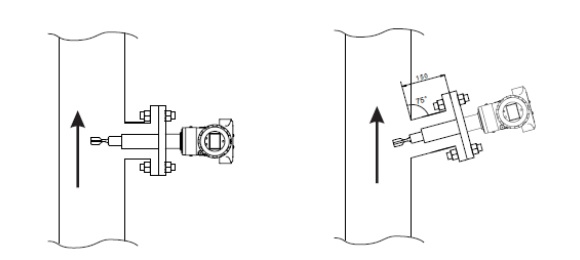
1. Inline Density Meter
Inline instruments are installed directly into the process pipeline or vessel. The sensing element is permanently wetted and continuously exposed to the process fluid. This provides the most accurate real-time measurement with minimal sample conditioning requirements.
Best for: Continuous process control, reactor monitoring, pipeline custody transfer, difficult-to-sample processes.
Key models: LONNMETER inline process densitometer series — engineered for direct pipe mounting with flange connections from DN15 to DN200, rated up to PN100 / Class 600.
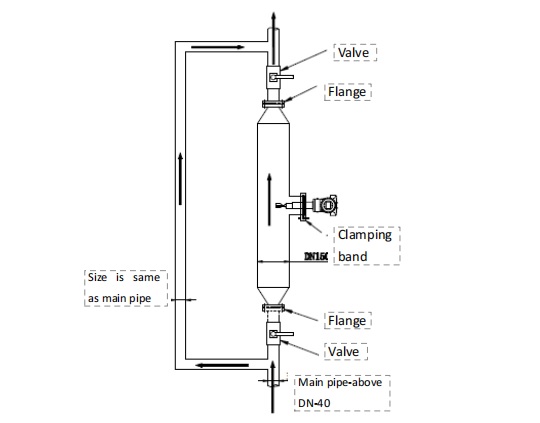
2. Online (Loop-Installed) Density Meter
Online instruments are installed in a bypass loop rather than directly in the main process line. A small sample stream is diverted through the instrument, while the main process line remains undisturbed. This simplifies maintenance — the instrument can be removed without shutting down the process.
Best for: Applications where regular instrument removal is needed, or where main-line installation is impractical.
Key consideration: Bypass loops introduce a measurement delay of several seconds due to sample transit time. For fast-responding processes, inline installation is preferred.
3. Portable / Handheld Density Meter
Portable digital density meters (often called digital hydrometers) use the same vibrating element technology but in a handheld form factor. They are used for spot checks, laboratory reference measurements, and field validation of inline instruments.
Best for: Field verification, incoming quality inspection, laboratory analysis.
Typical spec: Accuracy ±0.001 g/cm³, sample volume 1–2 mL, built-in temperature compensation.
4. Laboratory Benchtop Density Meter
High-precision instruments for QA/QC laboratories. They offer the best absolute accuracy (±0.0001 g/cm³) but cannot be used for real-time process control.
Best for: Product certification, R&D formulation, calibration reference standards.
Classification by Measurement Technology
| Technology | Accuracy (typ.) | Temp. Range | Pressure Rating | Wetted Materials | Best Application |
|---|---|---|---|---|---|
| Tuning Fork / Vibrating Element | ±0.001 kg/m³ | −50 to +250 °C | Up to PN100 | 316L SS, Hastelloy, Tantalum, PTFE coating | General purpose inline process, chemical, food |
| Coriolis Mass Flow | ±0.0005 g/cm³ | −40 to +180 °C | Up to PN400 | 316L SS, Hastelloy C, Super Duplex | Custody transfer, high-accuracy mass balance |
| Ultrasonic | ±0.001–0.005 g/cm³ | −40 to +250 °C | Limited by pipe rating | Non-wetted (clamp-on) or PEEK | Sanitary, abrasive, non-contact applications |
| Nuclear / Gamma | ±0.01–0.05 g/cm³ | −20 to +80 °C (detector) | Full pipe pressure | None (non-intrusive) | Mining slurry, extreme corrosion, pipe > DN100 |
| Radiation Attenuation | ±0.005 g/cm³ | Up to +400 °C | Full pipe pressure | None | High-temperature melts (glass, metal) |
How to Choose Density Meter: How to Choose the Right Density Meter
This section provides a structured decision framework for process engineers and procurement specialists evaluating how to choose density meter options. Work through each step in order.
Step 1: Define Your Measurement Objective
Ask yourself:
- What parameter do I need to control? Density (kg/m³), concentration (%, °Brix, °Baumé), specific gravity, or API gravity?
- Is real-time continuous measurement required, or will spot-check measurements suffice?
- What is the process control loop — am I integrating into a DCS, PLC, or SCADA system?
For closed-loop concentration control (e.g., acid blending, sugar crystallization, salt concentration), an inline process density meter with 4–20 mA output and Modbus/HART connectivity is the standard choice. For quality logging without process control, a laboratory benchtop instrument may be adequate.
Step 2: Characterize Your Process Fluid
Fluid properties are the single most important technical factor in meter selection:
- Chemical compatibility: Is the fluid corrosive (acids, alkalis, chlorides)? Does it attack 316L stainless steel? For chloride-rich fluids (seawater, certain brines), Hastelloy C-276 or Tantalum wetted materials are required.
- Abrasiveness: Mining slurries, sand-laden water, and ceramic suspensions will erode vulnerable sensors. Coriolis tube meters or nuclear meters are preferred here.
- Viscosity: High-viscosity fluids (>500 cP) affect the response time of vibrating element meters. Coriolis meters handle high viscosity better.
- Temperature range: Is the process at ambient temperature or does it run at 200 °C+? Tune the instrument’s temperature rating to match.
- Vapor pressure / gas entrainment: Aerated fluids or fluids with entrained gas cause measurement errors in vibrating element meters. Degassing chambers or Coriolis meters with dual-phase compensation may be needed.
- Solid content: Slurries with >5% solids by weight may require nuclear or specialized slurry density meters.
Step 3: Determine Installation Requirements
- Line size: What is the nominal pipe diameter? Inline density meters are available from DN15 to DN200+ (1/2″ to 8″+). For very large pipes, clamp-on ultrasonic or nuclear options avoid the need to modify the pipeline.
- Process connection: Flange (DIN/ANSI), clamp, thread, or bayonet? Confirm the standard used in your facility.
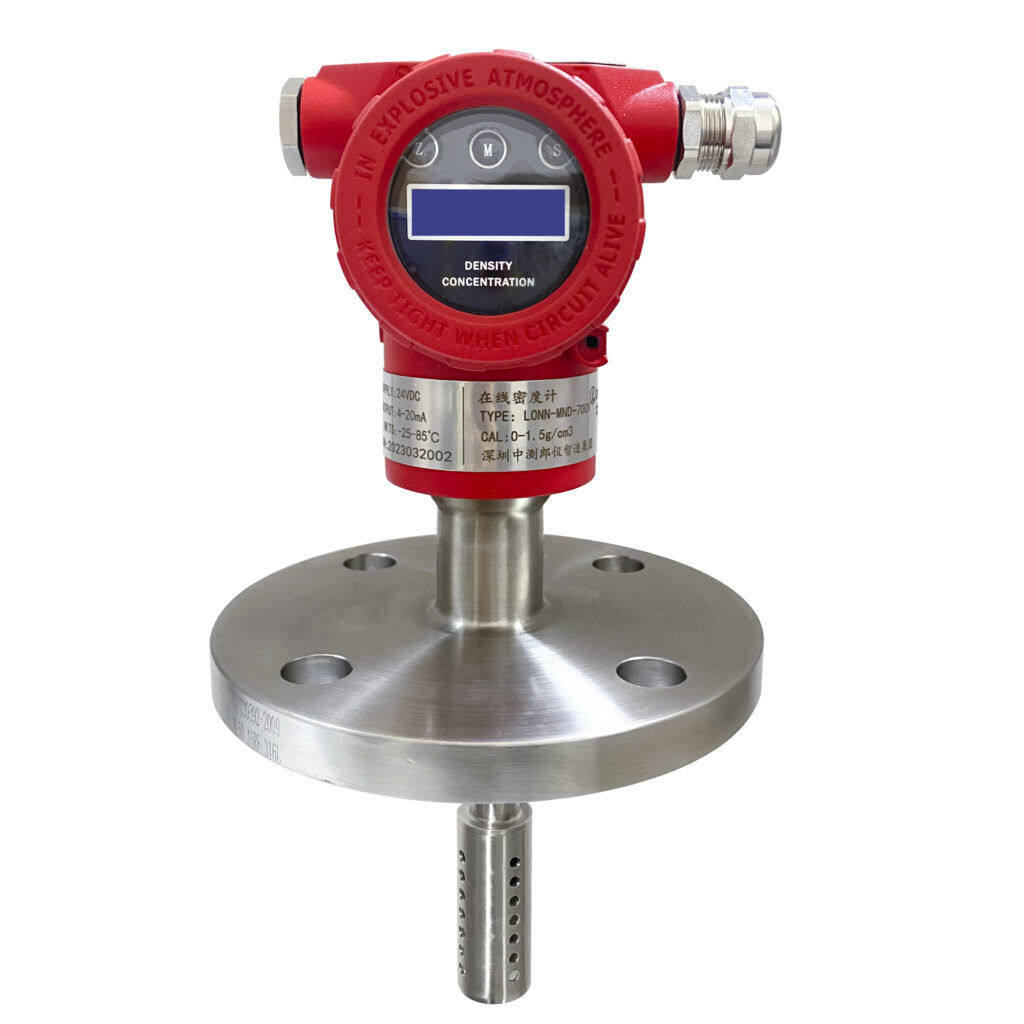
- Explosion protection: Is the installation area classified as hazardous (Zone 1/Zone 2)? Look for ATEX/IECEx certification for Europe/international markets, or CSA/UL for North American installations. LONNMETER inline density meters carry both ATEX and IECEx approval for hazardous area use.
- Sanitary requirements: Food, beverage, pharmaceutical, and biotech applications require 3-A Sanitary standards, EHEDG compliance, and CIP/SIP capability. Choose 316L stainless steel with polished surfaces (Ra ≤0.8 µm) and FDA-compliant seals.
- Flow orientation: Vertical or horizontal? Most inline density meters can be installed in either orientation, but orientation affects gas purge behavior and sensor wetting.
Step 4: Match Accuracy and Repeatability to Your Requirements
| Application | Required Accuracy | Recommended Technology |
|---|---|---|
| Process monitoring / trend | ±0.01 kg/m³ (1%) | Vibrating element inline |
| Quality control / product spec | ±0.001–0.002 kg/m³ | Vibrating element with temp. comp. |
| Custody transfer / legal metrology | ±0.0005 kg/m³ | Coriolis mass flow meter |
| Laboratory reference | ±0.0001 g/cm³ | Benchtop oscillating U-tube |
| Mining slurry / rough process | ±0.05 g/cm³ | Nuclear / gamma densitometer |
Repeatability is often more important than absolute accuracy for process control — a meter that is ±0.002 but repeatable to ±0.0005 is more useful in a closed loop than a meter that is ±0.001 but inconsistent.
Step 5: Evaluate Output and Communication Options
- Analog output: 4–20 mA (most common) — ensure the DCS input card matches the meter output range.
- Digital protocols: HART, Foundation Fieldbus, PROFIBUS PA, Modbus RTU/TCP, PROFINET, EtherNet/IP.
- Display: Local LCD display with function keys for configuration, calibration, and diagnostics is standard on modern instruments.
- Data logging: Internal event logging with time-stamped records supports regulatory compliance and maintenance diagnostics.
- IO options: Some instruments offer multiple output types (e.g., 4–20 mA + HART + Modbus simultaneously) for integration flexibility.
Step 6: Consider Total Cost of Ownership
The purchase price of a density meter typically represents only 30–40% of its total cost over a 10-year operating life. Factor in:
- Calibration costs: Annual calibration by an accredited laboratory (ISO/IEC 17025) typically costs $200–800 per instrument.
- Maintenance frequency: Instruments with no wetted moving parts (vibrating element, nuclear) have lower maintenance than those with mechanical components.
- Spare parts availability: Choose a manufacturer with a global distributor network and 10+ year spare parts commitment.
- Installation costs: Flange-mounted inline instruments have higher installation cost but lower operating cost than bypass loop systems.
- Recalibration downtime: Bypass-installed instruments can be removed and recalibrated without process interruption.
How to Choose Density Meter: Key Specifications to Evaluate
When reviewing manufacturer datasheets, systematically evaluate the following specifications against your application requirements.
Measurement Accuracy and Repeatability
- Density accuracy: Expressed in kg/m³ or g/cm³. For process applications, ±0.001 kg/m³ is the benchmark for vibrating element meters. For custody transfer, ±0.0005 kg/m³ or better is required.
- Repeatability (standard deviation): Typically half the accuracy spec. LONNMETER inline density meters specify repeatability of ±0.0002 kg/m³ under stable temperature conditions.
- Temperature compensation accuracy: Since density is temperature-dependent, the instrument’s temperature measurement accuracy directly affects the corrected density accuracy. Look for temperature accuracy of ±0.1 °C or better.
Measurement Range
- Density range: Most process density meters cover 0–3,000 kg/m³ (0–3 g/cm³). Specialty instruments can measure up to 5,000 kg/m³ for heavy slurries and molten materials.
- Concentration range: Some instruments are calibrated for specific concentration ranges (e.g., 0–25% NaOH, 0–80° Brix). Confirm the range covers your full operating envelope, including startup and shutdown conditions.
Temperature Specifications
- Process temperature range: The temperature range over which the meter can operate without damage. For steam-sterilizable applications (SIP), look for ratings up to +180 °C.
- Ambient temperature range: The instrument electronics operating range. In outdoor or unheated installations, ensure the specified ambient range covers worst-case conditions (−20 to +60 °C is common).
- Temperature stability: Some instruments specify a temperature coefficient (e.g., ±0.0002 kg/m³/°C), indicating how much the reading drifts per degree Celsius change.
Pressure Specifications
- Maximum process pressure: Rated pressure (e.g., PN40, PN100, Class 300, Class 600) at maximum temperature. Pressure derating curves must be consulted for temperatures above ambient.
- Pressure drop: For inline flow-through meters, pressure drop across the instrument (typically 0.1–0.5 bar at normal flow) must be accommodated in your process design.
- Burst pressure: Safety margin — typically 1.5× or 4× the rated pressure for hydrostatic burst testing.
Wetted Materials
The material in contact with your process fluid must be chemically compatible. Common options:
| Material | Chemical Resistance | Typical Use |
|---|---|---|
| 316L Stainless Steel | Acids (mild), alkalis, organic solvents | General chemical, food, water |
| Hastelloy C-276 | Strong acids, chlorides, seawater | Corrosive chemicals, offshore |
| Tantalum | Strong acids (hot HCl, H₂SO₄), halogens | Highly corrosive acids |
| PTFE / PFA Lining | Nearly universal chemical resistance | Aggressive acids, ultra-pure chemicals |
| Duplex / Super Duplex SS | Brines, seawater, mild acids | Mining, offshore, oil & gas |
| Titanium Gr. 2 | Chlorides, nitric acid, seawater | Desalination, chlor-alkali |
Output and Communication
- Primary output: 4–20 mA (active or passive), HART, Foundation Fieldbus, or PROFINET.
- Secondary output: RS-485 / Modbus RTU, relay (alarm) outputs, pulse output (for totalization).
- Display: Local 4-digit or 6-digit LCD with backlight for outdoor visibility.
- Diagnostic output: Self-diagnostics for sensor failure, tube fouling, calibration drift — critical for SIL-rated safety instrumented systems (SIS).
Certifications and Standards
- ATEX / IECEx: Required for hazardous area installations (Zone 1, Zone 2, Category 2/3).
- SIL 2 / SIL 3: For use in safety instrumented systems per IEC 61508.
- 3-A Sanitary: For dairy, food, and beverage applications.
- EHEDG: Enhanced hygienic design for cleanability.
- IP66 / IP67: Ingress protection for outdoor and washdown environments.
- RoHS / REACH: Regulatory compliance for EU markets.
- Measurement instrument approval: OIML R 71 / R 117 for legal-for-trade applications.
Common Applications by Industry
Chemical Processing
In chemical plants, density meters monitor acid concentration (e.g., H₂SO₄ at 93–98%), caustic soda (NaOH 30–50%), solvent mixtures, polymer concentration, and reactor batch composition. The inline density meter provides real-time feedback for dosing control, ensuring reactant concentrations stay within specification throughout the reaction cycle.
Typical configuration: Hastelloy C-276 or Tantalum wetted materials, ATEX/IECEx approved, 4–20 mA output to DCS, accuracy ±0.001 kg/m³, temperature range −20 to +150 °C.
Example: A specialty chemicals plant used inline density meters to control sulfuric acid dilution in real time, reducing acid consumption by 8% and eliminating batch off-spec product.
Food and Beverage
Density measurement in food processing is used for Brix monitoring in sugar solutions, fruit juice concentration, dairy product composition (milk fat content), brewing wort gravity, and vegetable oil density for blending control.
Typical configuration: 316L stainless steel with 3-A Sanitary certification, EHEDG-compliant clamp connections, CIP/SIP capability, Ra ≤0.8 µm surface finish, accuracy ±0.001 kg/m³.
Example: A fruit juice concentration plant used inline density meters to monitor °Brix during evaporation, maintaining consistent concentrate specifications across seasonal fruit variations without manual lab sampling delays.
Mining and Minerals
Mining applications involve slurry density measurement — mixtures of water, solids (ore particles, tailings), and reagents. This is one of the most challenging environments for density measurement due to abrasion, variable solid content, and corrosive reagents (cyanide, sulfuric acid) used in leaching circuits.
Nuclear (gamma) density meters are widely used in mining because they are non-intrusive, handle abrasive slurries without wear, and can measure through pipe walls. Vibrating element inline density meters are used in classifier overflow and concentrate circuits where accuracy is paramount.
Typical configuration: Nuclear densitometer for primary slurry circuits (DN100–DN600 pipes); inline vibrating element for flotation feed density; ATEX/IECEx for explosive dust environments.
Example: A gold mining operation used nuclear density meters on their cyanide leaching circuit to control solid-to-liquid ratio, improving gold recovery efficiency by 3.2%.
Pharmaceutical and Biotechnology
Pharmaceutical applications require density measurement for API (Active Pharmaceutical Ingredient) concentration in fermentation broths, buffer preparation verification, and final product quality control. These applications demand the highest levels of accuracy, documentation (21 CFR Part 11), and sanitary design.
Typical configuration: 316L stainless steel with electropolished finish, 3-A Sanitary and EHEDG certification, SIP/CIP capability, ±0.0005 kg/m³ accuracy, digital output with secure data logging.
Oil and Gas
In upstream oil and gas, density meters monitor produced water salinity, drilling mud density, produced water treatment, and refinery process streams. Downstream, they measure hydrocarbon densities for custody transfer and product quality.
Typical configuration: Coriolis mass flow meter with density function for custody transfer (OIML R 117 approved), Hastelloy or Duplex SS wetted materials, ATEX/IECEx Zone 1, PROFIBUS or Modbus output.
Common Mistakes to Avoid
Mistake 1: Selecting Based on Price Alone
The cheapest meter that meets your application requirements on paper often has hidden costs: higher maintenance frequency, shorter calibration intervals, incompatible output protocols, or inadequate material selection leading to premature corrosion. Always evaluate the total cost of ownership over the instrument’s expected 10–15 year service life.
Mistake 2: Ignoring Temperature Compensation Accuracy
Many buyers focus on density accuracy specifications while overlooking temperature measurement accuracy. A density meter specified at ±0.001 kg/m³ accuracy at 20 °C can easily show ±0.01 kg/m³ errors if its temperature sensor drifts by ±0.5 °C — and most process fluids are rarely at 20 °C. Ask for the combined (density + temperature) uncertainty specification.
Mistake 3: Choosing the Wrong Wetted Material
Material compatibility charts are useful starting points, but they cannot account for every variable: trace contaminants, process upsets that change concentration, synergistic effects between multiple chemicals, or cleaning agents used during CIP cycles. When in doubt, request a material compatibility review from the manufacturer and consider corrosion allowance.
Mistake 4: Overlooking Gas Entrainment
Entrained gas or air bubbles in the process fluid dramatically affect vibrating element density measurements (causing readings that are too low) and Coriolis measurements (causing zero instability). If your process is prone to gas entrainment (e.g., chemical reactors, agitated tanks), specify a degassing chamber option or choose an ultrasonic clamp-on meter.
Mistake 5: Neglecting Calibration Verification
An unverified density meter is an unknown meter. Even instruments with excellent repeatability can develop systematic bias over time due to sensor fouling, chemical attack, or mechanical changes. Plan for annual on-site calibration verification using traceable reference standards (ISO/IEC 17025) and compare results against laboratory reference measurements.
Mistake 6: Not Planning for Maintenance Access
Inline density meters installed in hard-to-reach locations create maintenance nightmares. Ensure adequate clearance for instrument removal (typically 1.5× the meter length), consider a bypass loop configuration for critical processes where shutdown is costly, and verify that the manufacturer’s service engineer can access the instrument with standard tools.
how to choose density meter FAQ
In our FAQ section on how to choose density meter, we address the most common questions engineers ask when selecting a meter.
Q1: What is the most accurate type of density meter for industrial use?
Coriolis mass flow meters provide the highest density measurement accuracy in industrial applications — typically ±0.0005 g/cm³ with excellent repeatability of ±0.0002 g/cm³. However, they are more expensive than vibrating element meters and have higher pressure drop. For most process control applications, a high-quality vibrating element inline density meter with ±0.001 kg/m³ accuracy is more than adequate and represents better value for money.
Q2: How do I choose between inline and bypass (online) density meter installation?
Choose inline installation when: you need the fastest possible response time, the process is easy to isolate, or the meter is dedicated to a single critical measurement. Choose bypass installation when: the main process cannot be shut down for maintenance, you need to remove the meter regularly for calibration, or the process conditions (extreme temperature, pressure) require the meter to be isolated from the main line. Bypass loops introduce 5–30 seconds of measurement lag, which is acceptable for slow-changing processes but not for fast reactor control loops.
Q3: Can a density meter measure concentration directly?
Yes, most modern digital density meters output both raw density (kg/m³) and calculated concentration values (%, °Brix, °Baumé, g/L, mol/L) when configured with the appropriate calibration curves for your specific solution. Some instruments support multipoint calibration for non-linear concentration ranges. For complex mixtures, consult the manufacturer — LONNMETER provides application-specific calibration services for chemical, food, and mining applications.
Q4: What certifications are required for hazardous area density meter installation?
For hazardous (classified) areas, the density meter must carry appropriate explosion protection certifications: ATEX (Europe, Directive 2014/34/EU), IECEx (international), or CSA/UL (North America). ATEX/IECEx-certified instruments are marked with their zone rating (e.g., Ex ia IIC T4/T6 Ga for Zone 0, Ex ib IIC T4/T6 Gb for Zone 1). Ensure the certification covers both the sensor and the electronics housing. LONNMETER inline density meters carry both ATEX and IECEx Zone 1 (Category 2) certification as standard.
Q5: How often should a process density meter be calibrated?
The calibration interval depends on the application criticality and process conditions. For critical process control and custody transfer applications, annual calibration is standard. For general monitoring applications, 12–24 month intervals are common. Instruments in harsh environments (corrosive fluids, abrasive slurries, high temperatures) should be verified more frequently. Most manufacturers recommend an annual on-site functional verification, with full recalibration at an ISO/IEC 17025 accredited laboratory every 2–3 years.
Q6: How does process pressure affect density meter selection?
Process pressure affects density measurement through dissolved gas behavior and liquid compressibility. At high pressures, dissolved gases remain in solution, giving a slightly higher liquid density than at atmospheric pressure. If your process operates across a wide pressure range, ensure the meter is calibrated at representative pressure conditions. Pressure rating of the instrument body (PN/Class) must exceed the maximum operating pressure at the measurement point, with appropriate safety margins per ASME B31.3 or EN 13445 design codes.
How to choose density meter: Conclusion and Next Steps
When it comes to how to choose density meter, the most important factors are accuracy requirements, process compatibility, and long-term maintenance costs. This how to choose density meter guide has covered the key criteria. and Next Steps
Selecting the right density meter is a multi-variable engineering decision that balances measurement accuracy, process compatibility, installation constraints, and total cost of ownership. The framework in this guide — defining your measurement objective, characterizing the process fluid, evaluating installation requirements, matching accuracy to your needs, checking certifications, and planning for maintenance — gives you a repeatable process for making confident purchasing decisions.
No single density meter technology is universally “best.” A vibrating element inline density meter is the right choice for 80% of chemical and food applications. Coriolis meters are the choice for custody transfer and the highest accuracy requirements. Nuclear meters dominate in mining slurries and extreme environments. Matching the technology to your specific conditions is what separates a successful installation from a recurring maintenance headache.
Ready to discuss your application? The LONNMETER engineering team provides application-specific selection support, free process compatibility reviews, and on-site commissioning for all inline process density meter installations. Get a tailored recommendation backed by 15+ years of industrial density measurement experience.
- 📄 Download LONNMETER Density Meter Product Datasheet →
- 📄 Request a Technical Quote →
- 📖 Read: Inline Density Measurement Best Practices →
- 📖 Read: Inline Viscosity Measurement Guide →
Knowing how to choose density meter technology correctly means understanding both your process conditions and the limitations of each meter type. A proper how to choose density meter evaluation considers accuracy, temperature range, pressure rating, and process compatibility. When planning how to choose density meter specifications, always document the measurement objective, acceptable error band, and maintenance interval. The decision on how to choose density meter mount location affects the straight-run requirements and accessibility for maintenance. Budget planning for how to choose density meter systems should include not just the instrument cost but also installation, commissioning, and calibration costs. After installing a meter, revisit your original how to choose density meter criteria to verify the selected instrument is performing within those specifications.