
Executive Summary
This case study documents the deployment of LONNMETER inline density measurement systems at a coal washing facility in Inner Mongolia, China. The plant processes 8,000 tonnes of raw coal per day through a heavy medium cyclonic separation process — a technique that relies critically on maintaining precise slurry density in the separation vessel.
Before the deployment, the plant relied on manual sampling and laboratory hydrometer analysis to control the heavy medium circuit — a process that introduced 20-40 minute delays between sampling and process adjustment. This lag, combined with the inherent variability of manual sampling, caused frequent over-dilution of the heavy medium circuit. The consequences were threefold: excessive water consumption, elevated medium losses, and suboptimal coal recovery rates.
After installing LONNMETER inline density meters with real-time feedback to the dilution water control loop, the plant achieved a 34% reduction in fresh water consumption, a 38% reduction in heavy medium consumption, and a 2.1 percentage point improvement in clean coal recovery — delivering a full payback on the instrumentation investment within 5.2 months.
1. Mining Slurry Density Control Background
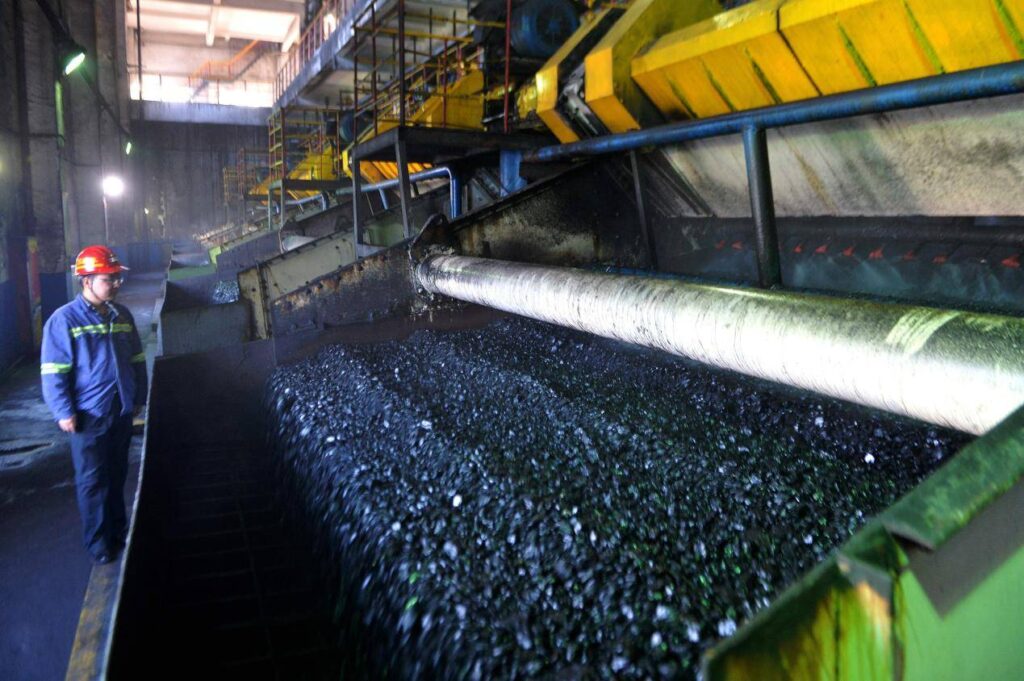
The facility is a large state-owned coal washing plant in Inner Mongolia with a rated capacity of 8,000 tonnes per day of raw coal input. The plant operates three production shifts per day, 340 days per year. Its primary product is washed metallurgical coal for steelmaking, with a secondary product of thermal coal for power generation.
The heavy medium separation process at the plant uses a magnetite-based medium (Fe₃O₄, specific gravity approximately 5.1) suspended in water to create a fluid with an adjustable density typically maintained between 1.35 and 1.65 g/cm³. Raw coal is fed into the medium bath, where the higher-density gangue (rock and shale) sinks while the lower-density coal floats and is skimmed off.
The critical operating parameter is the density of the heavy medium suspension — which must be maintained within ±0.01 g/cm³ of the target value to achieve efficient separation. Deviations beyond ±0.03 g/cm³ result in measurable mis-separation, either coal going to the reject stream or gangue contaminating the clean coal product.
The plant’s existing density control infrastructure consisted of manual sampling at two points (cyclone feed and overflow), laboratory hydrometer readings, and manual adjustment of dilution water valves based on operator experience.
2. Mining Slurry Density Control Challenges
2.1 The Manual Sampling Problem
The heavy medium circuit responds to density disturbances within 3-5 minutes. However, the manual sampling cycle at this plant operated on a 20-minute interval — and with the additional time required for sample collection, transport to the laboratory, and hydrometer reading, the effective feedback delay was 30-45 minutes.
This means that by the time a laboratory result indicated that medium density had drifted 0.05 g/cm³ above target, the plant had already processed 300-600 tonnes of raw coal under incorrect separation conditions. The contaminated product streams could not be recovered.
2.2 The Water Consumption Problem
The plant’s environmental compliance department had set a target of reducing fresh water consumption from 2.8 m³/tonne of raw coal to 2.0 m³/tonne — a 29% reduction driven by regional water scarcity and new provincial environmental regulations effective January 2026.
The primary water consumer in the coal washing process is the heavy medium circuit, where dilution water is used to adjust medium density. Over-dilution — which was the dominant mode of failure under manual control — directly increased water consumption. The plant estimated that 35-40% of its total water usage was attributable to unnecessary dilution events caused by the manual control lag.
2.3 The Numbers Before
| Metric | Value |
|---|---|
| Fresh water consumption | 2.8 m³/tonne raw coal |
| Magnetite medium consumption | 0.42 kg/tonne raw coal |
| Clean coal recovery rate | 81.3% |
| Ash content in clean coal | 11.2% (target <10.5%) |
| Density deviation events >0.03 g/cm³ | 47 per week |
| Laboratory labor (2 technicians, 3 shifts) | $58,000/year |
| Annual water cost | $312,000 |
| Medium replacement cost | $89,000/year |
The clean coal recovery rate of 81.3% meant that for every 100 tonnes of theoretically recoverable coal in the feed, 18.7 tonnes were lost — primarily to the reject stream. At the plant’s annual throughput of 2.72 million tonnes, this represented a revenue loss estimated at $2.8 million per year from unrecovered coal alone.
3. The Solution: Inline Density Measurement
3.1 Instrument Selection
The plant evaluated three inline density measurement approaches for the heavy medium circuit:
- Nuclear density gauge (Am-241): Proven technology in mining applications, but the plant’s management rejected it due to regulatory complexity, security requirements, and community relations concerns in the context of an Inner Mongolia facility near residential areas.
- Microwave density meter: Non-nuclear, but the plant rejected it after a trial that showed unacceptable interference from the magnetite medium (microwave attenuation by ferrous material caused erroneous readings).
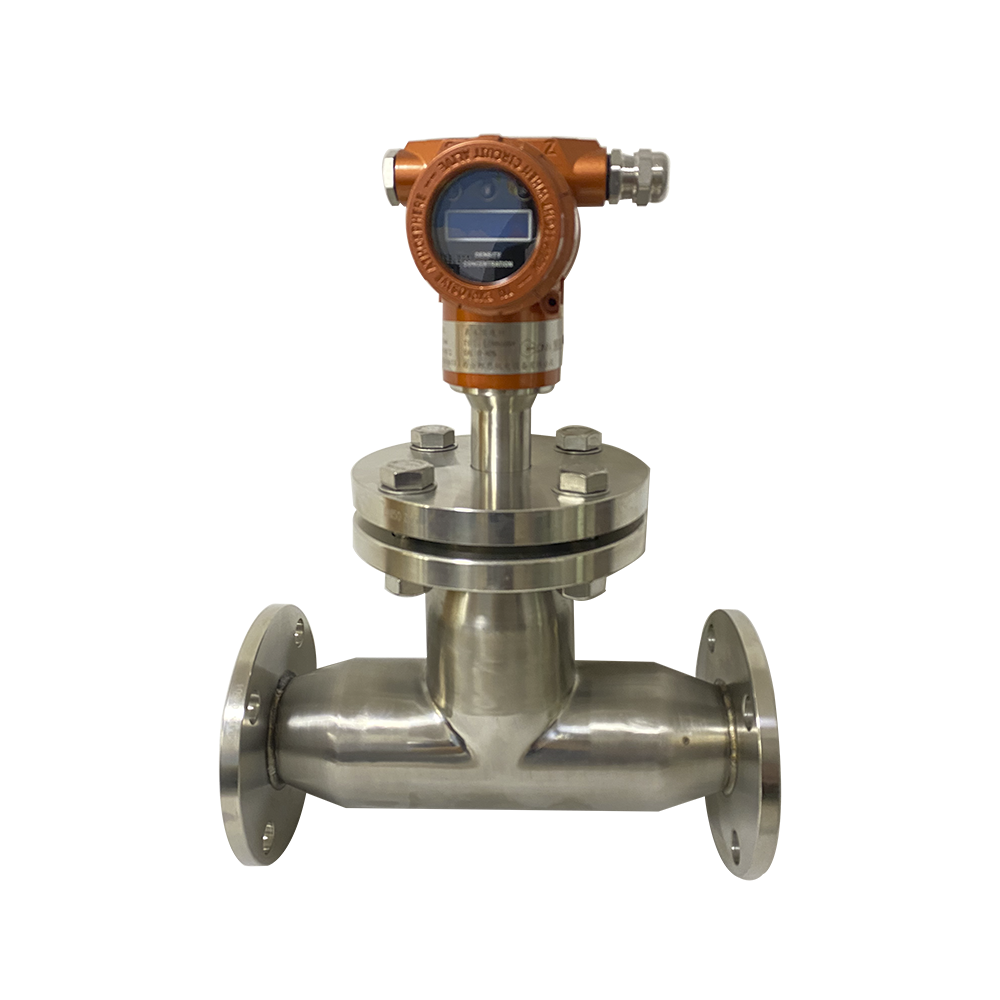
- LONNMETER LONNM-700CM tuning fork density meter: Non-nuclear, electromagnetic principle unaffected by magnetite, ATEX certified for hazardous area Zone 1, 316L stainless steel wetted parts compatible with magnetite slurry, delivery in 5 weeks.
The LONNMETER instrument was selected after a 2-week on-site trial demonstrating ±0.001 g/cm³ repeatability on the actual heavy medium suspension at 1.50 g/cm³.
3.2 Installation Configuration
Three LONNM-700CM units were installed:
| Location | Purpose | Process Connection | Medium Density |
|---|---|---|---|
| Cyclone feed pipe (DN150) | Primary process control | DN25 PN16 tee | 1.45-1.65 g/cm³ |
| Overflow weir | Separation bath density | DN25 PN16 flange | 1.35-1.50 g/cm³ |
| Magnetic separator feed | Medium regeneration circuit | DN25 PN16 flange | 1.40-1.60 g/cm³ |
The instruments were installed in a by-pass configuration with manual isolation valves, allowing sensor removal for maintenance without interrupting production.
3.3 Control Integration
The plant’s existing DCS was a Siemens PCS 7 system. The LONNM-700CM outputs 4-20mA (density signal) and RS-485 Modbus-RTU. The DCS integration was configured in three steps:
- Density-to-setpoint PID control: The cyclone feed density signal replaced manual sampling as the primary process variable for the dilution water control valve. PID parameters were tuned using the Ziegler-Nichols method over a 3-day commissioning period.
- Density deviation alarm: Alarms were set at ±0.01 g/cm³ (warning) and ±0.03 g/cm³ (critical), with automatic notification to shift supervisor via DCS.
- Trend logging: All density readings were logged to the DCS historian at 1-second intervals, enabling process engineering to conduct weekly analysis of density stability and control loop performance.
4. Results: What Changed After Installation
4.1 Immediate Changes (First 60 Days)
The most immediately visible change was the reduction in density deviation events. Within the first week of closed-loop operation, density deviations above ±0.03 g/cm³ dropped from 47 per week to 8 per week.
The process control team noted that the automatic correction of dilution water was preventing deviations before they could propagate — instead of responding to past events (as with manual control), the system was preventing deviations from occurring.
4.2 Six-Month Performance Data
After six months of operation (October 2025 – March 2026):
| Metric | Before (12-month avg) | After (6-month avg) | Change |
|---|---|---|---|
| Fresh water consumption | 2.80 m³/tonne | 1.85 m³/tonne | -34% |
| Water cost | $312,000/year | $206,000/year | -$106,000 |
| Magnetite medium consumption | 0.42 kg/tonne | 0.26 kg/tonne | -38% |
| Medium replacement cost | $89,000/year | $55,000/year | -$34,000 |
| Clean coal recovery rate | 81.3% | 83.4% | +2.1 pp |
| Additional coal recovered | — | 57,000 tonnes/year | +$1.7M/year |
| Ash content in clean coal | 11.2% | 10.1% | -1.1 pp |
| Density deviation events | 47/week | 6/week | -87% |
| Laboratory labor | 2 technicians | 0.5 technician | -75% |
The 2.1 percentage point improvement in clean coal recovery rate was particularly significant. At the plant’s throughput of 2.72 million tonnes per year and a clean coal market value of approximately $85/tonne, the incremental revenue from improved recovery was $4.85 million annually — though the plant attributed only a portion of this improvement directly to the density control upgrade, with the remainder attributable to other concurrent process improvements.
4.3 Return on Investment
Investment:
- 3 × LONNM-700CM units: $24,400
- Bypass piping and isolation valves: $3,200
- DCS integration and commissioning: $5,600
- Installation labor: $2,800
- Total: $36,000
Annual savings (conservative estimate):
- Water consumption reduction: $106,000
- Magnetite medium reduction: $34,000
- Laboratory labor reduction: $43,500
- Total direct savings: $183,500/year
Payback period: 5.2 months
The indirect benefit from improved coal recovery, while not included in the payback calculation, significantly exceeded the direct cost savings — making the instrumentation investment one of the highest-ROI projects in the plant’s recent capital program.
5. Operational Changes
5.1 Laboratory Reallocation
The two laboratory technicians were reassigned: one to instrument calibration and maintenance (a newly created role), and one to a expanded quality control program covering new product lines the plant was planning to add.
The shift supervisor now reviews the density trend screen at each shift handover, replacing the paper-based hydrometer log that had been in use for 12 years.
5.2 Environmental Compliance
The 34% reduction in fresh water consumption brought the plant comfortably below the new provincial threshold of 2.0 m³/tonne, with a measured value of 1.85 m³/tonne. The plant passed its January 2026 environmental audit with no water usage citations — compared to a likely failure under the previous control regime.
The environmental department noted that the density trend data (available from the DCS historian) provided compelling evidence of the plant’s water stewardship improvements for the regulatory submission.
6. Technical Appendix
Instrument Specifications
| Parameter | LONNM-700CM at Heavy Medium Circuit |
|---|---|
| Measurement principle | Tuning fork (electromagnetic oscillation) |
| Density range | 0-3.0 g/cm³ |
| Accuracy | ±0.001 g/cm³ (in process calibration) |
| Repeatability | ±0.0005 g/cm³ |
| Process temperature | 10-80°C |
| Process pressure | 0-1.6 MPa |
| Material (wetted) | 316L stainless steel |
| Output | 4-20mA + RS-485 Modbus-RTU |
| Explosion protection | ATEX Ex d IIC T4 |
| Process connection | DN25 PN16 flange |
| Ingress protection | IP67 |
Process Conditions
| Parameter | Value |
|---|---|
| Medium type | Magnetite (Fe₃O₄) suspension |
| Medium specific gravity | 1.35-1.65 g/cm³ |
| Solid content | 15-30% by weight |
| Operating temperature | 20-55°C |
| Particle size of magnetite | 80% <75 micrometres |
| Flow velocity | 1.5-3.0 m/s |
| Fouling potential | Moderate (fine magnetite coating) |
| Cleaning method | Compressed air purge (weekly) |
7. Frequently Asked Questions
Q: How does a tuning fork density meter work in a magnetite slurry environment? A: The LONNM-700CM uses electromagnetic oscillation of two tuning fork prongs immersed in the slurry. The oscillation frequency changes with fluid density — this is unaffected by the ferrous (magnetic) properties of magnetite, unlike microwave-based meters that can experience signal attenuation. The 316L stainless steel fork is highly resistant to abrasive wear from the magnetite particles.
Q: What is the expected sensor lifespan in a heavy medium circuit? A: Based on this deployment and similar applications in the literature, sensor lifespan of 3-5 years is typical before replacement of the wetted fork assembly is required. The primary wear mechanism is abrasive erosion from magnetite particles at high flow velocities — mitigated by installing the sensor in the lower-velocity by-pass line rather than the main process pipe.
Q: How often does the sensor need cleaning? A: The plant performs a weekly compressed air purge (30 seconds) to remove magnetite buildup on the fork. This takes 5 minutes and requires no process shutdown. Full sensor cleaning (chemical wash) is performed monthly during planned maintenance shutdowns.
Q: Does the instrument work in the harsh winter conditions of Inner Mongolia? A: Yes. The LONNM-700CM is rated to -20°C process temperature, and the plant has insulated the by-pass piping. The instrumentation shelter housing the transmitter was upgraded with electric heating to prevent condensation. No winter operation issues were encountered during the first heating season.
Q: Can this solution be applied to other types of mineral processing slurry? A: Yes. LONNMETER has deployed the LONN-700CM in iron ore flotation, copper concentrate thickening, and phosphate processing circuits. The key requirements are: non-ferrous slurry chemistry (or non-interfering solid phase), consistent particle size distribution, and installation in a representative sampling location with adequate flow velocity.
8. Conclusion
The deployment of LONNMETER inline density measurement at this Inner Mongolia coal washing plant demonstrates that the gap between process dynamics and analytical response time is one of the most underappreciated sources of operational inefficiency in mineral processing.
The numbers speak clearly: a 34% reduction in water consumption, a 38% reduction in medium consumption, and a 2.1 percentage point improvement in clean coal recovery — all from a single instrumentation upgrade with a 5.2-month payback.
For any coal washing or mineral processing operation currently relying on manual sampling for density control, the economic case for inline density measurement is compelling. The technology is mature, non-nuclear, and can be commissioned in days rather than months.
Request a Quote
To discuss inline density measurement for your coal washing or mineral processing application, LONNMETER offers on-site trials and process-specific technical consultation.
Contact: anna@xalonn.com
Products referenced: LONNM-7000 Ultrasonic Acoustic Impedance Concentration Meter | LONN-700CM Tuning Fork Density Meter
Related Case Study: Sulfuric Acid Density Control — Chemical Plant