
Industry Overview
The petroleum chemical industry operates at the intersection of the world demands measurement instrumentation that operates reliably in the world’s most demanding process environments — flammable hydrocarbons, corrosive chemicals, extreme temperatures, high pressures, and hazardous areas where explosive atmospheres are a daily reality. Every process decision — from crude oil receipt to finished product dispatch — depends on accurate, certified, and continuously available measurement data.
LONNMETER provides the petroleum and chemical industry with a unified instrumentation portfolio — inline density meters, inline viscometers, and flow meters — engineered to API, ASTM, and ATEX standards, backed by application engineering teams with direct experience across upstream, midstream, and downstream petroleum and chemical operations.
This page maps the complete LONNMETER petroleum chemical industry solution to your specific operational challenges.
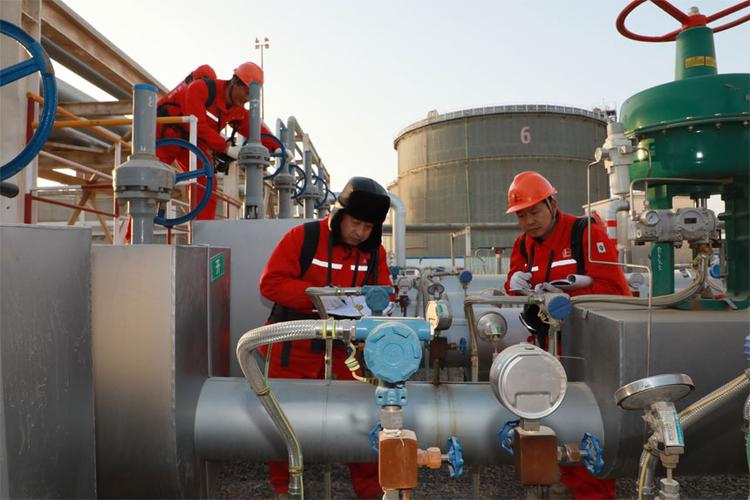
Measurement Challenges in the Petroleum & Chemical Industry
Every petroleum and chemical operation faces a common set of measurement challenges that are specific to this industry — challenges that distinguish it from food processing, pharmaceutical, or water treatment applications.
Challenge 1: Hazardous Area Compliance in the Petroleum Chemical Industry Solution
The petroleum and chemical industry operates continuously in Zone 1 and Zone 2 hazardous areas where flammable gas or vapor atmospheres are present during normal operations. Instrumentation that fails to meet ATEX Ex d IIC T4 (or higher) certification is not a procurement option — it is a safety and legal compliance requirement. Every instrument in your plant must carry valid ATEX certification, and that certification must match the actual gas group and temperature classification of the installation location.
Beyond ATEX, petroleum custody transfer applications require instruments with calibration traceable to national metrology institutes — NIST in the United States, national institutes internationally. A density meter used for fiscal custody transfer is not merely a process instrument; it is a legal measurement device whose accuracy directly determines financial settlement.
Challenge 2: Temperature and Pressure Extremes in Petroleum Chemical Industry Solution
Petroleum and chemical processes span temperature ranges from cryogenic (LNG at -162°C) to 400°C+ (pyrolysis furnaces). Pressure ranges extend from vacuum to 140 MPa in deepwater wellhead applications. No single instrument covers this entire range — selecting the right instrument for your specific temperature and pressure conditions is fundamental to reliable operation.
Beyond the instrument’s own range, petroleum fluids exhibit extreme temperature-viscosity sensitivity — heavy fuel oil viscosity changes by 5-10% per °C, meaning a 10°C temperature error translates to a 50-100% viscosity measurement error. Automatic temperature compensation (ATC) with accurate temperature measurement (±0.1°C) is not optional for petroleum applications — it is the difference between a useful measurement and a misleading one.
Challenge 3: Corrosive Fluids in Petroleum Chemical Industry Solution
Petroleum refining and chemical manufacturing involve fluids that are aggressively corrosive — sulfuric acid at any concentration, hydrochloric acid, hydrofluoric acid, caustics at high temperature, and chloride-rich crude oils that stress-corrode standard stainless steel. The wetted materials in your measurement instrument must be selected specifically for your fluid’s composition, temperature, and chloride content.
In sour gas applications (high H2S content), additional material selection criteria apply. In amine gas treating (for CO2 and H2S removal), the instrument must withstand thermal cycling between ambient and 120°C in a corrosive bicarbonate solution. Generic stainless steel instrumentation fails in these applications — purpose-selected wetted materials are required.
Challenge 4: Financial Stakes in the Petroleum Chemical Industry Solution
In petroleum and chemical operations, measurement errors translate directly to financial losses. A ±0.005 g/cm³ density measurement error on a 100,000 barrel crude oil cargo represents a $35,000 exposure at $70/barrel crude prices. A lube oil viscosity blending error of ±5% can mean the difference between a premium ISO VG 46 specification and an off-grade product that commands a lower price or triggers customer complaints.
In continuous process operations, measurement accuracy determines process efficiency. In a 250,000 barrel-per-day refinery, every 0.1% improvement in measurement accuracy through better process control translates to measurable annual operating cost savings through reduced energy consumption, reduced product giveaway, and optimized yield.
Typical Applications in the Petroleum & Chemical Industry
Crude Oil Receipt and Custody Transfer
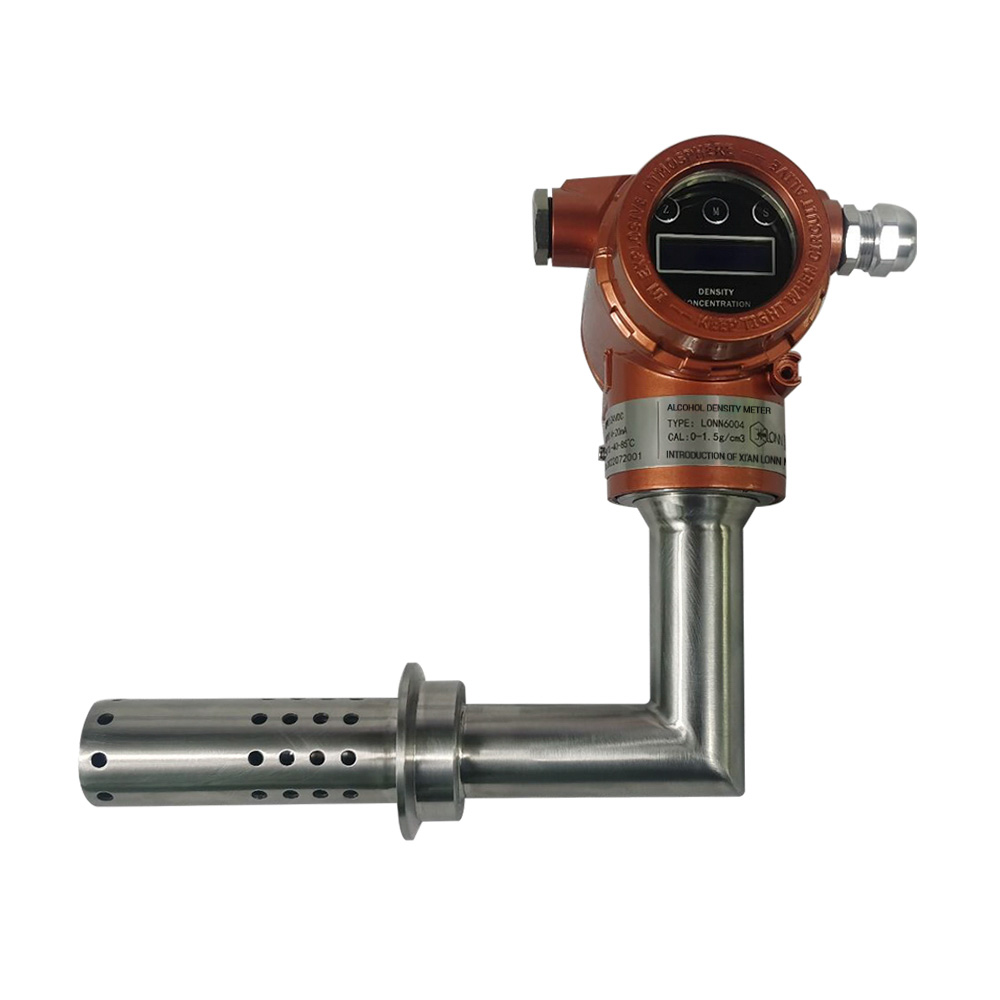
Every barrel of crude oil that enters a refinery arrives with a density measurement — the API gravity — that determines its value. The LONN6004 U-tube oscillating density meter provides the accuracy required for crude oil custody transfer applications: ±0.001 g/cm³ (0.02% of reading), meeting API MPMS Chapter 9 requirements for fiscal density measurement. The built-in PT100 temperature sensor (accuracy ±0.1°C) provides the temperature data required for API gravity calculation to standard conditions.
The LONN-ND tuning fork viscometer adds simultaneous viscosity measurement at the custody transfer point — enabling a complete fluid characterization (density + viscosity) from a single inline sensor, reducing the number of instruments required and simplifying the meter run installation.
Lube Oil Blending and Viscosity Control
Lube oil manufacturing is perhaps the most demanding viscosity control application in the petroleum industry. Every ISO Viscosity Grade (VG 10 through VG 6800) is defined by kinematic viscosity at 40°C. A blending error of ±3% places a VG 46 product at the VG 50 boundary — triggering grade change costs, potential customer complaints, and contract disputes.
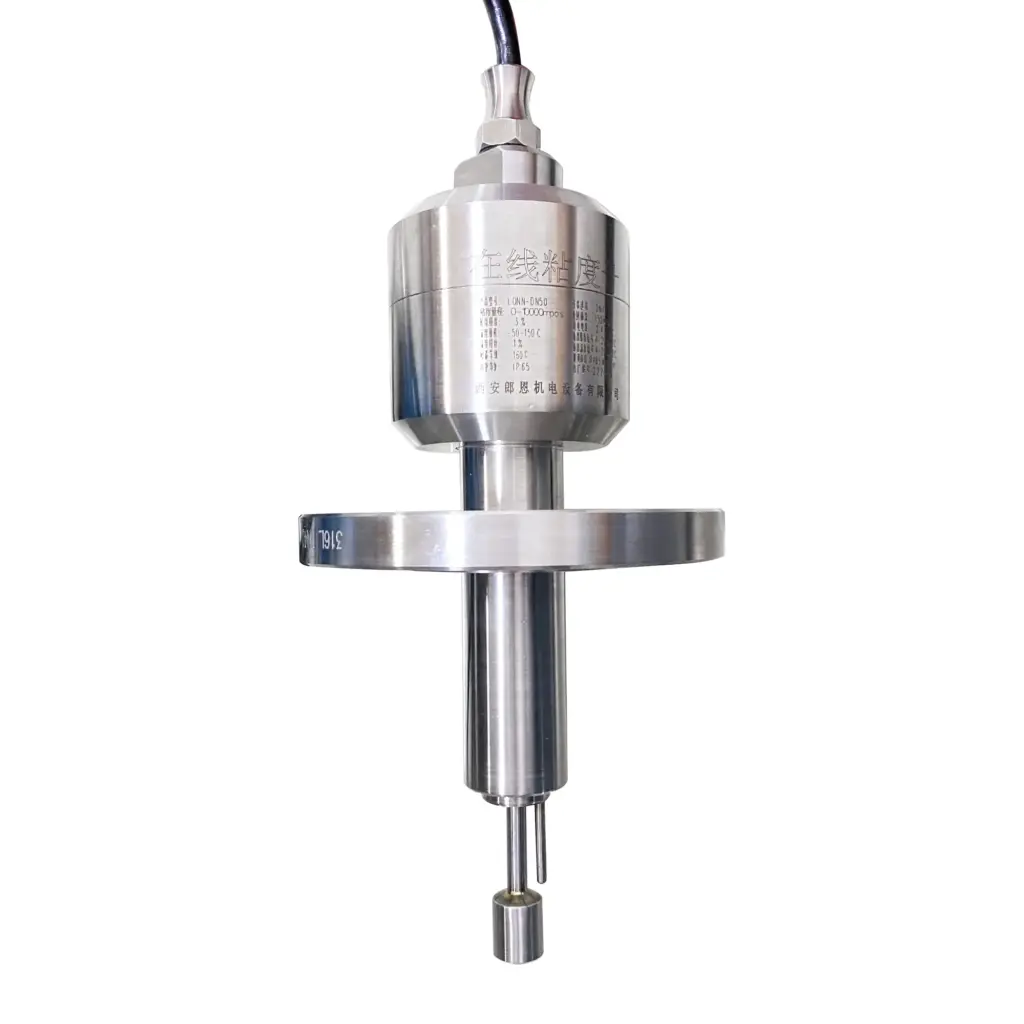
The LONN-DN100 split-type inline viscometer is purpose-engineered for lube oil blending applications: split electronics/sensor design enables installation in the blending manifold while the electronics housing is mounted in a safe, accessible location. The ±3% full-scale accuracy, combined with closed-loop control system integration via 4-20mA or Modbus RTU, enables viscosity control to ±2% of setpoint — eliminating the ±8% conformance band typical of laboratory-sampling-based blending control.
Heavy Fuel Oil Combustion Optimization
In power generation and marine fuel applications, heavy fuel oil (HFO) viscosity determines combustion efficiency. Optimal combustion viscosity for most burners is 15-20 cP — achieved at fuel temperatures of 130-140°C. The LONN-V7 high-viscosity inline viscometer, with its 0-5,000,000 cP measurement range and 300°C maximum process temperature, is installed in the HFO supply line to provide continuous viscosity feedback for burner temperature control.
Field data from 500 MW power plant installations shows that LONN-V7-based viscosity control delivers 0.5-1.0% fuel efficiency improvement — representing approximately 1,500-3,000 tonnes per year of fuel reduction and proportional CO2 emission reduction.
Acid and Caustic Concentration Monitoring
Petroleum refining and chemical manufacturing consume large volumes of acids (sulfuric acid, hydrochloric acid, phosphoric acid) and caustics (sodium hydroxide, potassium hydroxide) in process units including alkylation, acid treating, and pH control. Accurate concentration measurement enables process optimization and prevents costly overfeed events.
The LONN-7000 ultrasonic sound velocity concentration meter provides non-contact acid and caustic concentration monitoring — the ultrasonic sensor is isolated from the process fluid by a Hastelloy or PTFE window, eliminating corrosion and wear issues that plague intrusive sensors. The LONN-7000 covers sulfuric acid at any concentration (0-100%), hydrochloric acid (0-37%), sodium hydroxide (0-50%), and mixed acid/caustic solutions.
Flare Gas and Fuel Gas Measurement
Environmental compliance and energy management in petroleum refineries require accurate measurement of flare gas flow (EPA Subpart CC, European EHS Directive 2010/75/EU) and fuel gas consumption (for greenhouse gas inventory and energy balance). The LONN-MFC thermal mass flow meter provides direct mass flow measurement of flare gas and fuel gas streams — without the pressure and temperature compensation complexity required by orifice plate or turbine meter systems.
The thermal mass principle — measuring the heat transfer from a heated sensor to the flowing gas — provides true mass flow measurement that is independent of gas pressure, temperature, and composition variations. This is particularly valuable for flare gas measurement, where the gas composition changes continuously as different process units route their relief gas to the flare header.
Process Flow Measurement
Petroleum refineries and chemical plants require flow measurement across thousands of process streams — from instrument air (DN15, 50 NL/min) to crude oil trunk lines (DN600, 10,000 m³/h). No single flow meter technology covers this range. The LONNMETER petroleum chemical industry solution provides three flow meter technologies for different applications:
- LONN-MFC thermal mass flow meter: Compressed air, natural gas, nitrogen, flare gas (DN15-DN50, 0.5-150 NL/min per range)
- LONN-UFM clamp-on ultrasonic flow meter: Any fluid in any pipe size (DN6-DN6000, non-intrusive, no pressure drop)
- LONN-GF gear flow meter: Viscous petroleum fluids, lube oils, chemicals (DN10-DN100, ±0.5% accuracy)
Recommended Instruments for the Petroleum Chemical Industry Solution
Density Measurement
| Instrument | Best For | Accuracy | ATEX | Key Differentiator |
|---|---|---|---|---|
| LONN6004 U-tube oscillating density meter | Crude oil and product custody transfer | ±0.001 g/cm³ | Ex d IIC T6 | API MPMS 9 compliant, ±0.02% accuracy |
| LONN-7000 ultrasonic concentration meter | Acid/caustic concentration monitoring | ±0.5% conc. | Ex d IIC T4 | Non-contact ultrasonic, zero corrosion |
| LONN-700C ceramic fork density meter | High-temperature acid applications | ±0.001 g/cm³ | Ex d IIC T4 | Ceramic fork: inert to 98% H₂SO₄ |
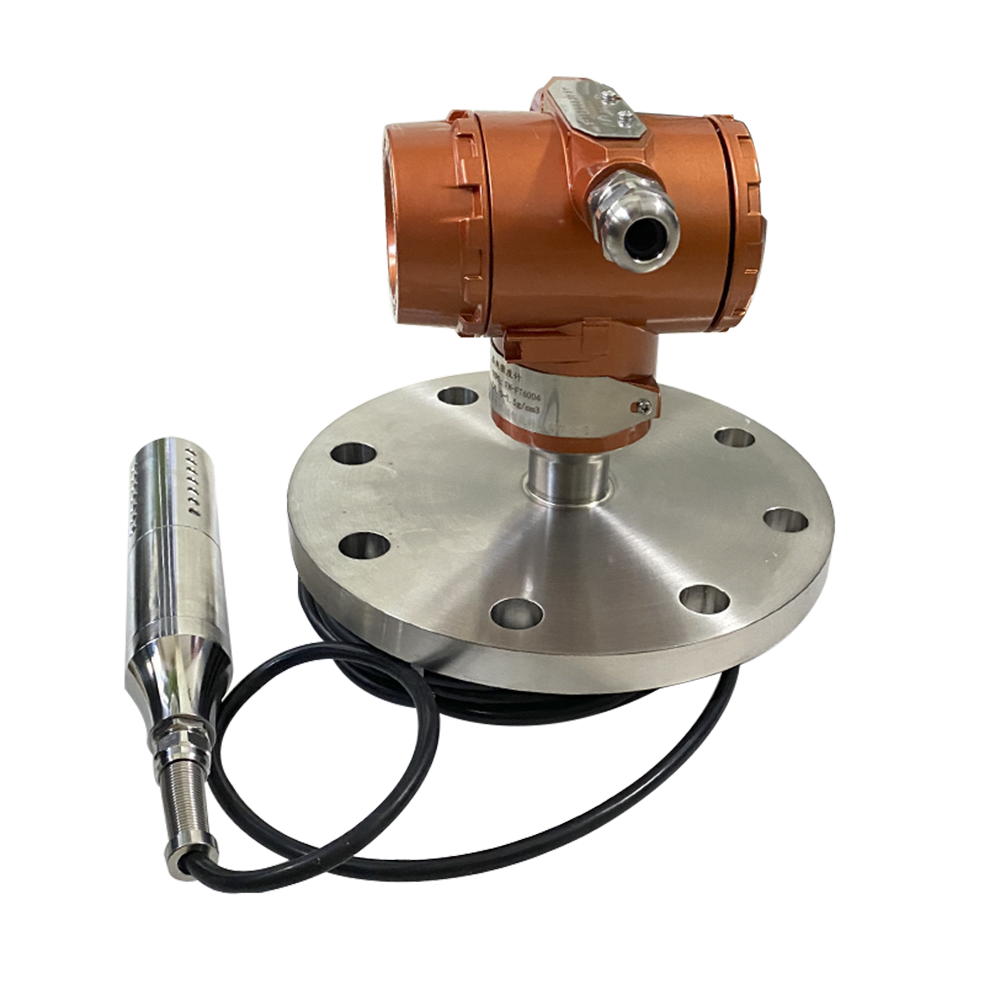
| LONN-700S split-type fork density meter | Tanks, vessels, high-vibration pipelines | ±0.001 g/cm³ | Ex d IIC T4 | Separated electronics for remote mounting |
Viscosity Measurement
| Instrument | Best For | Range | ATEX | Key Differentiator |
|---|---|---|---|---|
| LONN-ND80 tuning fork viscometer | Lube oil blending, pipeline monitoring | 0.5-5,000 cP | Ex d IIC T4 | Simultaneous viscosity + density from one sensor |
| LONN-DN60 high-viscosity inline viscometer | Heavy fuel oil, bitumen | 0-5,000,000 cP | Ex d IIC T4 | 300°C max temperature, DN50/DN80 flanges |
| LONN-DN100 split-type viscometer | Storage tanks, custody transfer | 0.5-500,000 cP | Ex d IIC T4 | Remote electronics: tank and vessel installation |
Flow Measurement
| Instrument | Best For | Range | ATEX | Key Differentiator |
|---|---|---|---|---|
| LONN-MFC thermal mass flow meter | Compressed air, natural gas, flare gas | 0.5-150 NL/min | Ex d IIC T4 | Direct mass flow, no P/T compensation |
| LONN-GMFC thermal mass flow controller | Fuel gas flow control | Up to 5,000 NL/min | Ex d IIC T4 | Built-in control valve, flow setpoint control |
| LONN-UFM clamp-on ultrasonic flow meter | Large pipes, non-intrusive installation | DN6-DN6000 | N/A | Zero pressure drop, no process shutdown |
| LONN-GF gear flow meter | Viscous fluids, custody transfer | DN10-DN100 | Ex d IIC T4 | ±0.5% accuracy, self-lubricating by process fluid |
Case Studies
Case Study 1: Crude Oil Pipeline Viscosity Monitoring
Background: A 200 km crude oil pipeline transporting heavy crude (API 18, viscosity 200-800 cP at pipeline temperature) required continuous viscosity monitoring for flow assurance. The pipeline operator needed to optimize pumping energy consumption and detect batch interface positions during multi-cargo crude oil transport operations.
Solution: LONN-ND80 tuning fork viscometers installed at the inlet and outlet of each pump station, with Modbus RTU signal integration to the pipeline SCADA system. Viscosity data used for: pumping energy optimization, quality deviation detection, and batch interface tracking.
Results:
- 7% reduction in pumping energy consumption through optimized flow rate management
- Zero batch interface contamination events — early detection of viscosity deviations prevented off-spec crude reaching the refinery
- 3-year instrument reliability with no scheduled maintenance required
Case Study 2: Lube Oil Blending Closed-Loop Viscosity Control
Background: A lube oil manufacturing plant producing 20 ISO VG grades from 8 base stock components used laboratory sampling (rotational viscometer, 30-minute test cycle) for viscosity quality control. The ±8% viscosity conformance band caused customer complaints and product giveaway equivalent to approximately 3% of annual production volume.
Solution: Three LONN-DN100 split-type inline viscometers in the blending manifold — one for each viscosity range (ISO VG 10-32, VG 46-150, VG 220-680). 4-20mA signal integration to the plant DCS, with closed-loop blending control adjusting component flow rates to maintain target viscosity setpoint.
Results:
- Viscosity conformance improved from ±8% to ±2% of target across all 20 grades
- Customer viscosity complaints eliminated completely
- Product giveaway reduced by 3% of total production volume — estimated annual value $2.4 million
- Calibration verification interval: 6 months (reduced from 3 months for custody transfer grade products)
Case Study 3: Sulfuric Acid Concentration Monitoring in Alkylation Unit
Verified performance data: LONN-7000 concentration monitoring achieves ±0.5% concentration accuracy for 98% sulfuric acid — compared to ±2% accuracy with laboratory sampling at 4-hour intervals. Three-year uptime of 99.7% in alkylation unit service with no scheduled maintenance.
Background: An alkylation unit in a petroleum refinery uses 98% sulfuric acid as a catalyst. The acid concentration must be maintained between 88% and 94% by weight — below 88%, the alkylation reaction slows and product yield drops; above 94%, the acid consumption rate increases and corrosion accelerates. Previous concentration measurement used laboratory sampling with a 4-hour test cycle.
Solution: LONN-7000 ultrasonic sound velocity concentration meter installed in the acid regeneration loop, with 4-20mA signal to the DCS for continuous concentration monitoring and alarm generation.
Results:
- Continuous concentration monitoring with ±0.5% accuracy — compared to ±2% with laboratory sampling
- Acid overfeed events reduced from approximately 4 events per year to zero
- Estimated annual savings: $200,000 in reduced acid consumption and eliminated production losses per overfeed event
- Instrument uptime: 99.7% over 3-year operating period
Frequently Asked Questions on the Petroleum Chemical Industry Solution
What ATEX certification do petroleum refinery instruments need?
Petroleum refineries are classified as Zone 1 for process unit areas and Zone 2 for adjacent areas. The minimum ATEX certification for Zone 1 installation is Ex d IIC T4 — explosion-proof protection for gas group IIC (covering hydrogen and acetylene) with maximum surface temperature of 130°C. The LONN6004 carries the more stringent Ex d IIC T6 certification (85°C maximum surface temperature), providing additional safety margin for high-temperature process environments.
For custody transfer applications in tank farms and metering stations, confirm the gas group classification with your safety department — some installations require IIB certification due to the presence of propane/butane in tank ullage gas.
Can inline density measurement replace laboratory sampling for custody transfer?
For fiscal custody transfer density measurement, API MPMS Chapter 9 specifies the accuracy requirements that must be met. The LONN6004 ±0.001 g/cm³ accuracy meets the repeatability requirements of API MPMS 9.2 for Class A meters. However, the specific requirements of your custody transfer agreement — including measurement location, correction procedures, and dispute resolution — must be verified with your legal and trading teams.
Inline density measurement provides a significant advantage over laboratory sampling: it is continuous, real-time, and eliminates the sampling error and laboratory measurement uncertainty that can exceed the inline instrument’s own accuracy specification. For routine custody transfer monitoring (not fiscal settlement), inline density measurement is unambiguously superior to laboratory sampling.
How do I select the right viscometer for heavy fuel oil viscosity control?
The selection of the right viscometer for heavy fuel oil depends on three factors: viscosity range, process temperature, and installation constraints.
For HFO viscosities up to 5,000 cP at temperatures up to 150°C, the LONN-ND tuning fork viscometer is the preferred choice — its 0.5-5,000 cP range covers most HFO applications, and the simultaneous density measurement provides API gravity data as a secondary parameter. For HFO viscosities up to 5,000,000 cP (including bitumen at elevated temperatures), the LONN-V7 is required — its 0-5,000,000 cP range and 300°C maximum temperature rating cover all heavy fuel oil and bitumen applications.
The installation location must provide a flow rate sufficient to ensure the viscometer fork is fully immersed and the fluid is representative of the bulk stream. For tank-mounted installations, a recirculation loop is recommended to maintain fluid motion and prevent settling.
What flow meter is best for flare gas measurement?
The LONN-MFC thermal mass flow meter is purpose-engineered for flare gas and fuel gas measurement applications. The thermal mass principle provides direct mass flow measurement that is independent of gas composition and temperature variations — critical for flare gas, where the gas composition changes continuously as different process units route their relief gas to the flare header.
The LONN-MFC covers flow rates from 0.5 to 150 NL/min per range (multiple ranges available up to 5,000 NL/min), with accuracy of ±1.0% of reading for flows above 30% of full scale. For smaller flare headers (DN15-DN50), a single LONN-MFC covers the range. For larger headers, multiple meters in parallel or the LONN-UFM clamp-on ultrasonic flow meter can be used.
How do I verify instrument calibration for custody transfer applications?
Custody transfer instruments require periodic calibration verification to maintain their legal measurement status. For density meters, calibration verification uses certified reference density standards traceable to national metrology institutes. For viscosity meters, calibration verification uses Newtonian certified viscosity reference oils traceable to ASTM D445 kinematic viscosity standards.
LONNMETER provides calibration services with traceable certificates for all custody transfer instruments. The recommended verification interval for fiscal custody transfer applications is 3 months; for general process control applications, 6-12 months is typical. In-situ calibration verification (without removing the instrument from the process) can be performed using a secondary standard for many applications.
Get a Tailored Petroleum & Chemical Industry Solution
Every petroleum refinery, petrochemical plant, and chemical manufacturing facility has a unique process configuration, fluid inventory, and measurement challenge set. LONNMETER application engineers work directly with your team — with verified accuracy of ±0.001 g/cm3 for custody transfer density and ±0.5% concentration for acid monitoring — to identify the optimal measurement solution for your specific requirements.
What to prepare before contacting us:
- Process fluid composition and typical operating temperature/pressure
- Measurement accuracy requirement and the consequence of measurement error
- Hazardous area classification of the installation location
- Signal interface requirement (4-20mA, Modbus RTU, HART, Profibus)
- Whether the application is process control or custody transfer
The petroleum chemical industry solution from LONNMETER addresses every challenge described above with a portfolio of purpose-engineered instruments, certified to ATEX and API standards, supported by application engineers with direct petroleum chemical industry experience.
Email: anna@xalonn.com
LONNMETER — smartmeasurer.com
Fill out our RFQ form