
A slurry is two things at once — a liquid and the solid it carries — and that second part is exactly what most plants are trying to control. Whether the goal is a flotation grade, a cyclone cut, a grinding-circuit load, or a tailings density that satisfies the engineers and the regulator, the number that drives the decision is almost always the slurry density. Yet the way many sites still read that number has not changed in decades: a worker draws a bucket from a launder, lugs it to a lab, and weighs it against a known volume an hour later. By then the stream has moved on. This guide is about doing slurry density measurement where the fluid actually is — inline, continuous, and honest about what slurry does to instruments. It sits within our broader density measurement hub, which gathers the method and application guides we reference below.
The case for moving slurry density measurement off the lab bench is not academic. Slurry is abrasive, it settles, it entrains air, and its solids fraction swings with the ore body and the weather. A single grab sample tells you what one point in one pipe did at one moment; a continuous inline signal tells you what the process is doing now. That difference is the whole article.
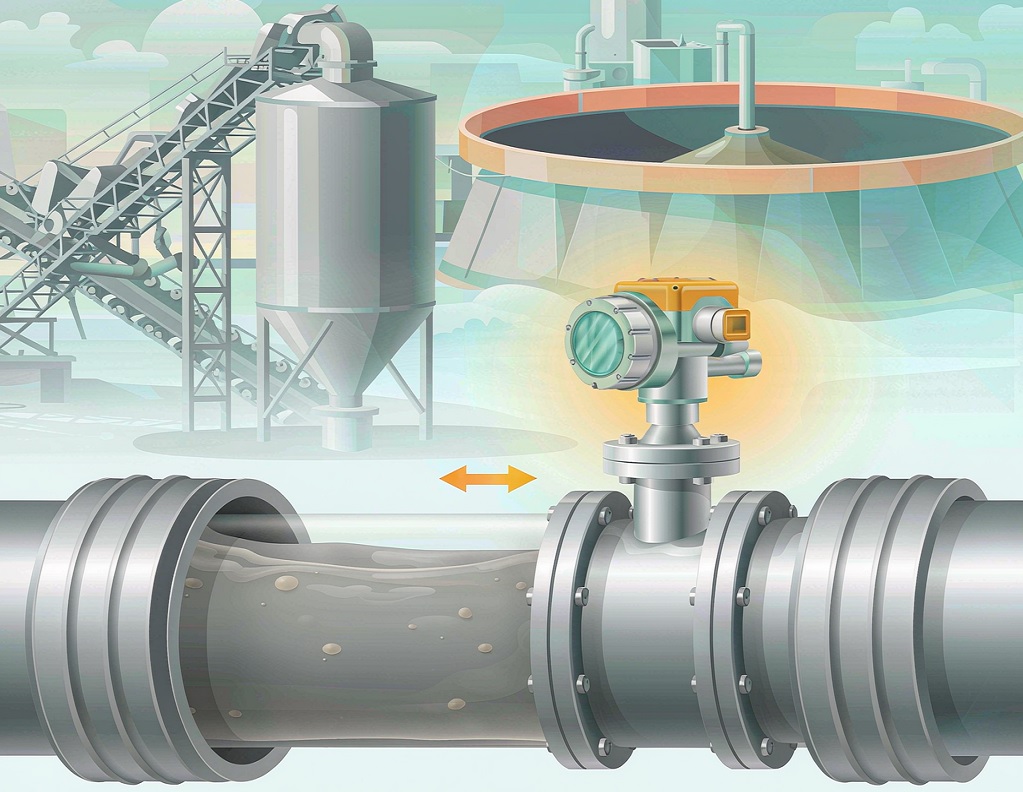
Fig 1 — An inline density transmitter on a slurry pipeline turns a once-per-shift bucket sample into a continuous signal the controller can actually use.
Why plants measure slurry density in the first place
Different industries lean on the same number for different reasons, and none of them tolerate a stale reading.
Flotation and mineral recovery
In a flotation circuit the slurry density sets the residence time and the bubble load. Too thin and the cells flush valuable mineral to tailings; too thick and the froth stalls and grade drops. Operators who control slurry density measurement continuously hold the circuit in its narrow window instead of chasing it after the shift report lands.
Cyclone and classification control
Hydrocyclones split coarse from fine on a density-dependent cut. Feed them a slurry that is denser than the controller thinks and the cut moves, the oversize reports to the wrong stream, and the grinding circuit eats steel it did not need to. A live density signal at the cyclone feed is what keeps the split where the metallurgist designed it.
Grinding-circuit load
The mill load is inferred, in part, from the density of the discharge and the sump. Get that density wrong and you either under-feed the mill (lost throughput) or over-feed it (a liner and a motor you did not budget for). Continuous slurry density measurement at the sump is the cheapest insurance against both.
Coal washing, dredging, and tailings
Coal preparation separates on density through a medium; dredgers track the solids they are moving by density; tailings dams are managed, in part, by the density of what gets pumped to them. In all three, continuous slurry density measurement is the operating variable, not a quality nicety.
What makes slurry hard to measure
Anyone who has pulled a probe out of a cyclone feed knows slurry is not water. Four properties decide which method survives.
Abrasion
Carried solids are rock. They sandblast any surface they touch. A sensor with a soft or thin wet-end loses calibration to wear long before it loses its electronics. This is why abrasion-resistant wet-ends — ceramic, hardened alloy, or a design with no wetted moving part — matter more for slurry than for any clean fluid.
Settling and stratification
Slurries are not homogeneous. In a horizontal pipe the coarse fraction sinks, the fines and water ride on top, and a density cell sees whatever layer happens to sit at its probe. A reading from a stratified line is a reading from a layer, not the stream.
Air entrainment
Flotation tails, agitated tanks, and any free-fall into a sump pump air into the slurry. Air at the probe reads as lower density than the true solids loading — a quiet, expensive error that looks like process drift.
Wide, shifting range
The same line can run from a thin 1.05 g/cm³ dilute to a 1.60 g/cm³ heavy medium depending on the ore and the step. A method tuned to one band reads the other band with a wide, lazy error.
The methods, compared
Slurry density measurement splits into the offline sample and the inline transmitter, plus — in mining — the radiation gauge that sits somewhere between.
Offline: grab sample, Marcy scale, pycnometer
The classic plant method is a known-volume bucket weighed on a Marcy or similar scale, or a lab pycnometer. It is cheap, familiar, and traceable. It is also a snapshot from one point, taken after transport, after settling in the bucket, and after the stream moved on. For circuit audits and calibration it is necessary; for live control it is a rear-view mirror.
Nuclear (gamma) density gauge
A sealed source and detector straddle the pipe; density follows from attenuation. It is non-contact, tolerates the worst abrasion and fouling, and needs no process opening. It also needs a radiological license, shielding, and a safety program — a regulatory load in addition to the technical one. For slurry density measurement on abrasive, high-pressure, or heavily scaling lines where nothing else survives, it earns its place. On a clean, well-run circuit it is often overkill, and the licensing overhead is real.
Tuning-fork inline density meter
A vibrating fork immersed in the stream reads density from its resonant frequency. For slurry the deciding feature is the wet-end: a ceramic or hardened-alloy fork shrugs off abrasion that would erase a softer probe in weeks. It is compact, fast, and with no process opening to leak, it suits retrofit on existing launders and pipes. Our tuning-fork density meter piece covers the wet-end and range details. For slurry density measurement on most mineral-processing and coal circuits, an abrasion-resistant fork is the first call.
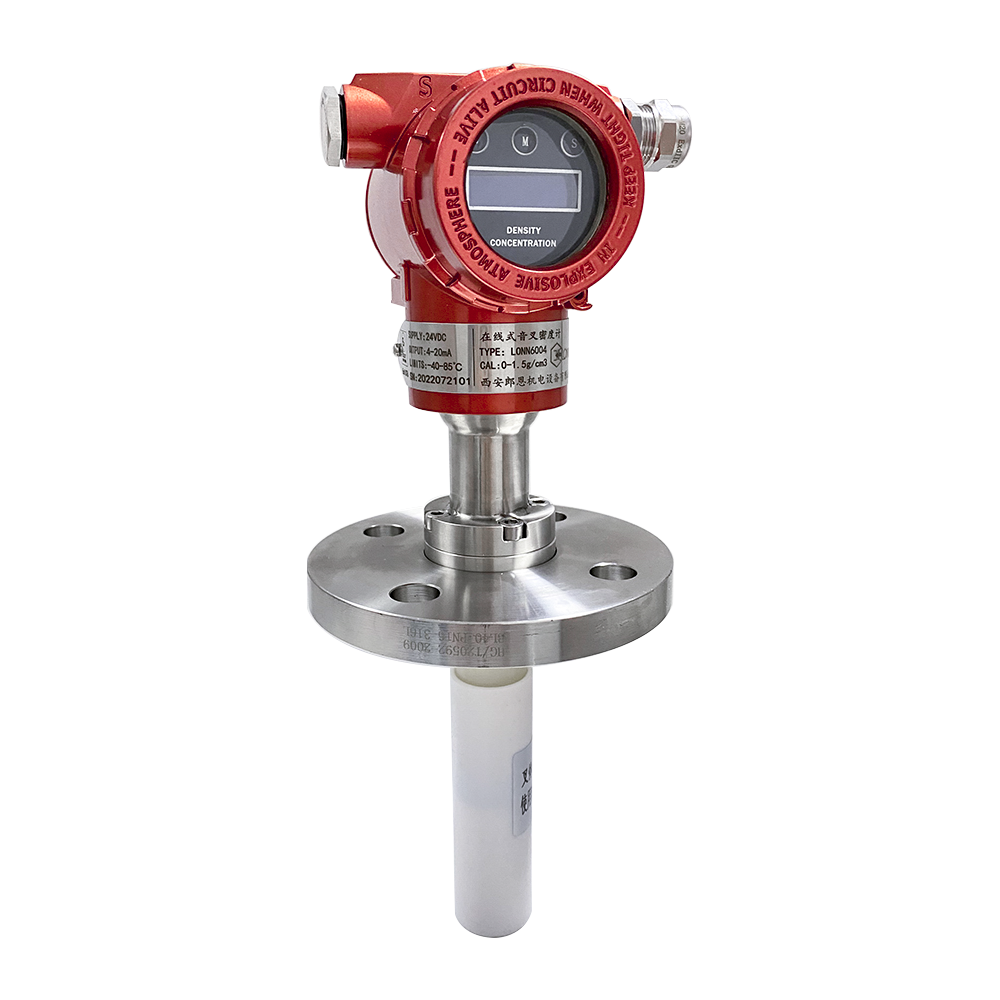
Fig 2 — A ceramic wet-end tuning-fork transmitter: the default slurry density measurement choice for abrasive cyclone feeds and tailings lines.
Clamp-on ultrasonic
A clamp-on ultrasonic density meter couples transducers to the pipe exterior and sends sound across the flow; density follows from the acoustic path. No penetration, no confined-space entry, nothing in the slurry to wear. On a large line where cutting in is expensive or the area is hard to reach, that non-intrusive nature is the entire argument. The trade is discipline: a clean pipe wall, good coupling, and you must keep scale and air off the inner surface or it will lie to you.
Coriolis
A Coriolis meter infers density from tube vibration while it measures mass flow — so where you also need the flow, you get both from one device. For slurry the abrasion story is the caveat: the vibrating tube and its sensors sit in the stream and take the wear. On a metered product line it is elegant; on a coarse cyclone feed it is a brave choice.
Choosing the method for the duty
A short framework for slurry density measurement, not a brochure:
- Abrasive mineral or coal slurry, existing pipe, retrofit → abrasion-resistant tuning-fork. Ceramic or hardened wet-end, no process opening, fast response.
- Large line, no appetite for a process opening, or hard to reach → clamp-on ultrasonic. Accept the coupling discipline.
- Metered stream where you also need mass flow → Coriolis, if the abrasion is manageable.
- Worst-case abrasion, scaling, or high pressure where nothing else survives → nuclear, if the radiological program is in place.
- Circuit audits, calibration, and the reference number → keep the grab sample and Marcy scale. Inline controls; the bucket proves.
The density meter selection guide expands this into a full decision table, and the inline measurement methods guide compares the technologies side by side. On a mine site the same picture applies with the abrasion story turned up — that is where an abrasion-resistant (ceramic or hardened) wet-end earns its keep over a soft one.
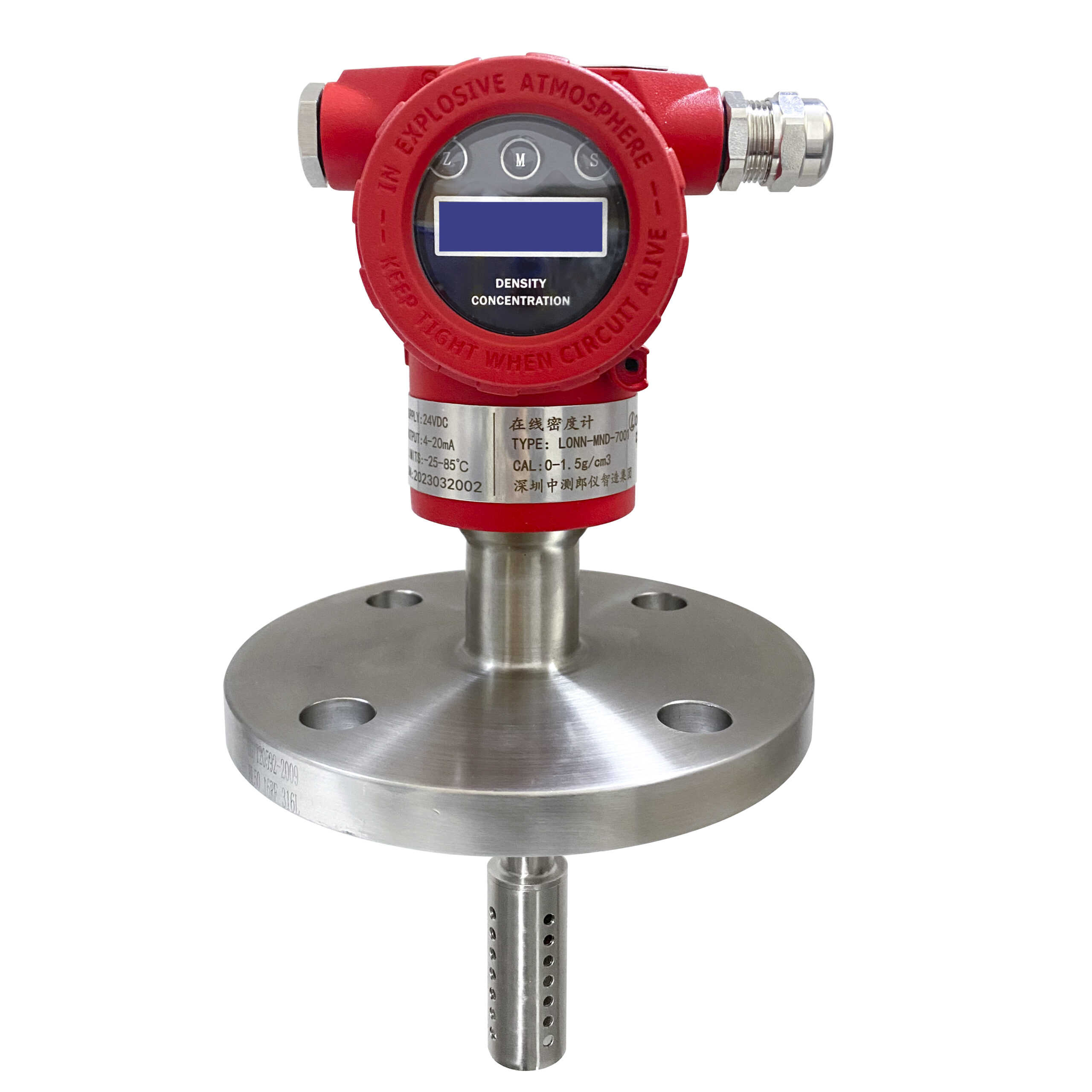
Fig 3 — An inline density and concentration transmitter on a process line: one device covering the density and solids-fraction read the controller needs.
Installation pain points that wreck the reading
Slurry density measurement lives or dies on the mounting, the same as any inline install, plus a few slurry-specific traps.
- Keep the pipe full and representative. A cell in a line that runs with solids banking at the bottom reads the bank, not the stream. Vertical upward runs, or a tap on a well-mixed, fully charged line, stay the rule. Stratification is the silent killer of slurry readings.
- Place it away from the disturbance. Ten to fifteen pipe diameters downstream of a pump, elbow, or valve, and clear of where the slurry free-falls and churns air in. Turbulence and entrained air are where density cells go to tell lies.
- Mind the abrasion at the mount. Even an abrasion-resistant wet-end wears faster at a bend or a high-velocity throat. Put the sensor where the velocity is steady, not where the slurry is being thrown.
- Temperature at the cell. Density is temperature-coupled, and slurry temperatures swing with the circuit. Read temperature at the density point, not at the motor house, or your correction carries someone else’s gradient.
- Plan the pull. Choose a device and location you can isolate and inspect on a planned shutdown, not one that strands you until the next one. A fork you can pull and check beats a sealed gauge you cannot.
Our non-nuclear density measurement in the chemical industry article covers wet-end materials and the non-nuclear choices for hazardous and abrasive streams more broadly, and the inline vs Coriolis comparison is useful where flow and density are both on the table.
The mistakes that keep showing up
The same five errors appear plant after plant, and most of them are placement, not instrument:
- Sampling the layer, not the stream. A tap on the bottom of a horizontal pipe reads settled solids. Move it to where the slurry is actually mixed.
- Trusting a number next to an air entrainment point. A cell two meters below a free-fall sump inlet reads foam half the day. Give it straight, de-aerated pipe.
- Ignoring wear. An uncalibrated fork that has lost a tenth of a millimeter to abrasion drifts slowly and nobody notices. Put a calibration check on the planned maintenance cycle, not on the failure.
- Buying the brochure, not the duty. A Coriolis on a coarse cyclone feed is a brave choice; a soft wet-end on a tailings line is a short one. Match the method to the solids.
- No reference at all. Running inline with no grab-sample check means you never know if the cell has drifted. Keep the bucket as the proof, even if you no longer run the circuit on it.
The honest bottom line
Slurry density measurement is less a choice of instrument than a choice of where and how the instrument meets the stream. The method — fork, ultrasonic, Coriolis, or nuclear — follows the duty: the abrasion, the access, the pressure, and whether you also need the flow. The reading follows the install: full pipe, mixed stream, clear of pumps and air, logged with its temperature. Get those two right and any of the inline methods will read what the process is actually doing. Skip them and you will spend months blaming a sensor that was telling the truth about a bad location. As a group that designs, builds, and supports these instruments, we have watched the same mistakes close more circuits than any specification ever opened — so plan the slurry density measurement on paper first, and the plant will read what you expect. That is the whole point of slurry density measurement: read the moving stream, not the layer it left behind.
If your circuit is fighting a density reading that will not hold, talk to our application engineers about the wet-end and the mount before you buy the instrument — most slurry problems are solved in the pipe, not the catalogue.
LONNMETER GROUP — designing, manufacturing, and supporting inline density and concentration instrumentation for mineral processing, coal preparation, and industrial slurry circuits.