
A distillery and a biofuel refinery measure the same quantity for opposite reasons. The distiller is chasing a flavor boundary that moves with the alcohol strength; the refiner is chasing a fuel specification that moves with the water left behind. Both reduce to one number: how much ethanol is genuinely in the stream. Ethanol concentration measurement is the step that converts a density reading into that number — ABV on the still, proof on the label, blend ratio at the tank. The sensor itself is the easy part. The conversion curve, the temperature correction, and the moment of the cut are where the value is won or lost, and a reading that describes yesterday's sample instead of today's flow is worse than none at all.
Two industries, one measurement problem
Both fail identically — the spirit still loses its cut window to a late grab sample, and the biofuel line ships off-spec blend before the lab calls. A strength known only after the fact is a strength you cannot act on.
Density already knows the answer
There is no probe that counts ethanol molecules directly. What plants measure is density, and then they let the ethanol–water relationship do the rest. At 20 °C the density of a plain ethanol–water mix falls smoothly from about 0.9982 g/mL at 0% ABV to about 0.7892 g/mL at absolute ethanol, but it does not fall in a straight line — mixing the two liquids contracts the volume, so 50 mL of each gives roughly 96.5 mL, not 100. That curvature is why the official tables, not a rule of thumb, have to drive the conversion. Mixing arithmetic should therefore track mass fractions rather than a naive volume sum — the contraction is already baked into the official tables.
For reference, the international alcoholometric tables (OIML R 22, also used by AOAC and IUPAC) give, at 20 °C, approximately:
Why the bench hydrometer loses on a running still
The bench hydrometer is accurate and cheap, and it is the wrong apparatus for a running still. The transition from heads to hearts to tails is a narrow window of a few minutes, and the alcohol strength is swinging fast right there. By the time an operator draws a sample, walks it to the bench, waits for temperature equilibrium, and reads it, the cut has moved — so the decision is made on a number that no longer describes the line. The result is hearts cut short, or tails drawn into the heart, which costs both yield and character.
Inline, reading ABV where the cut happens
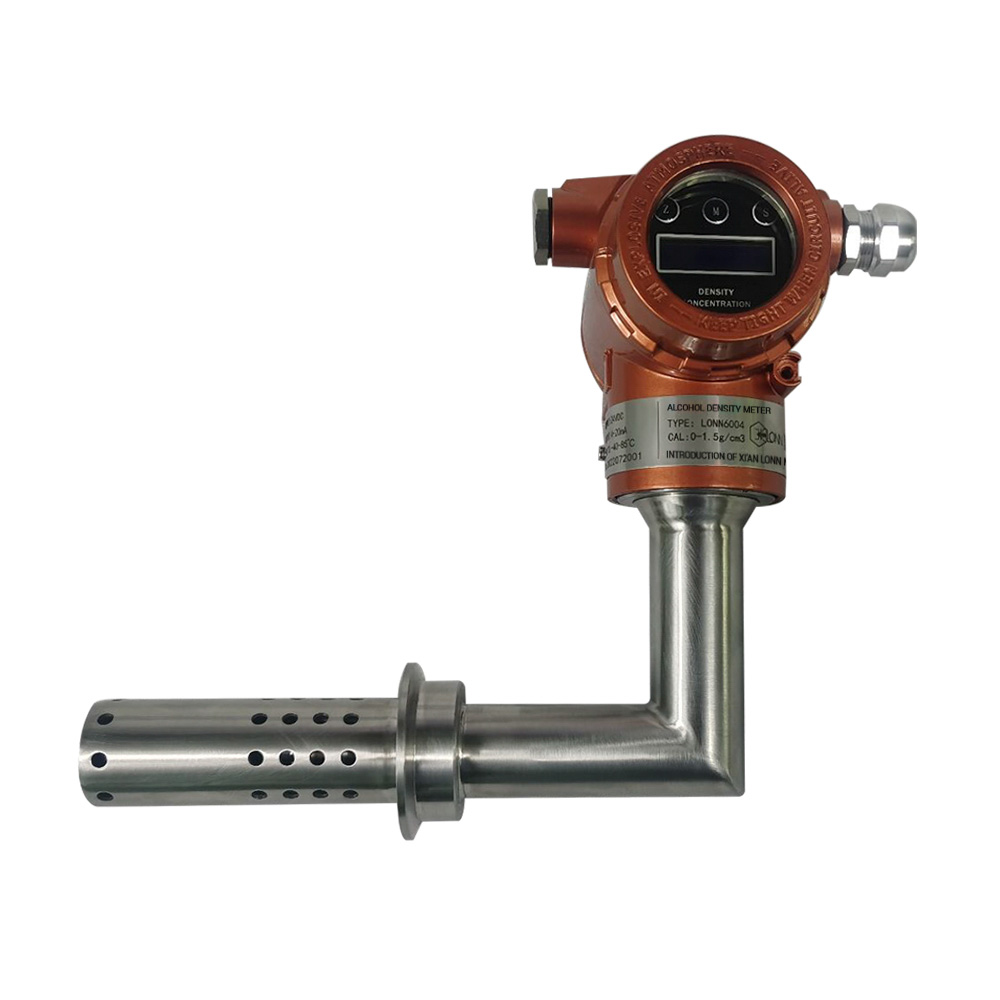
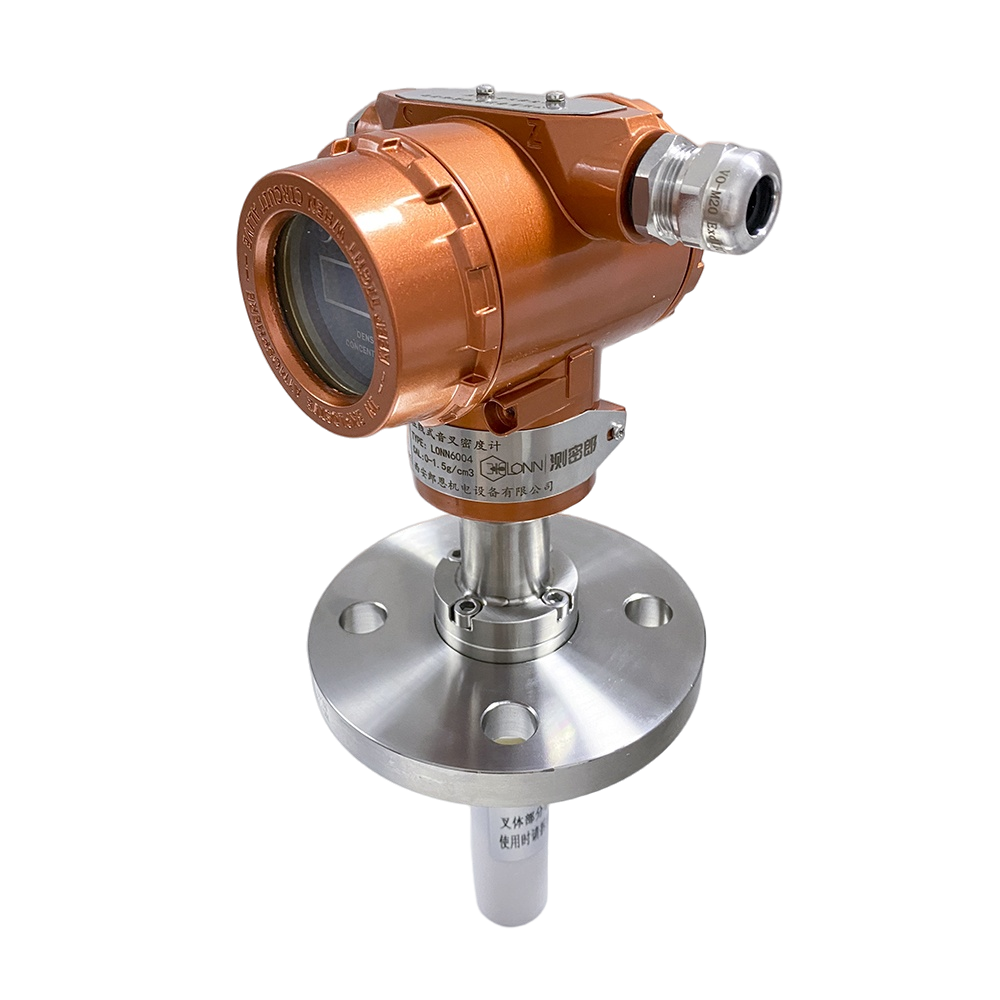
Placing the sensor at the condenser outlet, on the fermenter, at the dehydration column, or on the blend and fill line turns ethanol concentration measurement from a post-mortem into a control input. On a pot or column still, a density meter just after the condenser reads the evolving ABV continuously; set an ABV threshold and the receiving vessel switches automatically between heads, hearts, and tails. On a fermenter, the falling specific gravity tracks fermentation to completion and calculates final ABV without a hydrometer draw. On a biofuel dehydration column, the same principle confirms the overhead product has crossed the 99.5% vol fuel threshold.
The temperature trap bites harder for ethanol
Ethanol expands with heat roughly four times faster than water near room temperature — pure ethanol loses about 0.00085 g/mL per degree Celsius. Because the density-to-ABV link is steep, a few degrees of uncorrected temperature can move the strength reading by more than a percent, which is the entire tolerance on a fiscal cut. Distillation condenser outlets run 20–40 °C and biofuel processing can reach 80–90 °C, so the correction is not a refinement, it is the measurement. This is exactly where ethanol concentration measurement is won or lost — at the temperature correction, not the probe.
Spirits and biofuel are not the same duty
Treating every alcohol application as one spec is the mistake that gets instruments returned. Spirits work spans a wide range — you need resolution through the 0–80% ABV cut region — while biofuel spans from a few percent in fermentation up to anhydrous product, and the dehydration purity check is unforgiving. Both sit in hazardous areas because ethanol vapor is present, so explosion protection is not optional: an Ex d IIC T6 housing certified to ATEX, IECEx, or CNEX is the baseline for Zone 1 and Zone 2, not a premium option.
A field note: the missed hearts cut
One distillery I recall ran its cuts on a manual alcoholmeter at the condenser. The outlet temperature swung with the run, the sample took minutes to read, and the hearts window was judged by feel as much as by number. Across a season they were consistently leaving hearts in the tails and pulling tails into the hearts — lost yield and a volatile flavor profile batch to batch. Fitting an inline density meter at the condenser outlet and driving the receiving-vessel switch from a fixed ABV threshold removed the guess. The hearts cut landed in the same place every run, and the off-grade volume dropped. The unit did not invent anything; it just measured ethanol concentration measurement at the moment the decision had to be made, instead of ten minutes after it.
Mistakes that quietly wreck ethanol readings
Most ethanol measurement failures are calibration and installation failures wearing a sensor's name.
None of these is a hardware fault. They are all reasons ethanol concentration measurement has to be specified and installed with discipline, then checked against the official alcohol table.