
The strange thing about a glycol loop is that almost nobody checks it until it has already failed. A data-center cooling circuit, an HVAC chiller, or a process jacket runs on a mixture that was correct on the day it was filled — and then every top-up, every leak-and-refill, and every change of season quietly moves it away from that number. Glycol concentration measurement is the discipline that keeps the protection real instead of assumed. The concentration is what stands between the loop and a cracked coil or a corroded pump, and the reading only matters if it describes the fluid in the pipe today, not the certificate from the fill day.
01 Freeze protection is only half the reason
People reach for glycol because of the freeze point, but the mixture is doing three jobs at once. Three jobs, one number. The glycol fraction sets how low the loop can go before it slushes, how much corrosion inhibitor stays in solution, and how well the fluid actually carries heat. Drop the concentration and you lose freeze protection first — but you also thin the inhibitor package and change the viscosity the pumps were sized for. A glycol concentration measurement program protects the coil and the chemistry together, which is why a single weak mixture tends to show up as a freeze alarm and a rusting heat exchanger in the same winter.
The other half of the story is burst, not freeze. A loop that only sees slush during a shutdown can survive a brief ice event if it is full and the system accommodates expansion; a loop that crystallizes while circulating cannot. The concentration that buys that margin is narrow — most HVAC loops want roughly 30–40% by mass, and a few points either way swings the freeze point by several degrees.
02 The mixture does not stay put
Drift is normal, not a defect. It is constant. Makeup water tops up a small leak and dilutes the whole circuit. A contractor refills a drained coil with the wrong ratio because "more is better" is the only rule they were told. Seasonal swing concentrates the loop through evaporation in summer and dilutes it again in winter. None of these are visible from the control room, which is exactly why glycol concentration measurement keeps getting framed as a maintenance problem rather than a fill-day event: the value only matters if it is caught while the loop is in service.
The expensive version of this is the one nobody logged. A circuit that tested at 40% on commissioning and was never checked again reads whatever it reads two years later, and the first indication is a freeze alarm at 2 a.m. in a cold snap. By then the damage is physical, not a number on a chart.
03 Why a hydrometer or dipstick lies here
The old field method — pull a sample, read it on a hydrometer or a handheld refractometer — is not wrong, but it is fragile in ways people forget. Density and refractive index both move with temperature, and a glycol solution is more temperature-sensitive than water: roughly 0.0004–0.0008 g/cm³ per degree Celsius depending on the mix. A reading taken ten degrees away from the calibrated condition carries a concentration error of about ±0.5–1.0% before the sensor's own uncertainty is added. For a loop living near its freeze margin, that swing is the whole safety band.
Additives make it worse. Formulated coolants carry corrosion inhibitors, dyes, and conditioners that shift the density-to-concentration relationship from the pure glycol-water curve. That mass is the silent error: a hydrometer trustworthy on one brand's 35% mix can be off on another's, because the additives carry weight the table never counted. So any glycol concentration measurement by density or refractometer has to be anchored to the actual fluid and temperature, not to a generic chart.
04 Conductivity cannot see the glycol
This is the trap that catches plants upgrading to "smart" cooling. It counts ions, not glycol. A conductivity sensor tracks the ionic condition of the coolant beautifully — contamination, inhibitor depletion, makeup-water changes all move the reading. What it does not do is identify the glycol percentage. Two coolants at the same glycol concentration can have different conductivity because their inhibitors or contamination differ, and the same coolant at two concentrations can read similarly if the chemistry has shifted. So glycol concentration measurement by conductivity is a trend tool, not a concentration tool, and a stable reading does not confirm the mix is right.
05 How inline infers glycol concentration
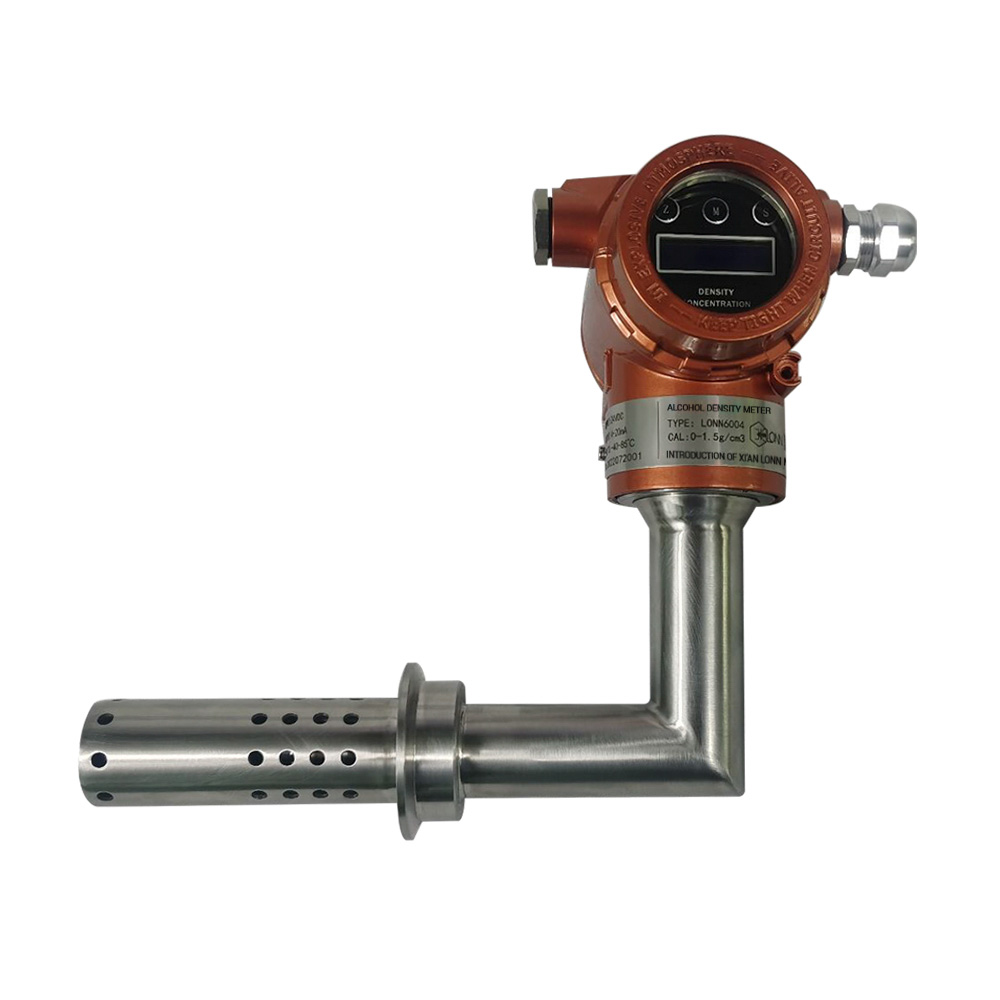
No instrument counts glycol molecules directly. Every continuous method infers concentration from a physical property — density, refractive index, or acoustic speed — through a relationship validated for the fluid. For glycol, density is the workhorse: at 20 °C, water is 1.0000 g/cm³, a 50% ethylene-glycol mix is about 1.0625 g/cm³, and pure EG is about 1.1130 g/cm³, with the curve steep and well characterized across the operating band. A tuning-fork density meter reads density continuously and, with the fluid's density-to-concentration table and temperature compensation loaded, outputs percent glycol live. This is why glycol concentration measurement by density has become the default for continuous monitoring rather than a spot-check luxury.
A refractometer still earns its place as the spot-check. It needs only a drop, reads on the correct EG or PG scale, and confirms the inline number during maintenance rounds. The two are not rivals — inline gives the loop, the optics give the audit — and a sound glycol concentration measurement program runs both.
06 A field note: the under-protected chiller
07 Mistakes that wreck glycol readings
Most glycol measurement failures are sampling or calibration failures wearing a sensor's name.
08 A short selection checklist
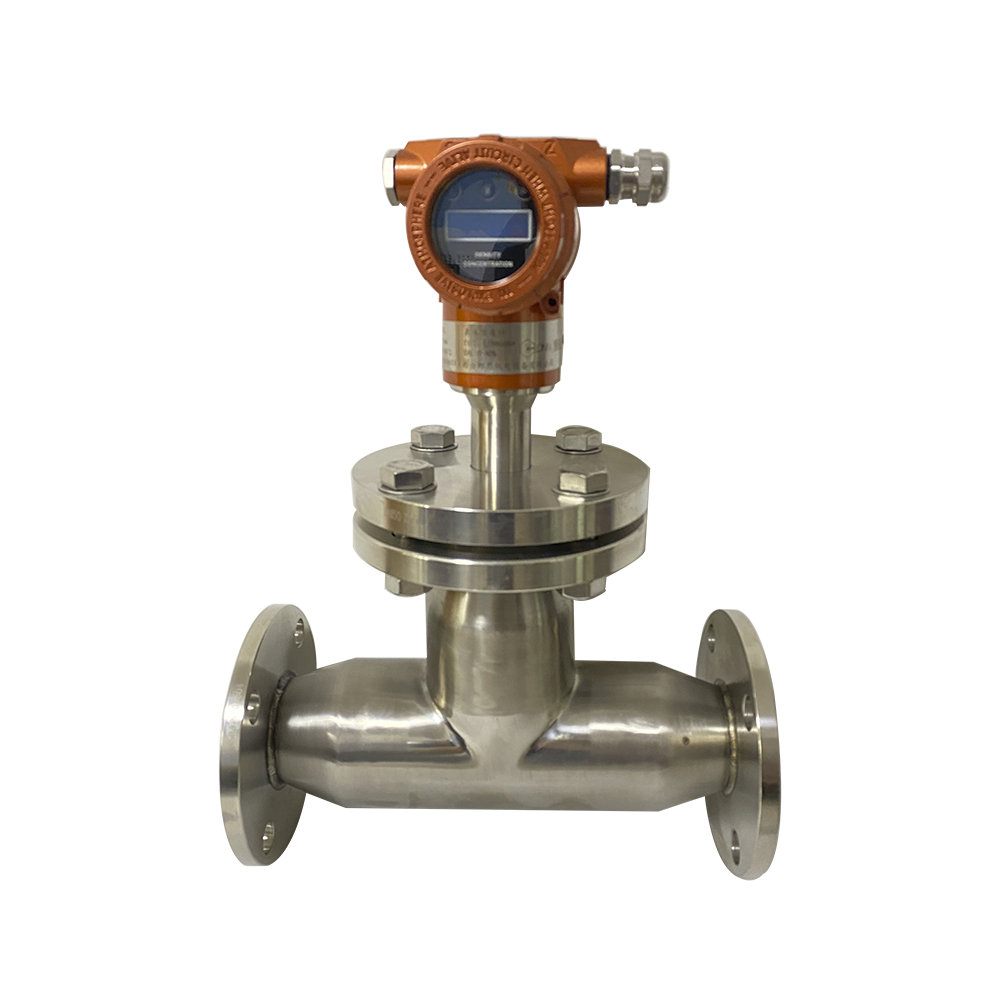
Answering those four questions is how a sound glycol concentration measurement spec gets written instead of guessed. For the hardware, inline concentration meters built on these principles are the usual starting point, and the density measurement hub collects the underlying technology pages. The inline versus Coriolis comparison is the right read when flow and density are both on the table.