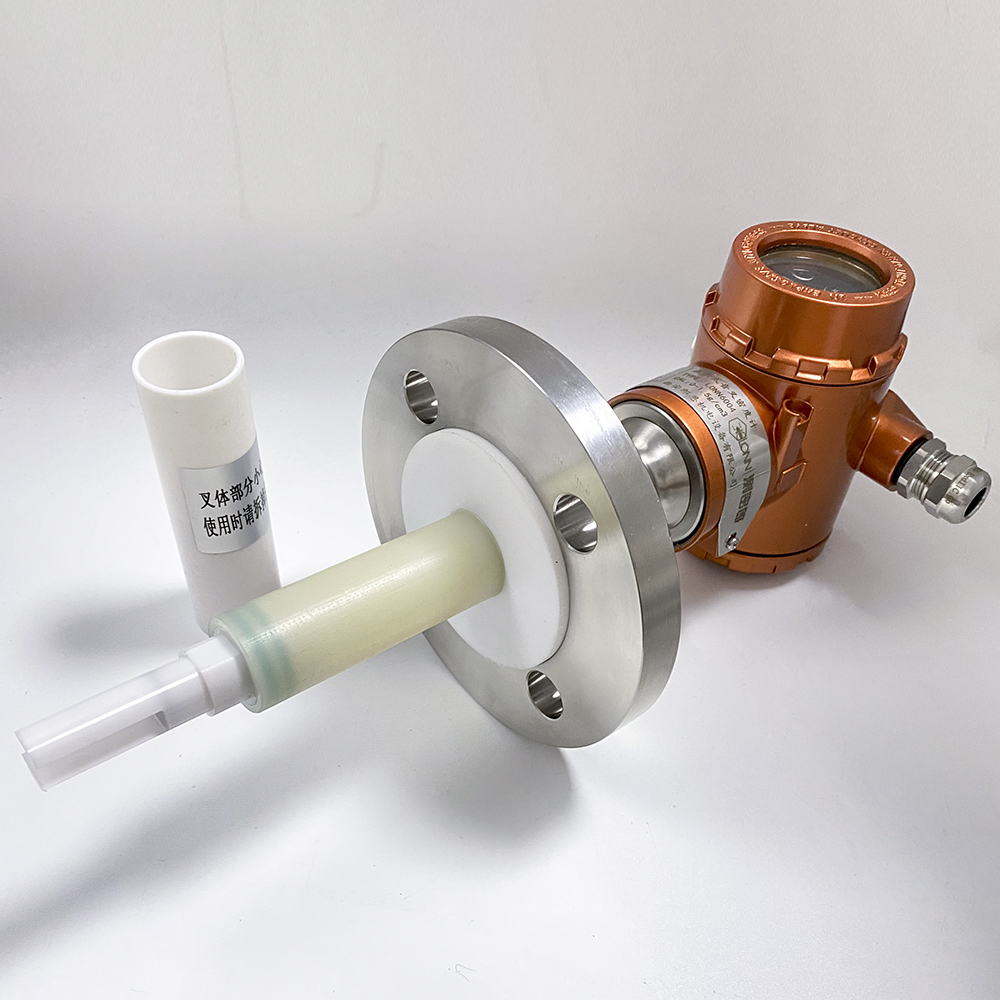
Treating HCl concentration as a titration problem works in the lab and fails on a running line. A titration tells you what the sample was; it cannot tell the dosing pump what to do next. On a continuous acid line, HCl concentration measurement has to be a live loop variable — read it where the acid flows, and let it drive the addition in the same minute the strength drifts. The interesting part is not the sensor. It is choosing which physical property to infer the concentration from, and surviving the corrosiveness long enough to trust the number. For most plants, the first HCl concentration measurement decision is not which meter to buy, but which property to infer the strength from.
Why acid strength is a process variable, not a lab result
Hydrochloric acid sits in the middle of more processes than people expect: steel pickling, chlor-alkali, pH neutralization, fertilizer, and acid regeneration. In every one of them, the concentration sets three things at once — reaction yield, how much counter-agent you burn to neutralize, and how aggressively the stream attacks its own piping. A half-percent miss on strength quietly overspends caustic downstream, or leaves a pickling bath too weak to clean the strip.
The usual failure mode is clock, not chemistry. A grab sample titrated off-line returns the answer an hour after the tank moved on. By the time the lab calls, the off-strength acid is already in the next batch. That lag is exactly why HCl concentration measurement keeps getting re-framed as a control problem rather than an analysis problem: the value only matters if it arrives before the decision it is meant to inform.
There is no direct "concentration probe" for HCl
Density-derived concentration: the workhorse for HCl
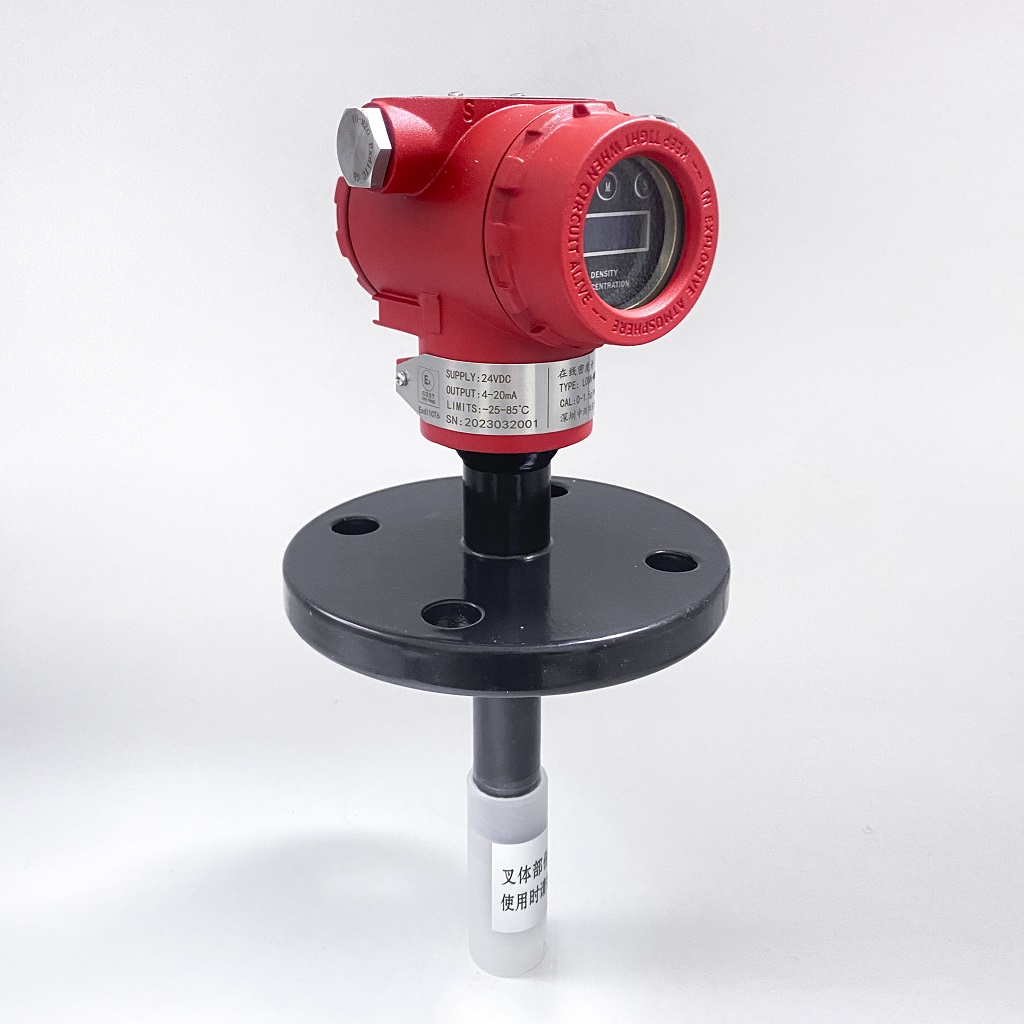
Conductivity: cheap and fast, with a hard ceiling
Conductivity is the simplest way to infer acid strength, and for dilute HCl it is genuinely good. Acid ionizes strongly, so even small concentration changes move the reading. An electromagnetic-induction variant measures without contacting the liquid at all, which is attractive on a fluid this corrosive.
But conductivity saturates. Above roughly 20% HCl the curve flattens, and the reading loses sensitivity exactly where concentrated acid lives. It is also blind to non-ionic contaminants and sensitive to temperature. So HCl concentration measurement by conductivity is a dilute-acid tool — excellent for a rinse or a plating bath in the low single digits, weak for anything approaching concentrated.
Refractometry: sharp where conductivity fades
A refractometer reads concentration off the refractive index using a sapphire prism in contact with the acid. For aqueous HCl it responds sharply across a wide band (roughly 5% to near saturation) and, because it uses only the reflected beam, it shrugs off bubbles, color, and suspended solids that would confuse other methods. Temperature still has to be compensated, but the optical path is forgiving.
Where refractometry loses to density is at the very high end and on cost of ownership in heavy service — the prism face is a wear and coating surface. For a clean, mostly-liquid HCl stream it is a strong contender; for a gritty or fouling line, density usually wins on uptime.
How the three compare on HCl
The loop is the point, not the reading
A concentration number that nobody acts on is a gauge, not control. The purpose of putting HCl concentration measurement inline is to drive the acid addition pump or valve from the measured strength through the PLC, so the loop corrects within the same minute the concentration moves. Compared with waiting on a titration, the win is a shorter loop — detection and correction on the same timescale as the process.
Feeding that signal into the DCS or PLC is straightforward: most inline transmitters output 4–20 mA or Modbus, and the controller already knows the dosing valve's authority. The harder part is dead time — between the addition point, the mixing section, and the sensor there is genuine transport delay, so tune the loop for the process, not for the meter's update rate.