
In a coal washery the saleable tonnage is settled long before the coal reaches the screen — it is settled in the density of the heavy-medium suspension. The whole point of dense-medium separation is Archimedes: float the light coal, sink the heavy rock, and the only thing that draws the line between them is the density of the fluid you suspend them in. Run that fluid a little light and coal follows the gangue to tailings; run it a little heavy and rock rides the belt with the product. So coal slurry density control is not a metering afterthought. It is the knob that sets your yield, your ash, and your media cost at the same time — and most plants still turn it by reading yesterday's bucket.
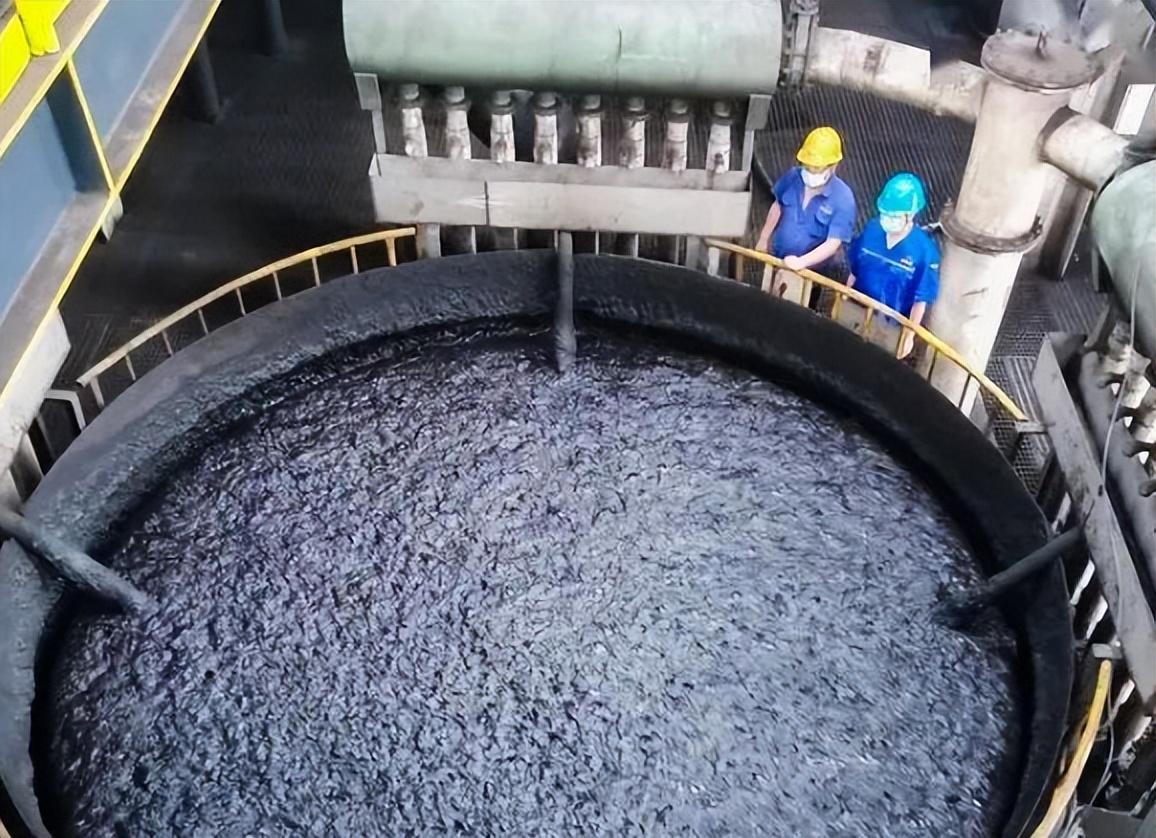
Most sites read medium density the way they did decades ago: a sample drawn from the launder, weighed on a Marcy scale or a pycnometer in the lab, a result back an hour later. For an audit it is sound and traceable. For live control it is a rear-view mirror, and in a medium circuit the mirror is pointed at a different stream than the one in the pipe. The gap between a grab sample and a continuous signal is the difference our inline versus laboratory density measurement guide keeps coming back to.

coal slurry density control

This article sits within our broader density measurement hub, which gathers the method and application guides referenced below.

The number that decides your yield is a density, not a grade

Dense-medium separation works because coal and rock sit on opposite sides of a density threshold. Clean coal floats around 1.30–1.50 RD; the shale and stone you are trying to reject sit near 1.75 RD and up. The suspension you pump through the vessel or the cyclone has to land squarely between those two numbers, because the cut is made at the suspension density, not at any property of the coal itself. Nudge that density a few hundredths and the partition curve slides — and with it, your clean-coal ash and your reject loss.

The washery does not grade the coal. The density of the medium grades it, and the meter is only as useful as the loop that trusts it.

This is why coal slurry density control is treated as a process variable in a well-run plant, not a quality check. The heavy-medium cyclone does not care what the lab said at 9 a.m. It responds to the density of what is in it right now. Every minute the actual medium density drifts from the setpoint, the circuit is silently mis-splitting tonnage you will only see on the shift report — or, worse, in the customer's ash complaint.

Why the bucket sample is always half a shift behind

A coal slurry is not a calm liquid. It is magnetite fines, water, entrained air, and a solids fraction that swings with the ore, the wash water, and the operator's hand on the dilution valve. In that environment a single grab sample has three problems at once.

First, it is late. By the time the number reaches the control room the stream has moved on, so the correction you apply is aimed at a fluid that no longer exists. Second, it is one point. Medium density varies around the circuit — at the dilute supply, the dilute-medium vessel, the cyclone feed, the refresh — and a bucket from one spot cannot speak for the others. Third, it invites drift you cannot see. A plant that controls on an hourly sample will ride a slow density walk for an entire shift before anyone notices the ash has crept. Continuous coal slurry density control is what keeps that walk from becoming a loss.

The plants that hold their yields are the ones reading coal slurry density control continuously at the point that matters, then closing the loop — not the ones weighing more buckets.

Three things that actually move your medium density

If you ask where a medium circuit loses its density, it is rarely the meter. It is the medium itself.

Magnetite loss. The suspension is magnetite in water, and magnetite is expensive and easy to lose. Every percent of magnetic solids that reports to tailings with the rejects drags the suspension density down and the media cost up. Tracking the magnetic content, not just the bulk density, is what keeps the setpoint true.

Stability and settling. A heavy-medium suspension wants to stratify when it slows down. In a partly-filled tank, a dead leg, or a line running below its design velocity, the dense fraction sinks and the probe reads whatever layer happens to sit at it. A reading from a stratified line is a reading from a layer, not the circuit.

Disturbance from the circuit around it. Fresh water in, middlings back, dilution for the cyclone, refresh from the drain — every stream that touches the medium nudges its density. A control loop that watches coal slurry density control and trims dilution or makeup medium automatically is what keeps those nudges from becoming a drift. That is the unglamorous core of coal slurry density control — the medium is never still, so the loop cannot be either.

How plants read it inline — and what survives a coal slurry
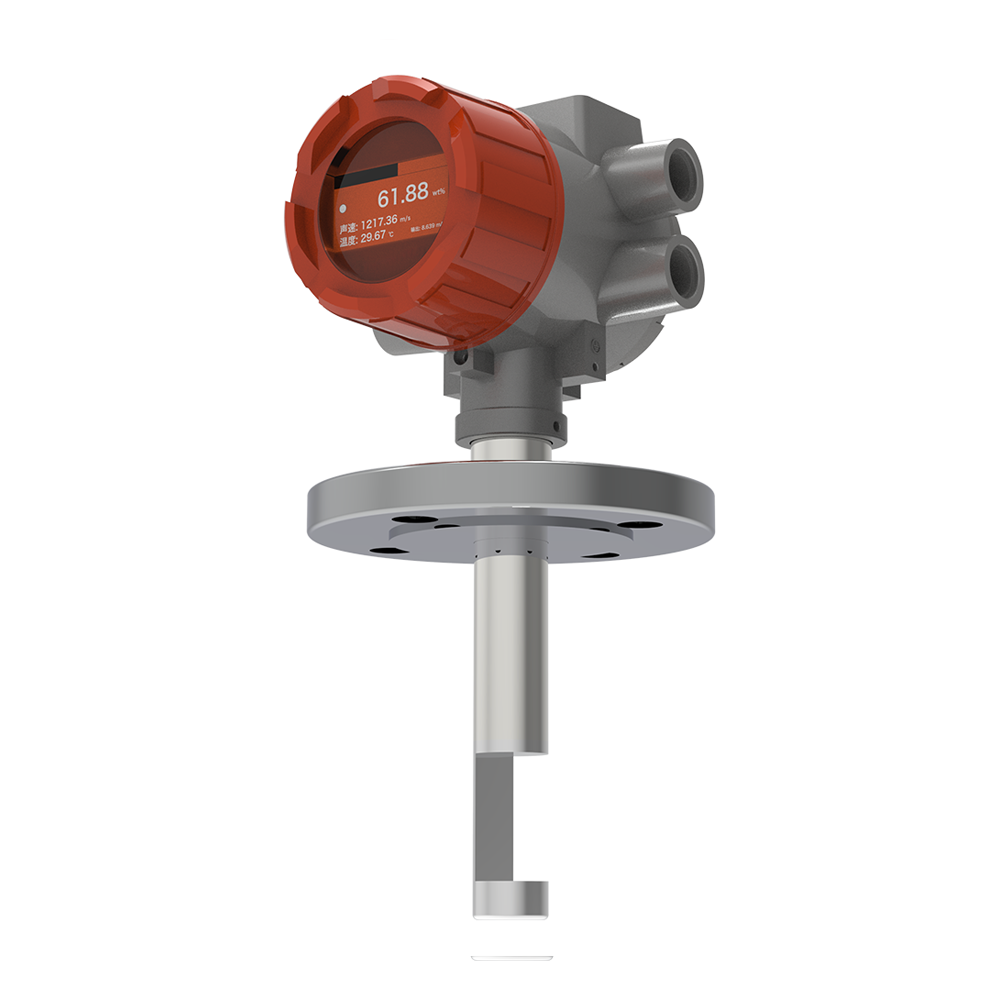
Moving the reading off the bench means putting a transmitter in or on the line. Four approaches show up in washeries, and they survive differently. See the full set in our inline density measurement methods guide.

A tuning-fork density meter built with a wear-resistant wet-end — ceramic, hardened alloy — sits well in abrasive coal slurry. The fork vibrates in the stream, the resonant frequency tracks the density, and there is no wetted moving part to sandblast. On a magnetite suspension this is the workhorse for a reason: compact, fast, and it does not care that the fluid is full of rock. The catch is the wet-end rating and keeping the probe in a representative, well-mixed point. Our tuning-fork density meter overview covers the wear-resistant builds.

A clamp-on ultrasonic density meter couples to the pipe exterior and infers density from the acoustic path — nothing in the fluid, nothing to wear, nothing to block. On the large, hard-to-cut lines common in a washery that non-intrusive fit is its whole appeal. The limit is the wedge temperature ceiling and the need for a clean, coupled pipe wall; on a heavy, air-entrained medium the reading needs care. The immersed-fork versus clamp-on trade is spelled out in our tuning-fork vs ultrasonic comparison.

df

A Coriolis meter earns its place where you also need mass flow, because it gives both from one device. On a metered medium line that is elegant. The trade is that the tube and its welds take the full abrasive and thermal load, so access and wear matter. Our Coriolis density meter piece covers where it wins.

A nuclear gauge reads density from attenuation and is genuinely unaffected by abrasion or air. But it needs a radiological licence, shielding, and a safety program — and most washery operators would rather not run one if a non-nuclear method will do. For coal slurry density control the non-nuclear routes above cover the large majority of duties. Our non-nuclear density measurement article covers wet-end materials for hazardous streams more broadly.

What a coal washery should actually spec for
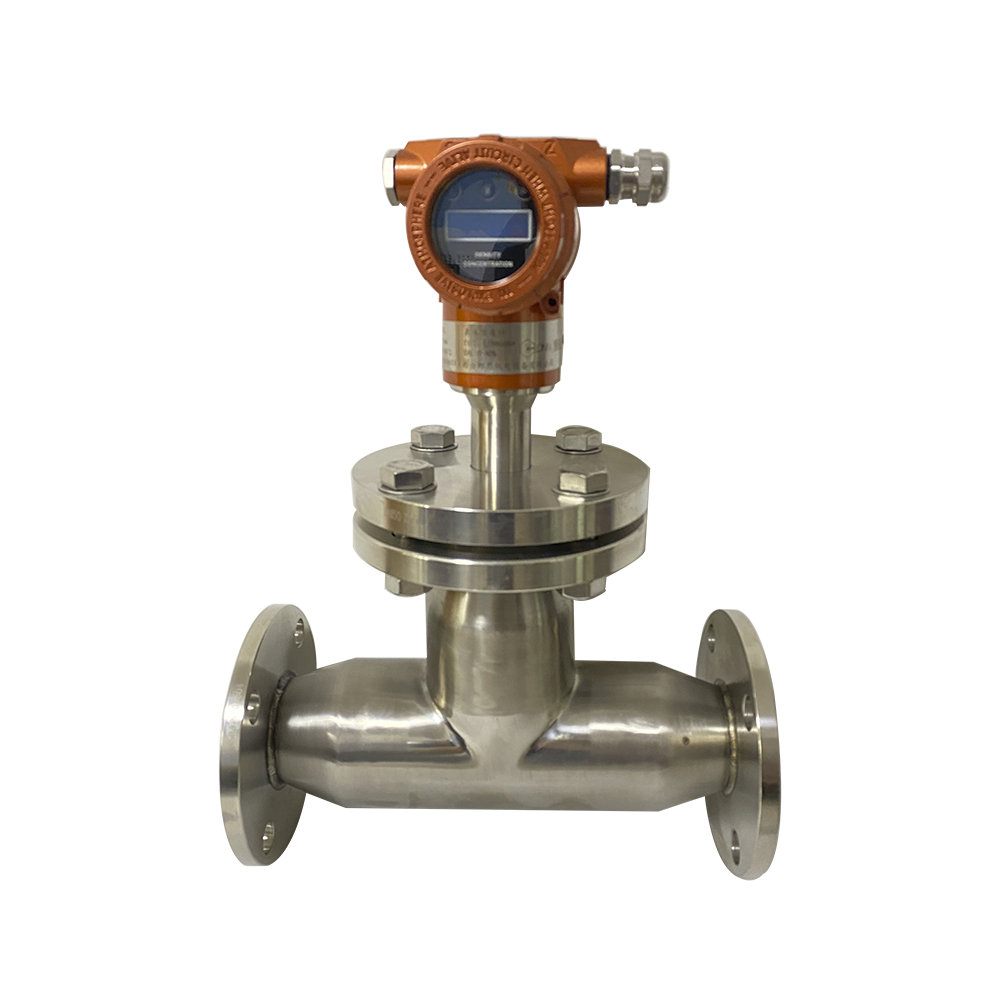
Buying a meter for a medium circuit is not the same as buying one for a clean tank. Four things decide whether it reads or quietly dies — and they line up with what our density meter selection guide weighs first.

Wear resistance comes first. Magnetite slurry is sandpaper with a density. A soft or thin wet-end loses calibration to abrasion long before its electronics fail. Ceramic or hardened wet-ends, or a design with no wetted moving part, are the baseline for this duty, not an upgrade.

Keep the pipe intact. Washery lines are big and busy. A clamp-on or insertion method that needs no full bore opening avoids a shut-down and a welded-in risk — and on a line you cannot easily isolate, that is the difference between a Tuesday afternoon and a planned outage.

Demand stability, not just accuracy. A meter that reads true for five minutes and wanders for the shift is worse than useless, because it teaches the controller to trust a lie. Stability under air entrainment and solids swing is the spec that actually protects your ash.

Prefer non-nuclear. Unless the line is so hostile that nothing else survives, a non-nuclear meter keeps you out of the radiological program. For routine coal slurry density control that is the normal, sensible choice.

IMG 0641

From a reading to a controlled circuit

A transmitter by itself is just a number on a screen. The real payoff of coal slurry density control arrives when that density signal closes a loop. The control point in most plants is the clean-medium (dense-medium) sump or surge tank — hold its density, and the vessel and cyclone feeds follow. The loop trims dilution water or makeup medium automatically as the reading moves, instead of waiting for an operator to react to a late sample.

Mount for the loop, not the photo. Put the probe at a well-mixed, representative point — the cyclone feed or the clean-medium tank — not a dead leg or a partly-filled line where the suspension stratifies. Read temperature where the density is read; a correction built on a tag metres away carries the wrong gradient.

And keep a periodic bucket or pycnometer check in the maintenance cycle as the independent proof the inline cell has not walked — inline controls, the lab confirms. The wider practice is the same one our slurry density measurement guide applies to mining and flotation circuits.

Where coal-slurry density loops quietly fail

The failures are rarely dramatic. They are slow, and they hide in the routine.

A sample point that does not represent the circuit — drawn from a calm spot while the cyclone feed surges — feeds a loop that is stabilizing the wrong number. Magnetic content left untracked lets bulk density look stable while the medium slowly washes out. A probe that is never cleaned builds a coating and reads light. A gauge left uncalibrated against a cooled reference drifts until the ash report arrives. And the nuclear shortcut, taken to avoid the wear problem, trades a maintenance ticket for a safety and licensing load the plant was not staffed for.

When the loop is wrong, a new meter will not fix it. If your medium density will not hold, the cause is almost never the sensor. It is the mount, the loop, and the check — the unglamorous parts of coal slurry density control that decide whether the number on the screen is the number in the pipe.

If your medium density will not hold, talk to our application engineers about the wet-end, the mount, and the loop before you buy. The inline density meter range lists the rated wet-ends and temperature limits per model, and the density measurement hub gathers the guides these choices build on.

From the field: one plant we worked with was chasing a clean-coal ash that would not stay down. The lab sample looked fine; the inline fork at the cyclone feed told a different story — the medium was swinging several hundredths across the shift because dilution was trimmed by hand on an hourly sample. Moving the control to the clean-medium tank, closing the loop on the inline reading, and keeping a daily bucket check took the swing out of the circuit. No new sensor was needed; the loop was.

How we spec, characterise, and verify: every transmitter we build is characterised against the method bases we work to — ISO 15212 for vibrating density meters and ASTM D4052 for digital density measurement — and the temperature compensation follows the same physical basis. That is also why we insist the density and the temperature be read at the same point: the standard and the field agree, and so should the number. Ratings quoted here are method-level; the figure for your exact model is the one on the published datasheet.

Frequently asked questions

What density does a coal washery actually control?

The density of the heavy-medium suspension — typically around 1.30–1.50 RD at the clean-medium tank or cyclone feed, set so coal (about 1.30–1.50) floats and rock (about 1.75 and up) sinks. The exact setpoint is a process-design value, not a meter specification.

Isn’t a nuclear gauge the easiest way to read slurry density?

It reads through abrasion and air without a wetted part, which is genuinely useful on the most hostile lines. But it needs a radiological licence, shielding, and a safety program. For routine coal slurry density control most washery operators prefer a non-nuclear meter and reserve nuclear for duties nothing else survives.

Can a tuning-fork meter survive abrasive magnetite slurry?

Yes, when the wet-end is built for it — ceramic or a hardened alloy, with no wetted moving part. That is why the tuning-fork is the common workhorse on medium circuits; the failure mode to watch is wear at the wet-end, not the electronics.

How often should the inline reading be checked?

Keep a periodic cooled-sample or pycnometer check in the maintenance cycle as the independent reference. Inline controls the process; the lab confirms it has not drifted. The interval is a plant decision, but the check has to exist or slow drift goes unnoticed.

Do you control the cyclone feed density or the medium density?

The control point is normally the clean-medium (dense-medium) sump or surge tank — hold that, and the vessel and cyclone feeds follow. Reading at the cyclone feed is valuable for confirmation, but holding the medium tank is what keeps the whole circuit on setpoint.


LONNMETER GROUP designs, manufactures, and supports inline density, viscosity, and concentration instruments for industrial process lines. This article is informational; density setpoints, temperature ratings, and specifications vary by process and must be confirmed against the published datasheet and the plant’s design basis before selection.

Leave a Reply

Your email address will not be published. Required fields are marked *